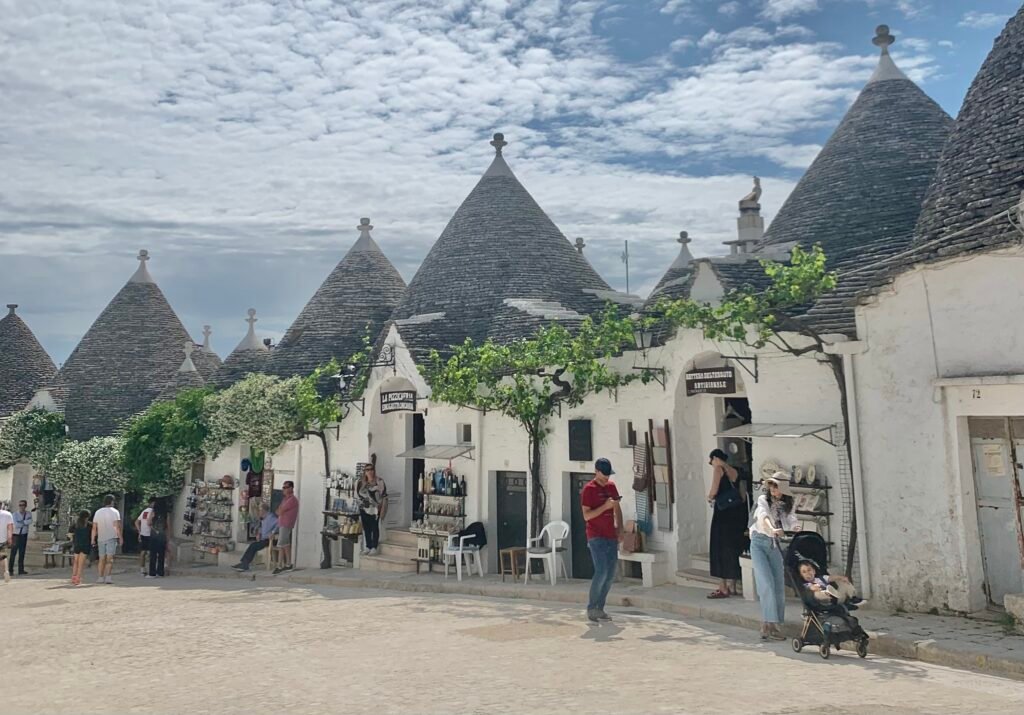
I visited Alberobello Italy on a day trip while backpacking through Italy on a budget back in 2023, and it’s still one of the most surreal places I’ve ever wandered through. One minute you’re on a normal Puglian street, and the next you’re surrounded by hundreds of little white houses topped with grey stone cones taken straight from a fairytale.
If you’re planning a trip to Puglia, Alberobello Italy needs to be on your list.
Here’s everything I wish I’d known before I went, from the best photo spots to how to actually get there.
Is Alberobello Italy worth visiting?
Short answer: yes, absolutely – but go in with the right expectations.
Alberobello is genuinely one of a kind. There is nowhere else in the world where you can walk through an entire neighbourhood built from trulli(the singular is trullo), the traditional dry-stone huts with cone-shaped roofs that give this town its fame. It’s a UNESCO World Heritage Site, and once you’re standing in the middle of the trulli district, it’s easy to see why.
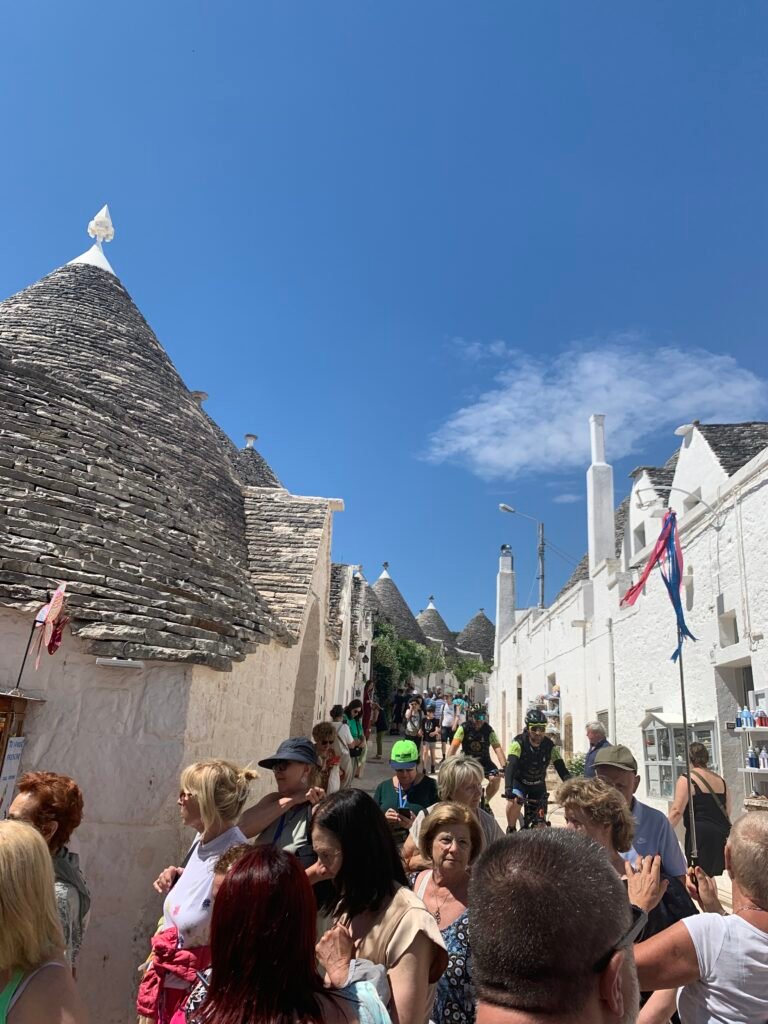
That said, you should know going in that Alberobello has become extremely popular, and the most photographed part of town (Rione Monti) can feel more like an open-air souvenir market than a quiet historic village once the tour buses start arriving. If you go in expecting a small, sleepy Puglian town, you might be a little disappointed by the crowds. If you go in knowing it’s a hugely popular stop and plan around that, by timing your visit carefully, you’ll love it.
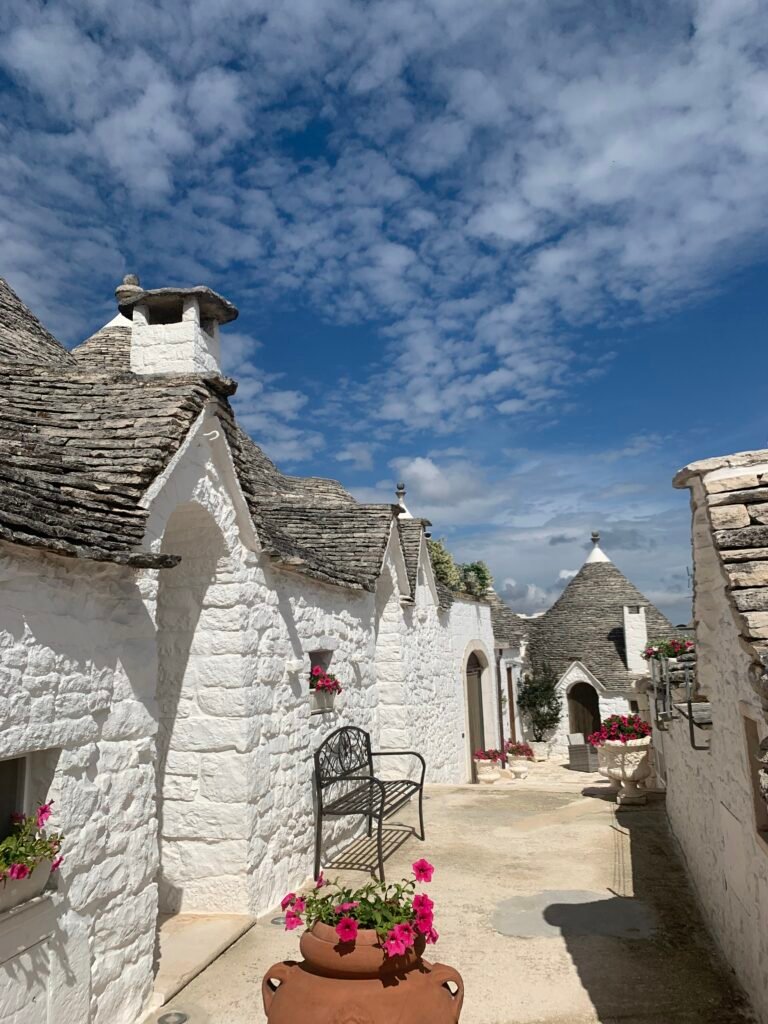
My best piece of advice, from personal experience: get there before 9am. Tour buses typically start rolling in between 10 and 11am, and the difference is night and day. The narrow streets are simply prettier when they’re empty, and you’ll get much better photos without dozens of strangers in the background.
How long should you spend in Alberobello Italy?
For most travellers, half a day (roughly 4-5 hours) is enough to see the main sights, wander both trulli districts, and grab a gelato. Alberobello Italy is small so you can walk from one end of the historic centre to the other in about 15–20 minutes, however there’s a lot to see, so don’t rush it. It also works well as a stop on a wider Puglia road trip or a day trip from Bari.
If you want a more authentic experience, though, consider staying overnight in a trullo. Several other travel blogs I’ve read who’ve done this mention that once the day-trippers clear out in the late afternoon, the town completely transforms as the streets empty out and it feels far more atmospheric, especially in the evening light.
Alberobello Italy map
Alberobello sits inland in the Itria Valley, in the province of Bari, roughly midway between Bari and Taranto. The historic centre (where all the trulli are) is compact and entirely walkable, split into two neighbourhoods by the main square, Largo Martellotta:
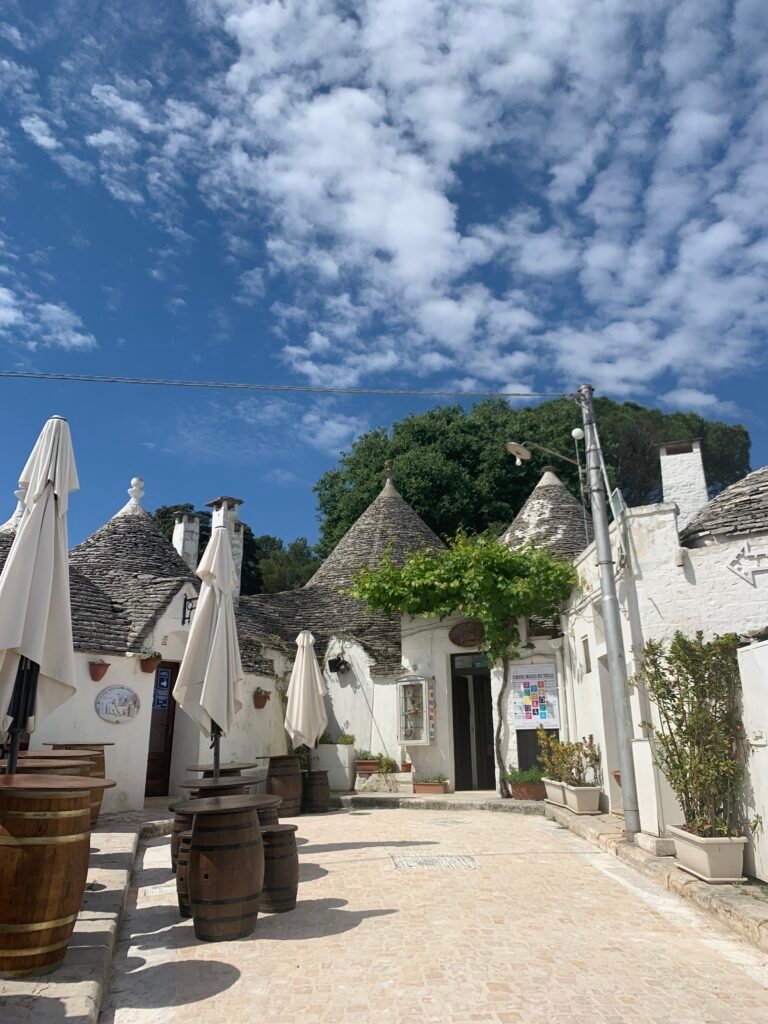
- Rione Monti (north/west side) — the largest and most famous trulli district, home to well over 1,000 trulli, most of which are now souvenir shops, cafés, and guesthouses.
- Rione Aia Piccola (south/east side) — a smaller, quieter, mostly residential trulli neighbourhood with far fewer crowds.
Why is Alberobello famous?
Alberobello is famous for its trulli — and for having by far the highest concentration of them anywhere in Italy. While you can spot trulli scattered throughout the wider Itria Valley, nowhere else comes close to Alberobello’s sheer number, with well over 1,000 trulli packed into the historic centre.
The story behind why they were built this way is genuinely one of the more entertaining pieces of Italian architectural history. I’m not fully certain of every historical detail here but the most commonly told version goes like this: the area was ruled by the Counts of Conversano, under the Kingdom of Naples, which taxed any new permanentsettlement. Locals are said to have gotten around this by building their houses from limestone stacked without mortar. If tax inspectors came through, the roofs could reportedly be dismantled quickly, making the buildings look temporary rather than permanent.
Alberobello was eventually freed from these feudal tax obligations in 1797, but by then the building tradition had taken hold, and it’s still practiced today. The trulli of Alberobello were inscribed as a UNESCO World Heritage Site in 1996, recognised specifically for this prehistoric mortarless construction technique.
What does the the white-washed symbols painted on the cone roofs of the trullis mean
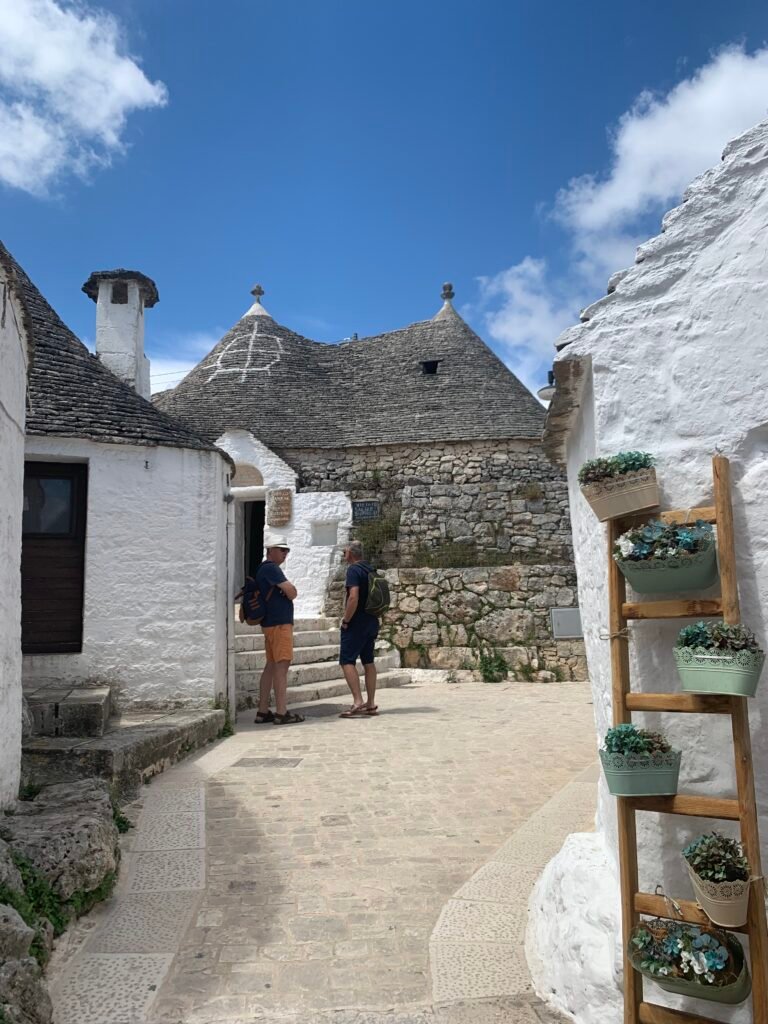
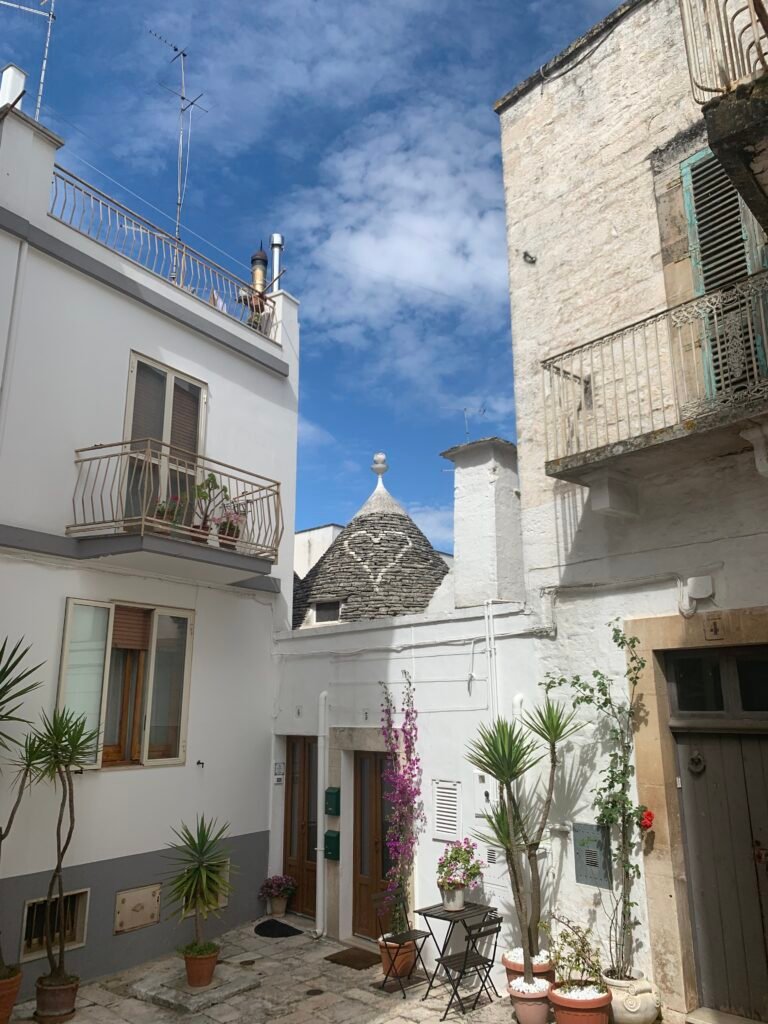
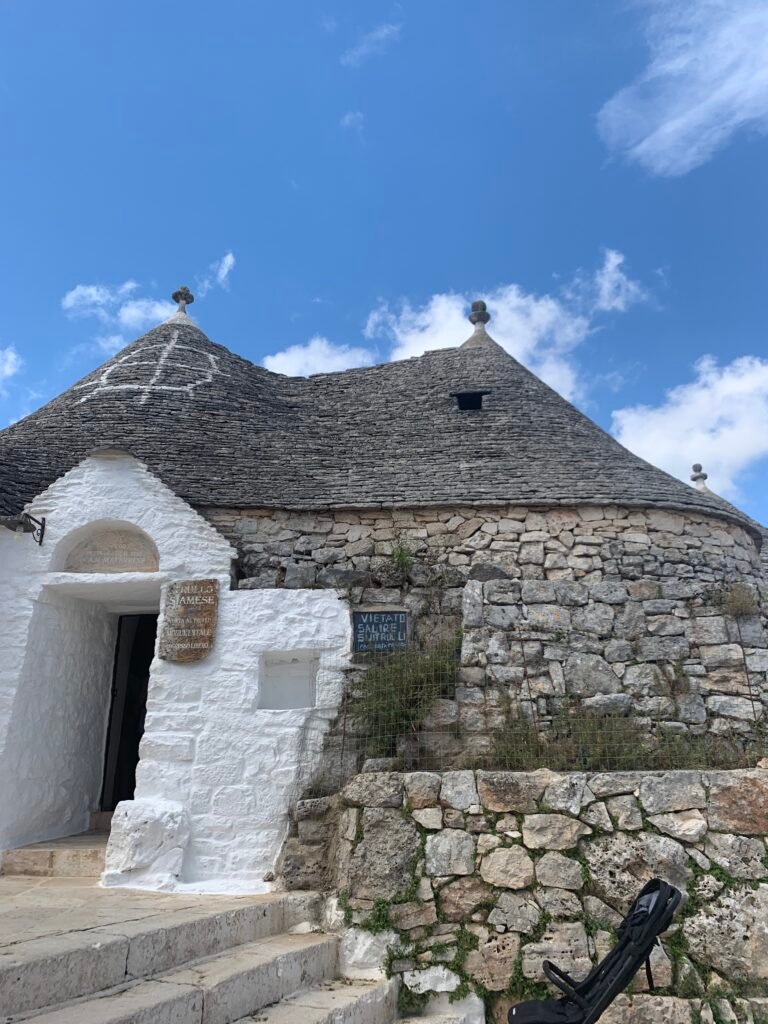
Some trullis have painted white symbols on their roofs, which I didn’t know anything about before visiting and seeing them myself. According to my research they are most commonly apotropaic symbols – meaning they were painted to ward off bad luck, protect the household, or bring good fortune, often described as guarding against the “evil eye.” Beyond that general idea, though, the specific meanings get murkier, and different sources genuinely disagree. I wouldn’t treat any specific “this symbol means X” chart you find online as definitive, but if you want a better explanation I’d ask one of the locals ;))
Common motifs that show up (and their most popular meaning) include:
- Crosses: Christian devotional symbol.
- Hearts: Love and/or symbolizing the Sacred Heart.
- Stars, suns, and moons: meant to invite good fortune or a favorable outcome, especially around fertility and harvest.
- Zodiac/astrological signs: believed to correspond to a specific wish or need of the household.
Famous Trulli in Alberobello Italy
Not all trulli are created equal and a few specific ones have become minor celebrities in their own right, and they’re worth seeking out.
Trullo Sovrano
Trullo Sovrano is the only two-storey trullo in all of Alberobello, which makes it stand out immediately. It’s now set up as a small house museum with period furnishings, giving you a genuine sense of what it was like to actually live inside one of these buildings – most trulli you’ll see are single-storey and quite small inside.
Trullo Siamese
Trullo Siamese is instantly recognisable because of its two joined cone roofs and two separate entrances, so it looks like a single building that’s been split in half. Today, one half of the building operates as a souvenir shop.
The Smallest Trulli of Alberobello Italy
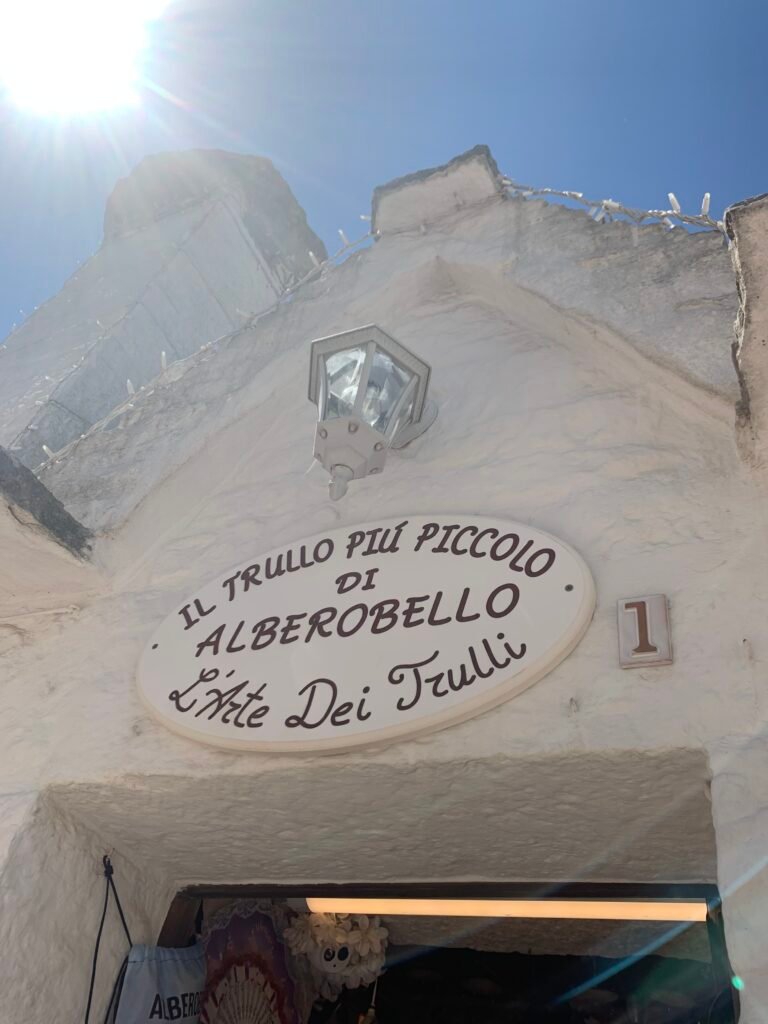
Tucked into the touristy part of Rione Monti is II Trullo Più Piccolo — the smallest trullo in town. It’s now a working souvenir shop and not super exciting besides saying you’ve seen it.
Best photo spots in Alberobello Italy
If you’re visiting Alberobello Italy specifically for photos (and let’s be honest, a lot of us are), here are the spots worth prioritising.
Viewpoint Cartolina di Alberobello
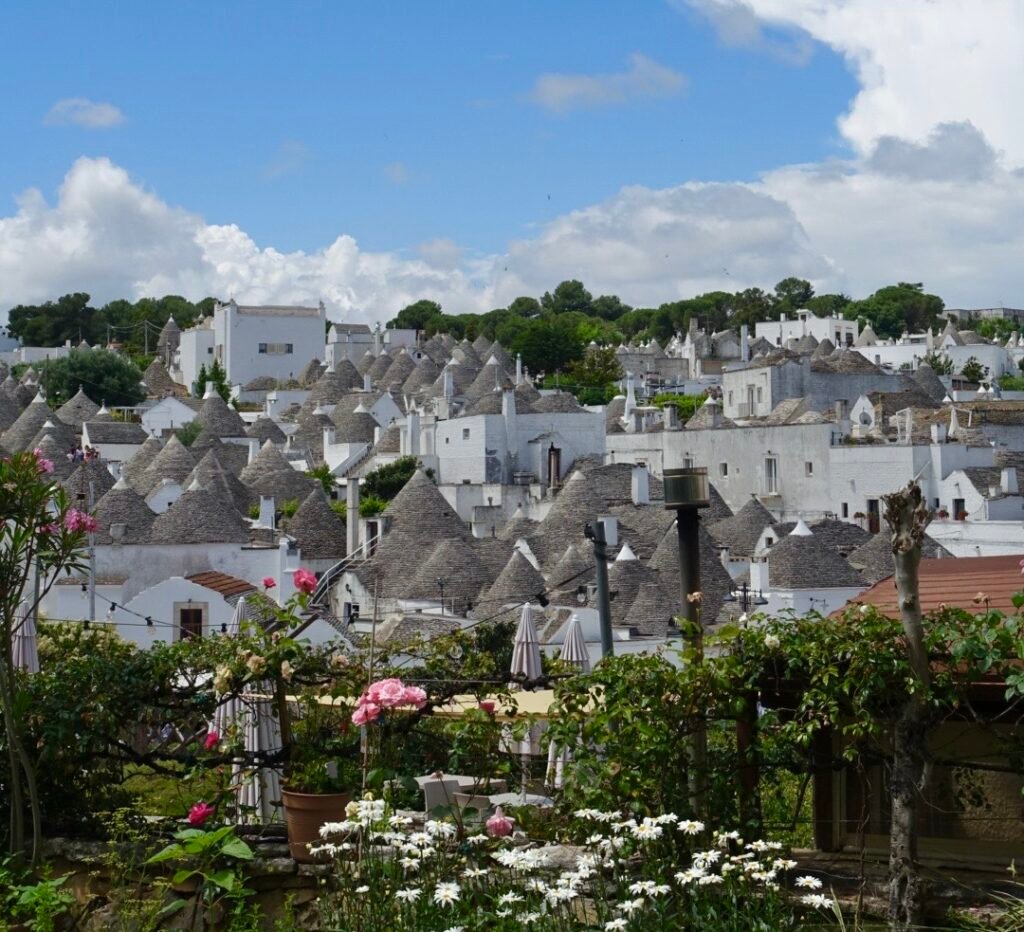
Also known simply as the “Belvedere” or postcard viewpoint, this is the classic panoramic shot of Alberobello — a wide, elevated view over the sea of cone-shaped rooftops in Rione Monti. Because it’s so popular, expect to queue for a clear shot, especially by mid-morning (another reason to get there early)
Via Monte Nero
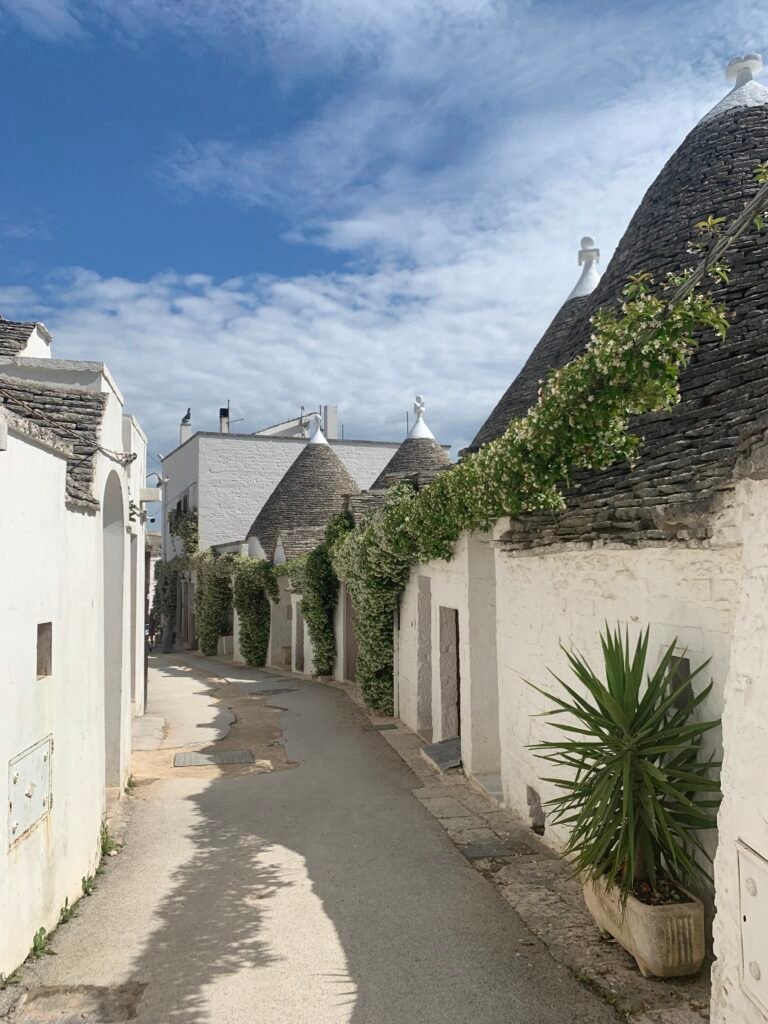
Via Monte Nero is one of the oldest streets in Rione Monti, lined with some of the town’s oldest trulli. It has plenty of greenery and flowers draped over doorways in season, making it a favourite for photographers who want the classic trulli look without quite as many people in frame.
Via Monte Sabotino
This one’s a bit of a hidden gem — it doesn’t show up in every Alberobello guide. It’s a side street branching off from the busier Via Monte San Michel.
Honestly, some of the best photo spots in Alberobello aren’t the “official” ones – they’re side streets you stumble into while wandering, so don’t be afraid to wander off the main routes.
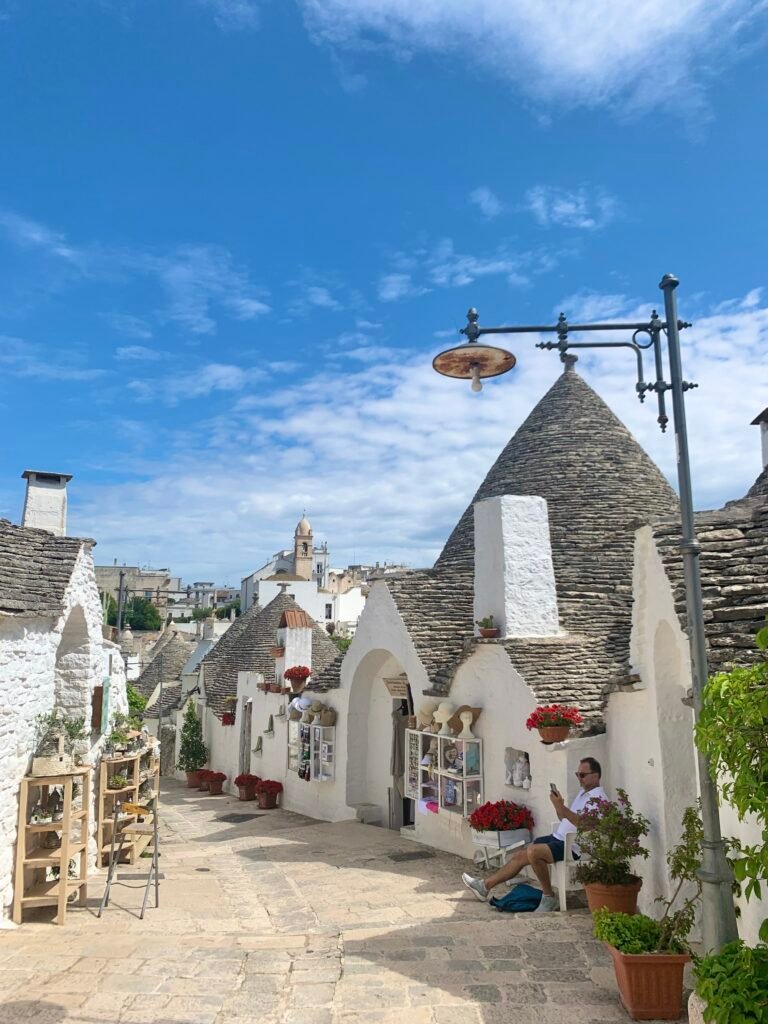
Alberobello Painted Rooftops Photo Spot
Look for the row of trulli along the upper part of Rione Monti (commonly cited as being near Via Monte Pertica) where a lot of the cone roofs are painted with the white symbols. Photographically, it’s one of the most striking spots in town, since it’s rare to see so many decorated roofs lined up together.
Other attractions in Alberobello Italy
Once you’ve done the trulli-hopping, there are a couple of other landmarks worth fitting in.
Church of Saints Cosmas and Damiano
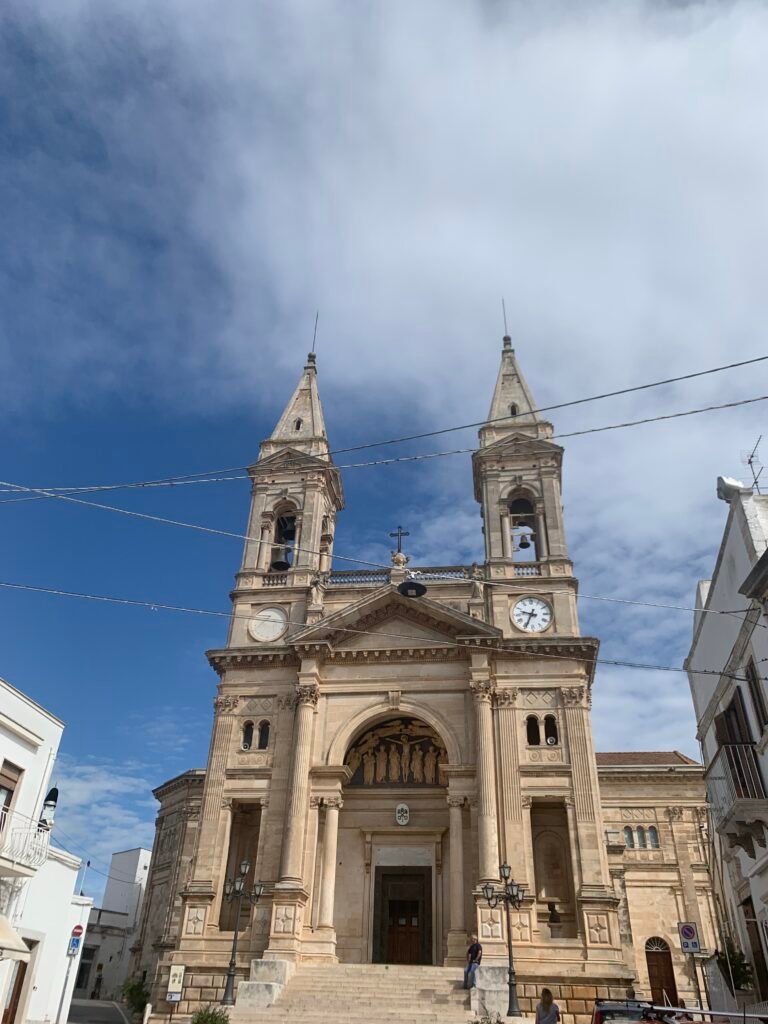
This basilica sits on a hill in Rione Aia Piccola, and its twin bell towers are visible from various points around town, it’s one of the few non-trullo landmarks that competes with the cone roofs for attention. Saints Cosmas and Damiano were twin brothers said to have worked as physicians who treated people for free; they’re now the patron saints of Alberobello.Entry is free, and if you happen to visit around late September, you may catch the town’s annual feast day in their honour.
Chiesa Parrocchiale di Sant’Antonio da Padova (S. Anthony’s Church)
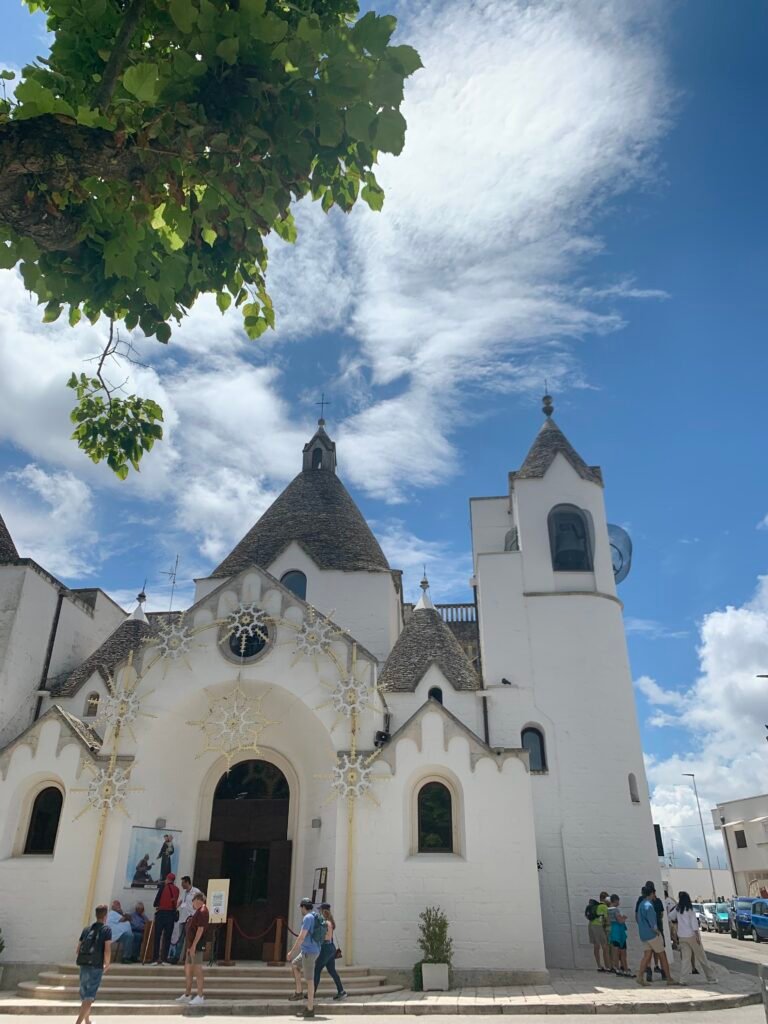
Also known simply as the “Trullo Church,” this is genuinely one of a kind and is the only church in the world built entirely in trullo style, with a large central cone and smaller cones branching off it.It was built in the 1920s, which makes it much younger than most of the surrounding trulli, but it was deliberately designed to match the town’s existing architecture.
How to get to Alberobello Italy
The easiest access point is Bari, whether you’re flying into Bari Airport or already based there.
By train: Alberobello is connected to Bari by the regional train line (€7 each way). The direct journey takes approximately 1,5 hours and is roughly a 10-minute walk from the station to Rione Monti.
By guided tour: If you’d rather not deal with public transport at all, plenty of day-tour operators run guided trips to Alberobello from Bari and other parts of Puglia, often combining it with nearby towns like the one below (as Matera is also hard to reach by public transport).