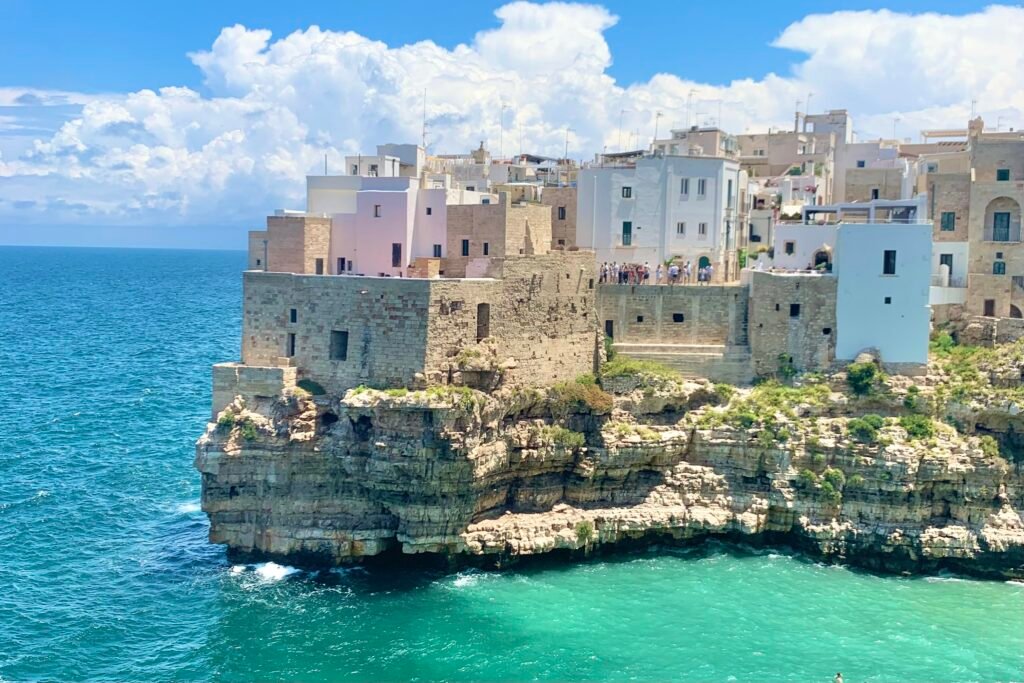
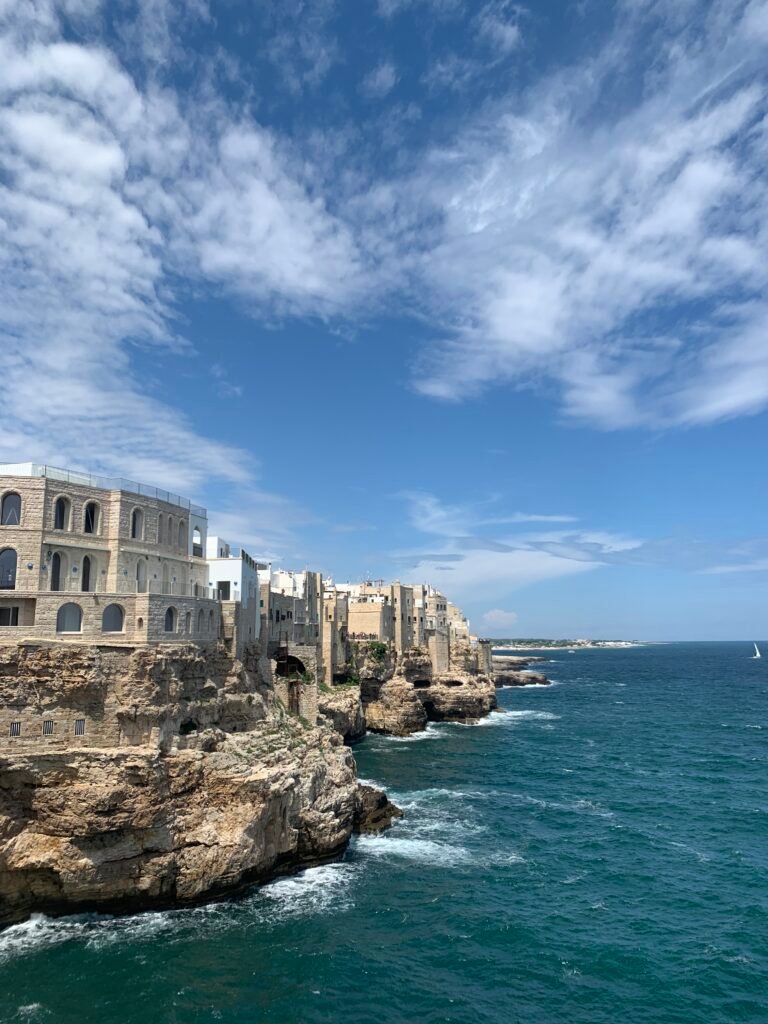
Perched on limestone cliffs above the turquoise Adriatic Sea, Polignano a Mare is one of the most photographed towns in Puglia, Italy – and for good reason. Between its whitewashed old town, dramatic sea caves, and the iconic Lama Monachile Beach, Polignano a Mare has earned its reputation as a must-visit stop on any southern Italy itinerary.
I visited Italy on a tight budget in 2023, so this guide won’t cover the best restaurants to visit in this stunning seaside town or anything similar – but I can tell you how to get the most out of your visit on a budget.
Let’s get into it.
Polignano a Mare map
Polignano a Mare sits on the eastern coast of Puglia about 38km from Bari. It’s central position makes it an easy add-on to a wider Puglia road trip or a straightforward day trip from Bari, as it’s only a 45 min. ride with the regional train.
The town is compact and walkable, with the historic centre (centro storico) built directly into the cliffside overlooking the sea.
Other nearby towns worth noting on the map for context:
- Monopoli: Around 15 minutes away, known for its harbour and old town.
- Alberobello: Home to the famous trulli houses, roughly 30 km away
- Ostuni: The whitewashed hilltop “White City,” reachable in 40 min. by car.
Is Polignano a Mare worth visiting?
In short: yes, but go in with the right expectations. Polignano a Mare consistently ranks among Puglia‘s most iconic destinations, and it’s easy to see why once you’re standing on one of its cliffside terraces and a genuinely unique atmosphere (poetry on the walls, cliff divers in summer) makes it stand out even among Puglia‘s many beautiful towns.
The caveat is that Polignano a Mare has become a genuine social media hotspot in recent years, and it shows. The town’s most photogenic spots like Lama Monachile Beach, the cliffside viewpoints, and especially Grotta Palazzese, the cave restaurant that shows up on seemingly every Puglia Instagram feed draw foot traffic. Because Polignano a Mare is small and its main sights are concentrated in a compact area, that popularity is felt acutely: narrow streets and viewpoints fill up fast, and the quiet, postcard-perfect version of the town you see online often requires an early start (or an off-season visit) to actually experience.
Given how compact the town is and how much of its charm is genuinely a “look and move on” experience, I found that Polignano a Mare works best as a stop of a few hours rather than a full day or overnight stay.
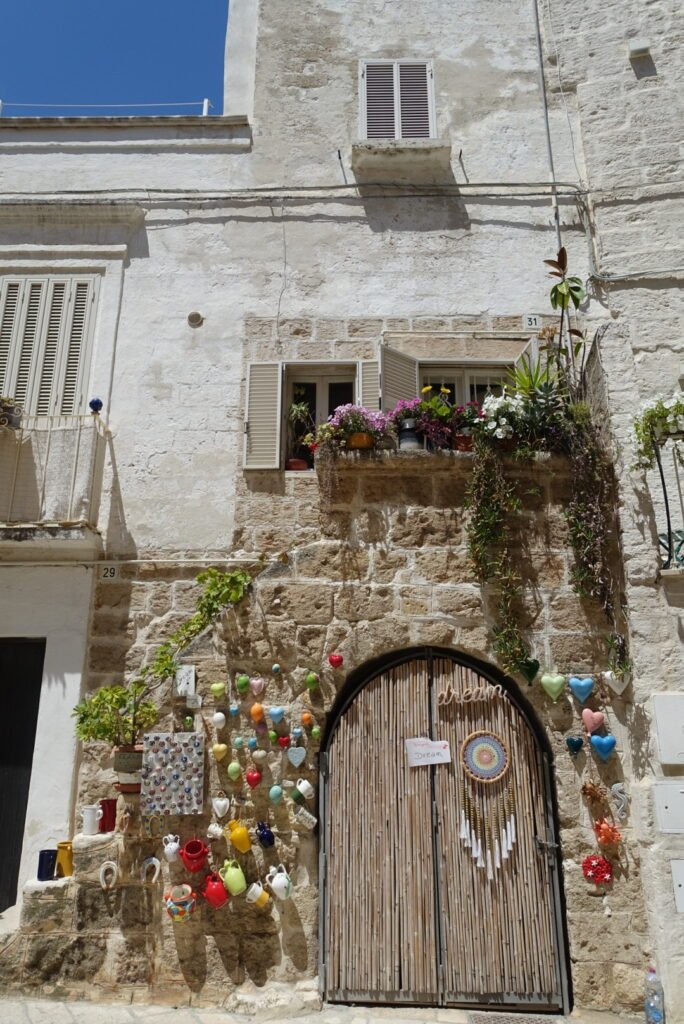
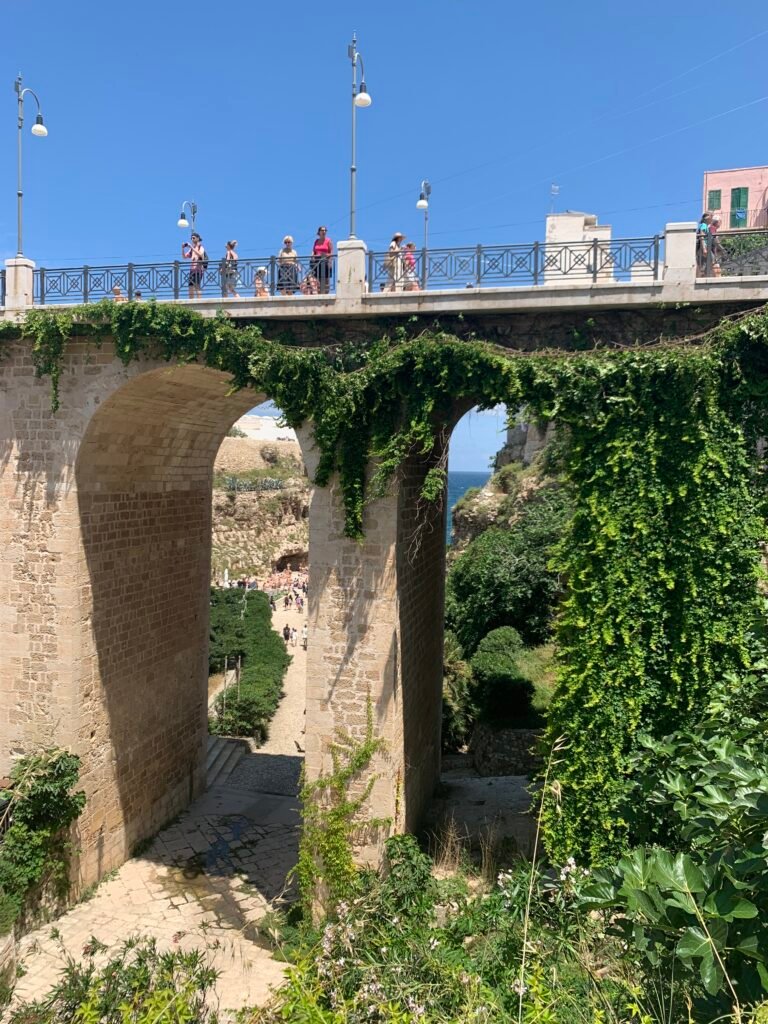
Explore the old town of Polignano a Mare
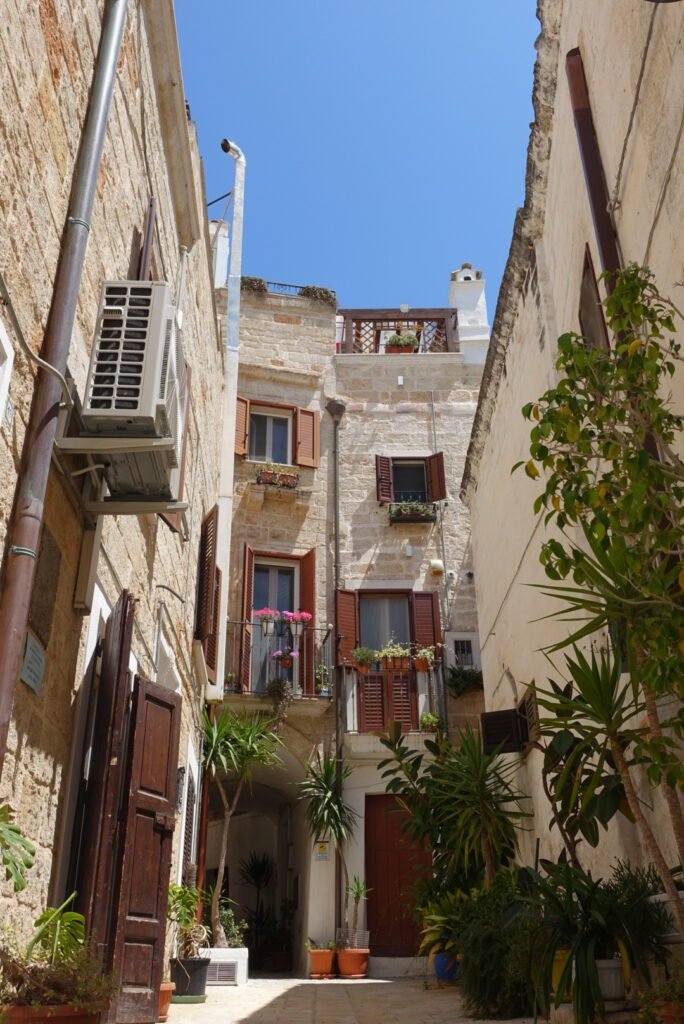
The centro storico of Polignano a Mare is where the town’s charm really shows itself. Entered through the old gate, Porta Vecchia, the old town is a tight maze of whitewashed cobblestone streets, flower-draped balconies, tiny trattorias, and sudden sea views around unexpected corners. It’s small enough to explore without a map – half the fun is simply getting a little lost.
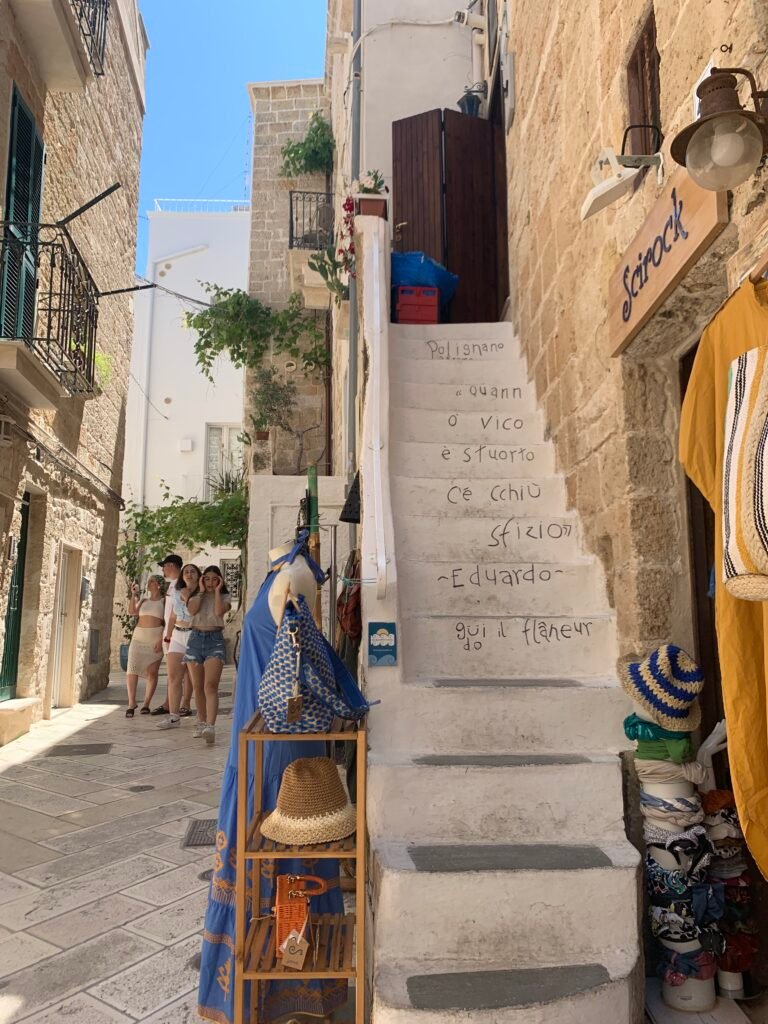
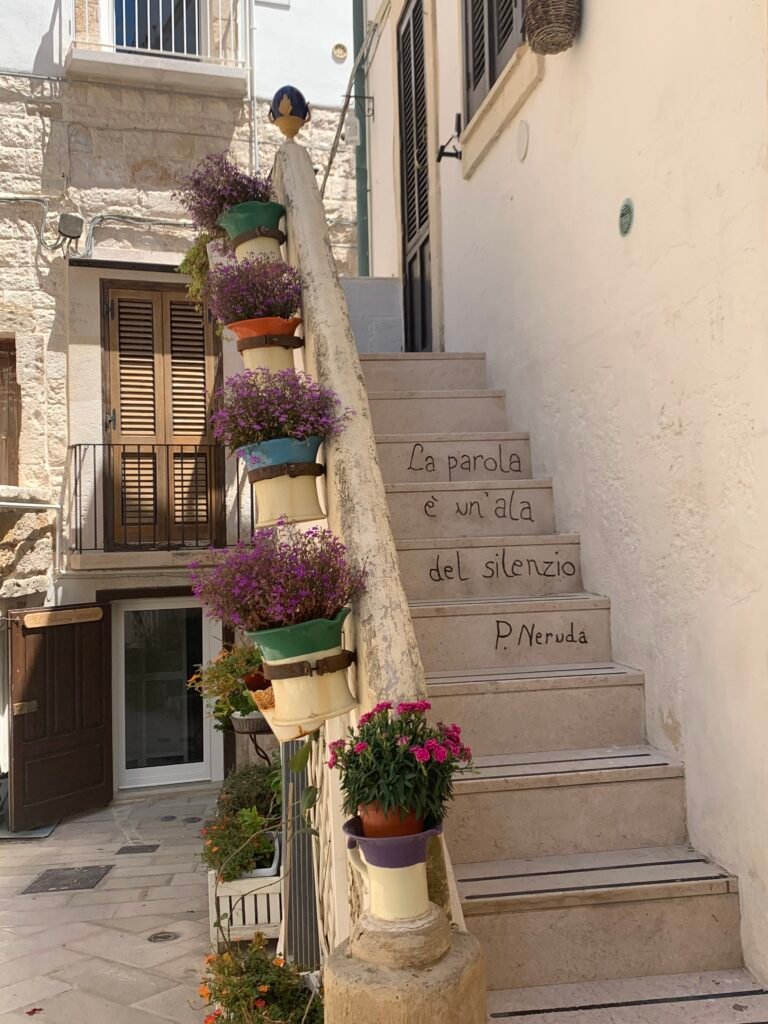
Polignano a Mare stairs
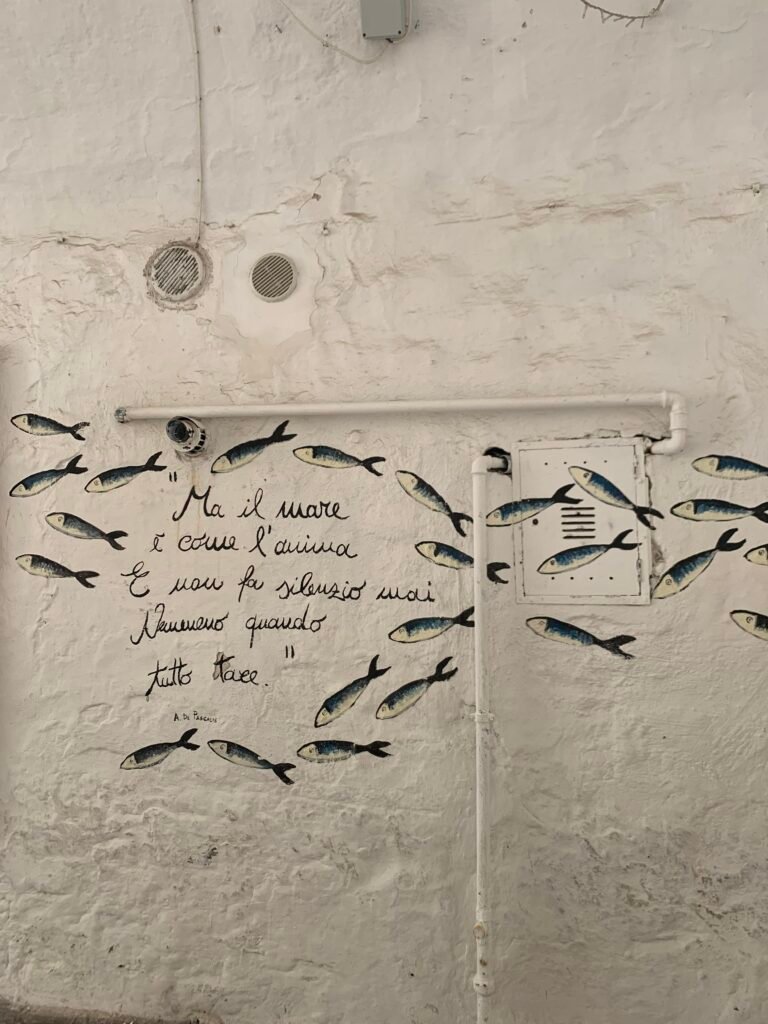
One of the most defining features of Polignano a Mare’s old town is stepped alleyways and poetry that has been written on stairs and walls. It’s the local poet Guido Il Flâneur who has scattered his verses, on love, nature, and the sea, throughout the historic centre, turning a simple stroll into something closer to a treasure hunt.
Church of Saint Mary of the Assumption
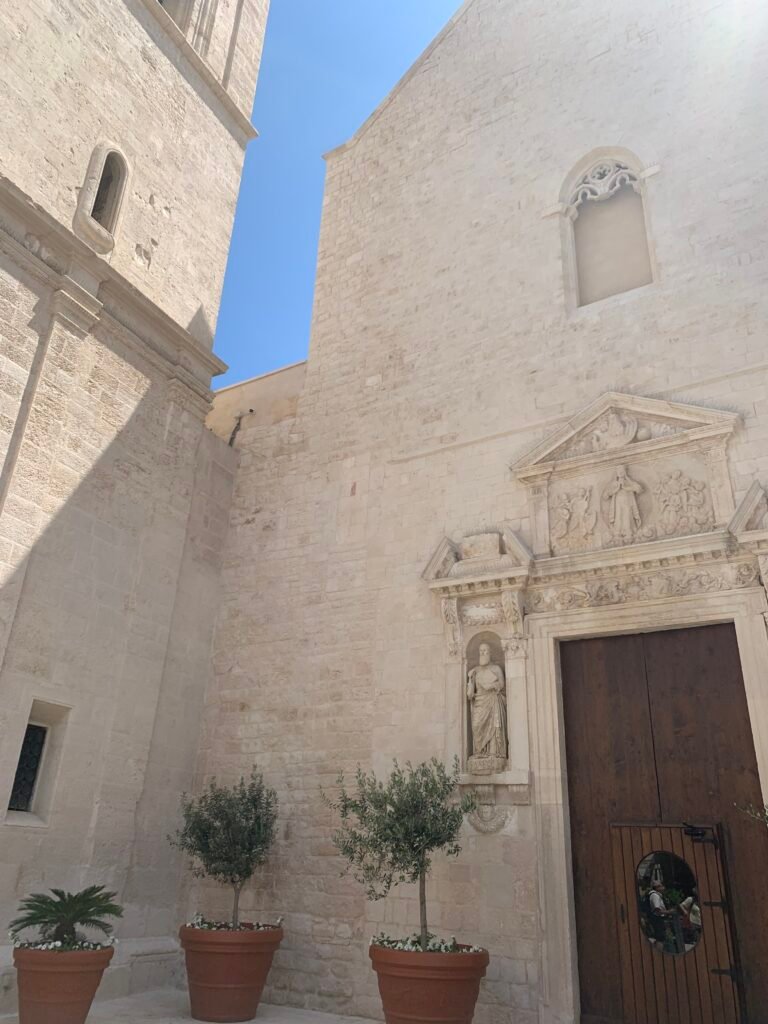
At the heart of the old town, in the main square Piazza Vittorio Emanuele II, stands the Chiesa Matrice Santa Maria Assunta. Dating back to the late 13th century, the church features a 22-metre bell tower and sits alongside the town’s clock palace, making the piazza a natural stop for a coffee break while taking in some local history.
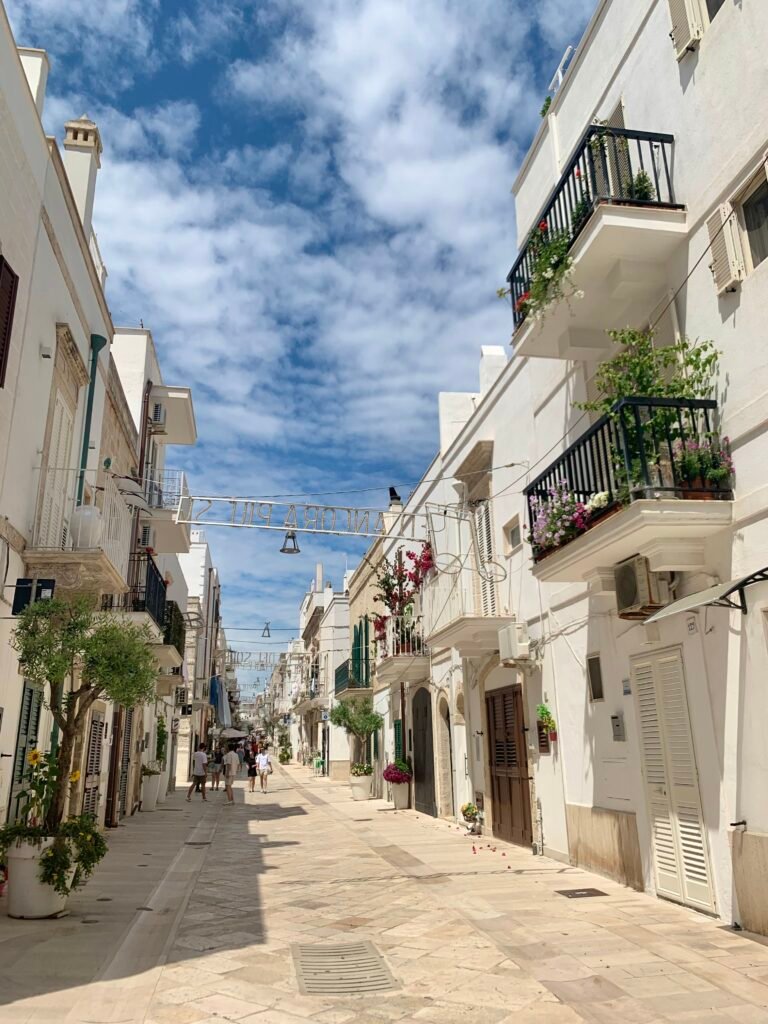
Polignano a Mare Via Roma street
Via Roma is one of the old town’s key streets and a good area to know if you’re chasing a little break from the crowds during your visit.
Cliff dive by Lama Monachile Beach
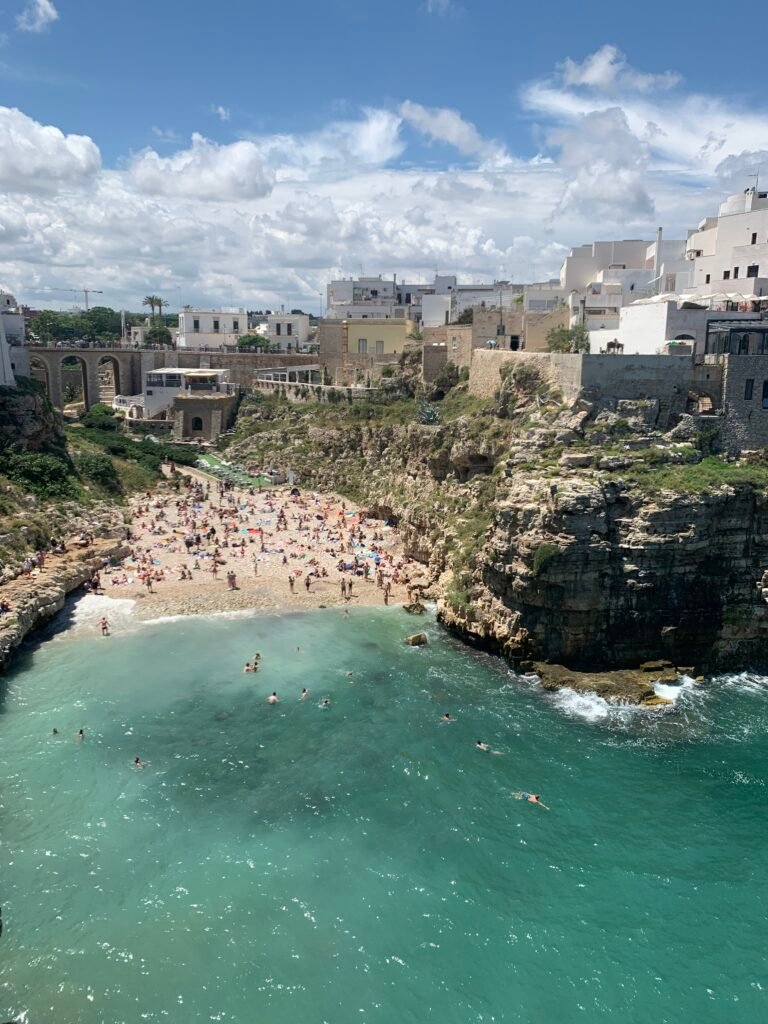
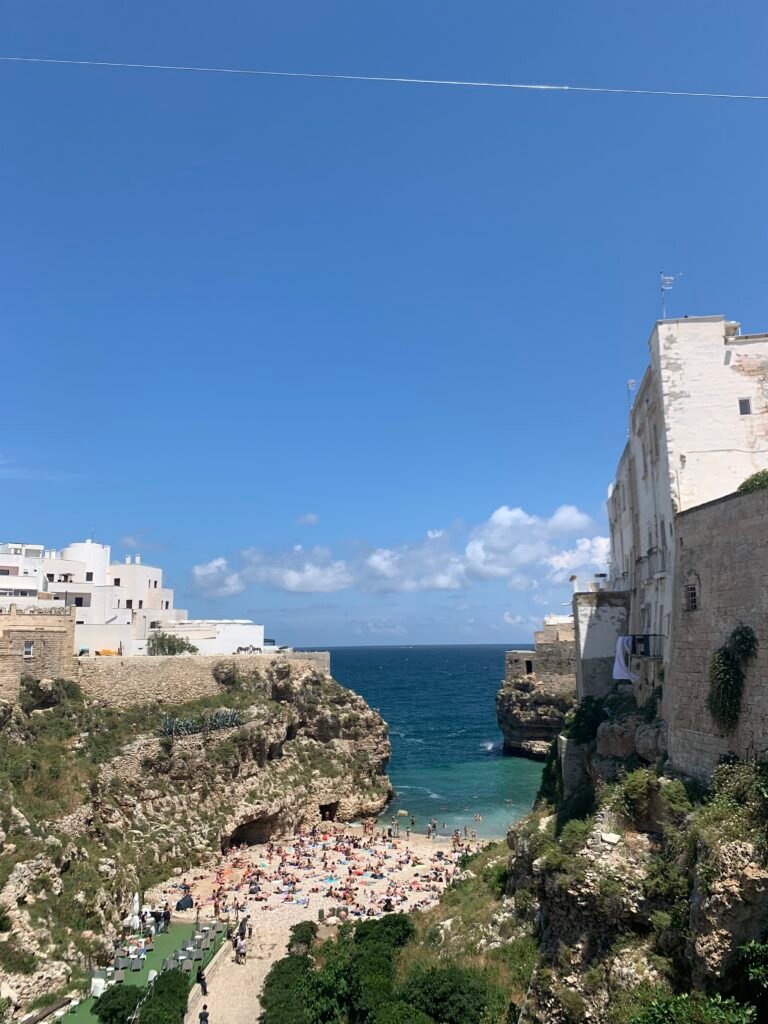
No visit to Polignano a Mare is complete without seeing Lama Monachile Beach (also known as Cala Porto) — the small pebble beach wedged dramatically between two limestone cliffs that appears on virtually every postcard of the town. The water is a striking, clear turquoise, and the setting is the reason Polignano a Mare shows up on so many “most beautiful towns in Italy” lists.
The beach is also famous for cliff diving. Locals and visiting divers regularly leap from the surrounding limestone cliffs into the sea below, and if you’re visiting in September, Lama Monachile hosts a stage of the Red Bull Cliff Diving World Series – one of the more spectacular ways to experience Polignano a Mare’s coastline.
Visit all the viewpoints of Polignano a Mare
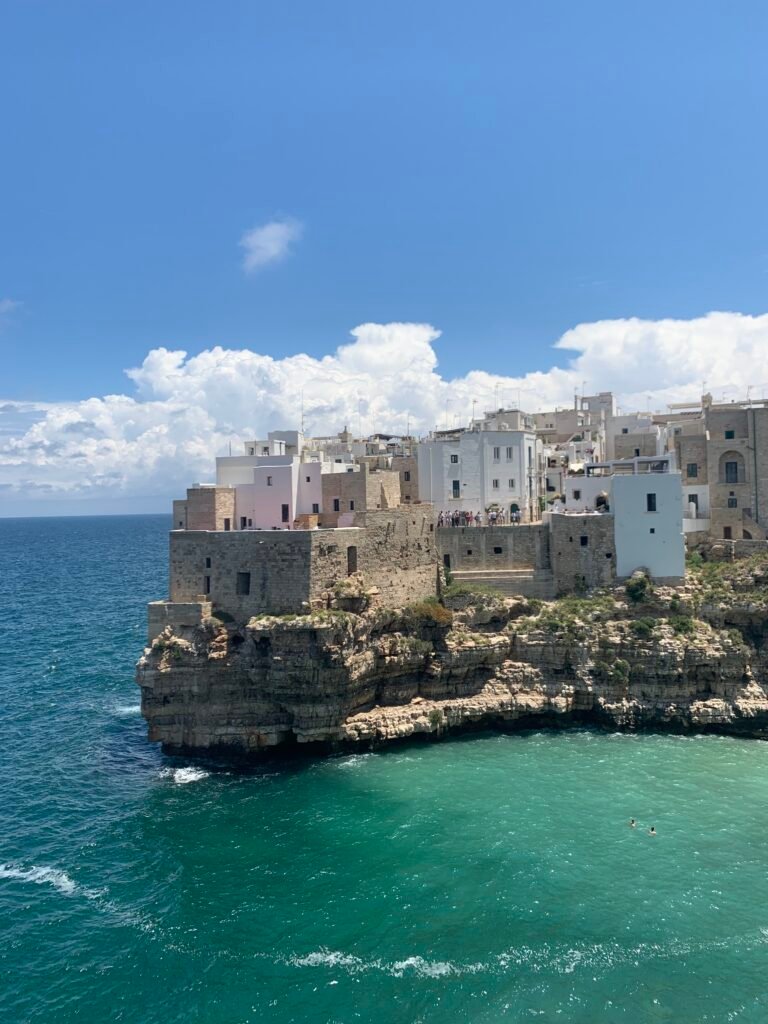
Part of what makes Polignano a Mare special is how many angles you can view it from – the cliffs create a series of distinct panoramic terraces, each with a slightly different perspective on the town, the sea, and the caves below.
Lama Monachile Lookout
The best-known lookout is the so-called “Belvedere su Lama Monachile”, the iconic viewpoint directly overlooking Lama Monachile Beach and the town’s whitewashed buildings stacked above the water. It’s the single most photographed spot in Polignano a Mare (so be prepared for crowds).
Polignano a Mare lookout
Directly opposite the “Lama Monachile Lookout” is a less visited viewpoint, which requires you to pass over the Ponte Borboncia di Lama Moncachile (also known as the Bourbon Bridge) and go to the other side of the beach.
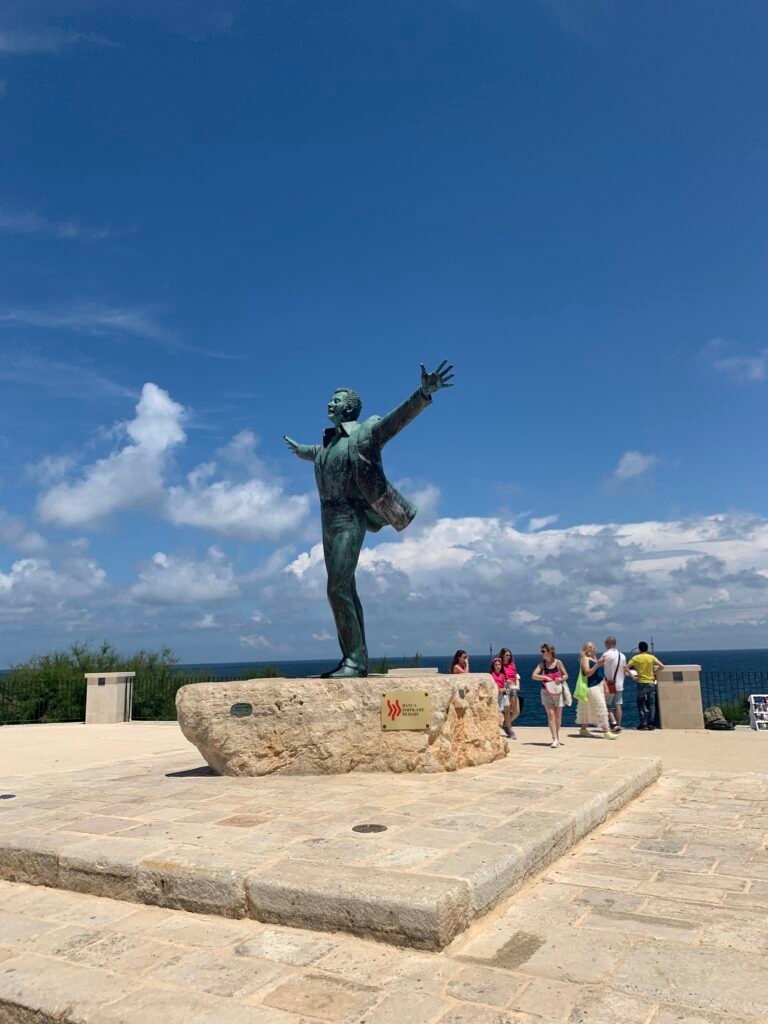
On the way to the Polignano a Mare lookout, you’ll pass by the monument of Domenico Modugno, who is Polignano a Mare’s golden child. He was an Italian singer (among other things) responsible for the Grammy-winning song “Volare.” (Aka “Nel Blu Dipinto di Blu” aka one of the most famous Italian songs in history.) He was born in Polignano a Mare in 1928.
Viewpoint of Grotta Palazzese
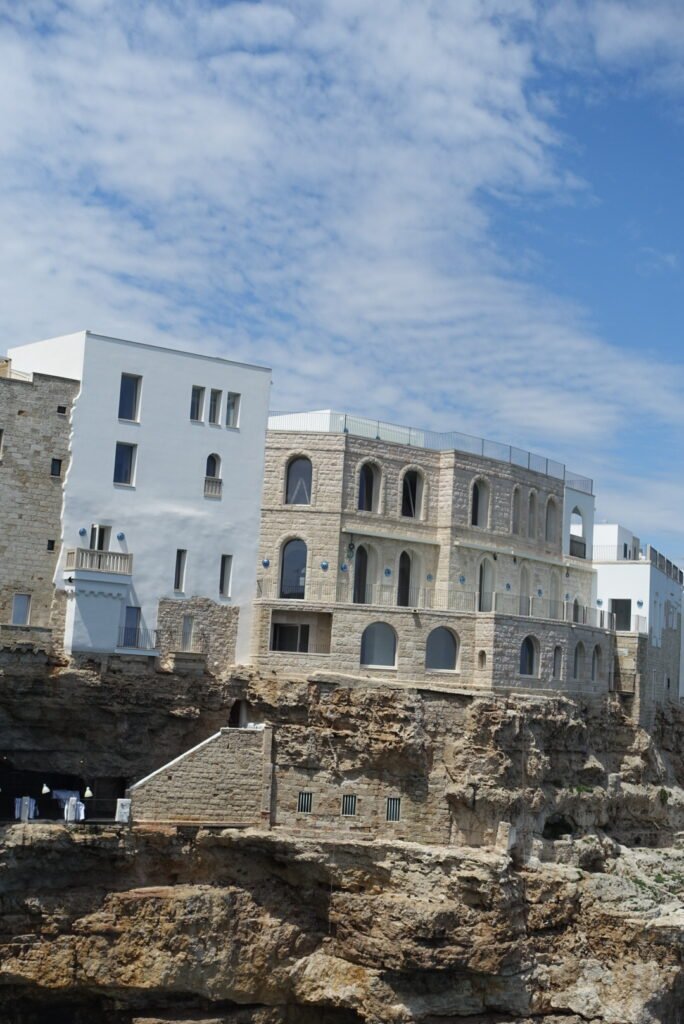
Beyond the main lookouts, there’s a dedicated viewpoint overlooking Grotta Palazzese – the sea cave that houses Polignano a Mare’s most famous (and most expensive) restaurant. Even if you don’t book a table inside the cave itself, the viewpoint lets you appreciate the dramatic setting for free: a restaurant literally built into a natural cavern overlooking the Adriatic Sea.
Grotta Ardito delle Caldaie
This is not a standard lookout but one of those you accidentally find when you wander the lesser visited area of Polignano a Mare. I highly recommend walking along the winding roads along the cliffsides of this cool city.
How to get to Polignano a Mare
Polignano a Mare is well connected, particularly from Bari:
By car: The drive from Bari takes around 30–40 minutes and is the most flexible option if you’re road-tripping around Puglia, though parking near the historic centre is limited.
By train: Trenitalia run routes to Polignano a Mare station from Bari regularly, with the journey taking roughly 30 minutes. From the station, it’s only a 9 minute walk to Lama Monachile Beach.