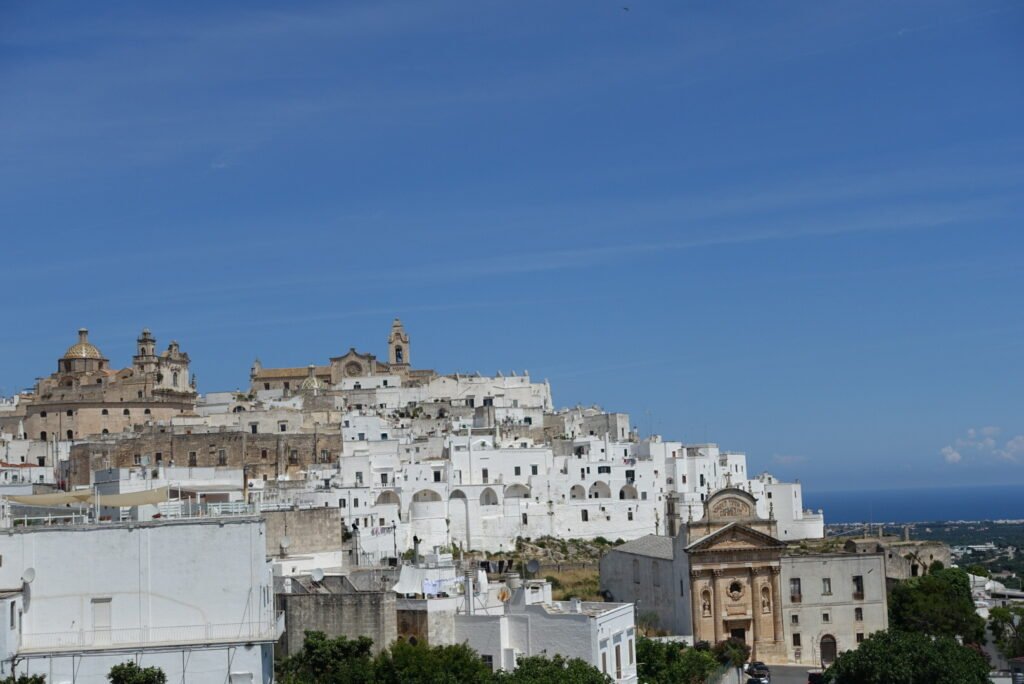
Perched on a hilltop, Ostuni, Italy is one of the most photogenic towns in Puglia. Locals call it La Città Bianca – or the White City – popular for its maze of whitewashed houses, medieval alleys, and sun-bleached staircases.
In this short guide I will tell you where the best photo spots and viewpoints are, how to get there and whether it’s actually worth going.
I visited on a day trip in June 2023 and still think about this cool area and I hope you love it as much as I did.
Is Ostuni Italy worth visiting?
Short answer: yes but with a caveat. Ostuni is consistently ranked among Puglia’s must-see towns, and it’s become especially popular on social media for its whitewashed alleys, stone archways, cave-carved restaurants, and picturesque blue doors. Add a 15th-century Gothic cathedral, a lively main piazza, olive groves that run all the way to the coast, and a strong regional food scene, and it’s easy to see why so many travelers name Ostuni as a highlight of their Puglia itinerary.
However, to be honest, what most bloggers leave out is that the old town is also a lot of stairs, a fair number of not-so-picturesque whitewashed buildings mixed in among the postcard-perfect ones, and – especially in the busiest stretches near the cathedral – its share of tourist traps. It’s still worth visiting. Just go in expecting a real, lived-in hill town with some rough edges, not a flawless Instagram set.
I based myself in Monopoli while exploring Puglia, and though you could choose to stay in Ostuni, I was happy to only visit for a daytrip.
Ostuni Italy map
Ostuni Italy sits on a low hill in the province of Brindisi about 9km from the coast, an hour’s car ride south from Bari and an hour’s car ride north from Lecce (so about in the middle of “the heel” of Italy.
Getting oriented on foot is fairly simple once you know the basic shape of the town:
- Piazza della Libertà sits at the edge of the old town and is the natural starting point — it’s where the Obelisco di Sant’Oronzo stands, and where most walking routes into the centro storico begin.
- From there, the streets climb uphill toward the Concattedrale di Santa Maria Assunta, which sits almost at the top.
- The ancient city walls ring the outer edge of the old town and are the best place to find open viewpoints over the olive groves and, on clear days, the coastline.
- The train station and most parking areas sit outside the historic center.
Wander the winding streets of Ostuni Italy
The single best thing to do in Ostuni is also the simplest: get lost in it. The old town was never built to a formal plan, so the streets form an irregular maze of narrow alleys, dead ends, hidden courtyards, and staircases that double as passageways between houses stacked on top of one another. Whitewashed walls, flowerpots, cacti, and the occasional parked Vespa give nearly every corner a postcard quality, which is part of why the town is such a favorite with photographers.
A popular (though unverified) piece of local lore holds that the tradition of whitewashing the houses began centuries ago as a plague-prevention measure using limewash, and that the practice stuck even after the health benefit was no longer the point — it’s now simply part of the town’s identity. If you’d like some historical context while you walk, a guided walking tour of the old town is a good way to spend a morning before the afternoon crowds arrive. If you’re visiting on a Saturday, the local market is also worth timing your walk around.
Popular photo spots in Ostuni Italy
Beyond the general charm of the streets, a handful of specific landmarks come up again and again as the most-photographed spots in Ostuni Italy (and this wouldn’t be a real blog post without mentioning them).
Arco Scoppa
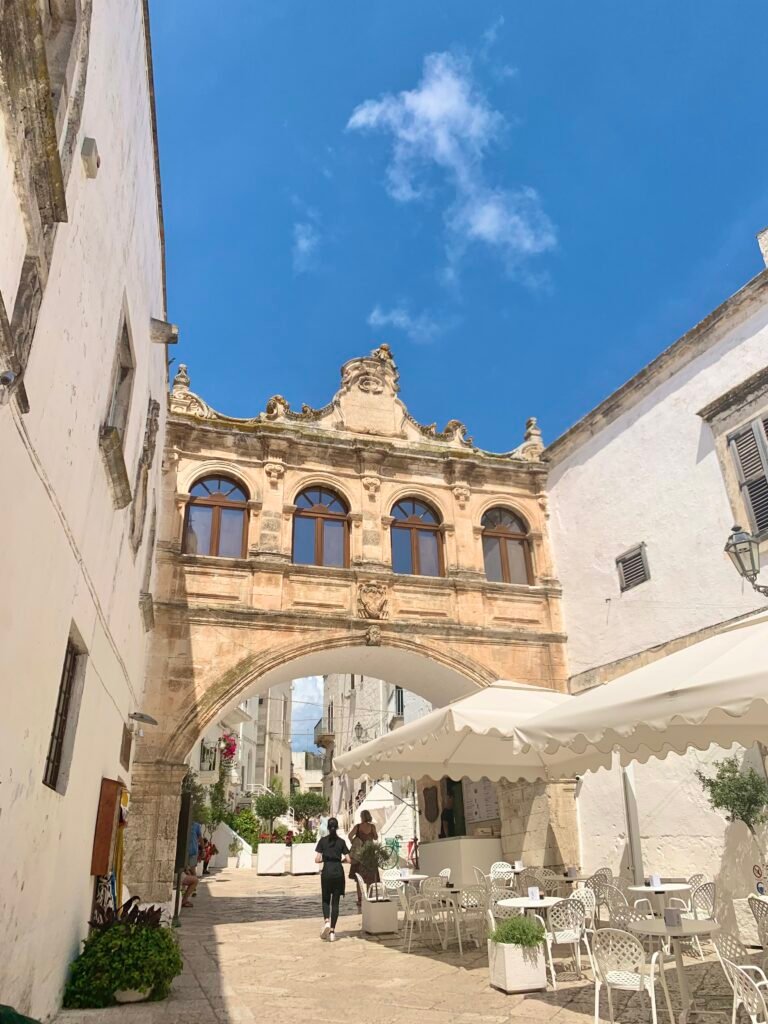
Arco Scoppa is a stone archway that once connected the Bishop’s Palace (Palazzo Vescovile) to the seminary building, allowing clergy to pass between the two without stepping into the street. Located on the small piazza just in front of the cathedral, it’s one of the most recognizable and frequently photographed structures in Ostuni Italy – an elegant, narrow stone bridge framing the whitewashed buildings and cafés below it.
Concattedrale di Santa Maria Assunta (Ostuni Italy Cathedral)
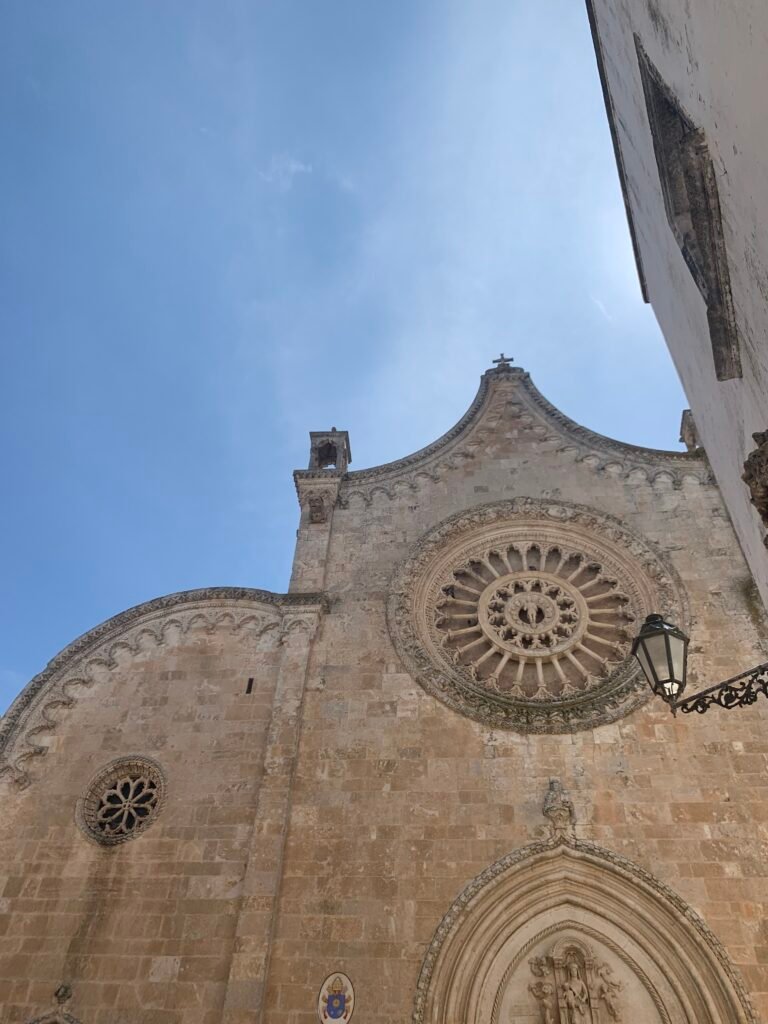
Ostuni’s cathedral, the Concattedrale di Santa Maria Assunta, sits at the highest point of the old town and dates to the 15th century. It’s built in a Gothic style, which is relatively unusual for a region where Romanesque and Baroque architecture are more common.
The Cathedral of Ostuni is free to visit and open daily from 10am to 12pm and again from 3-6pm.
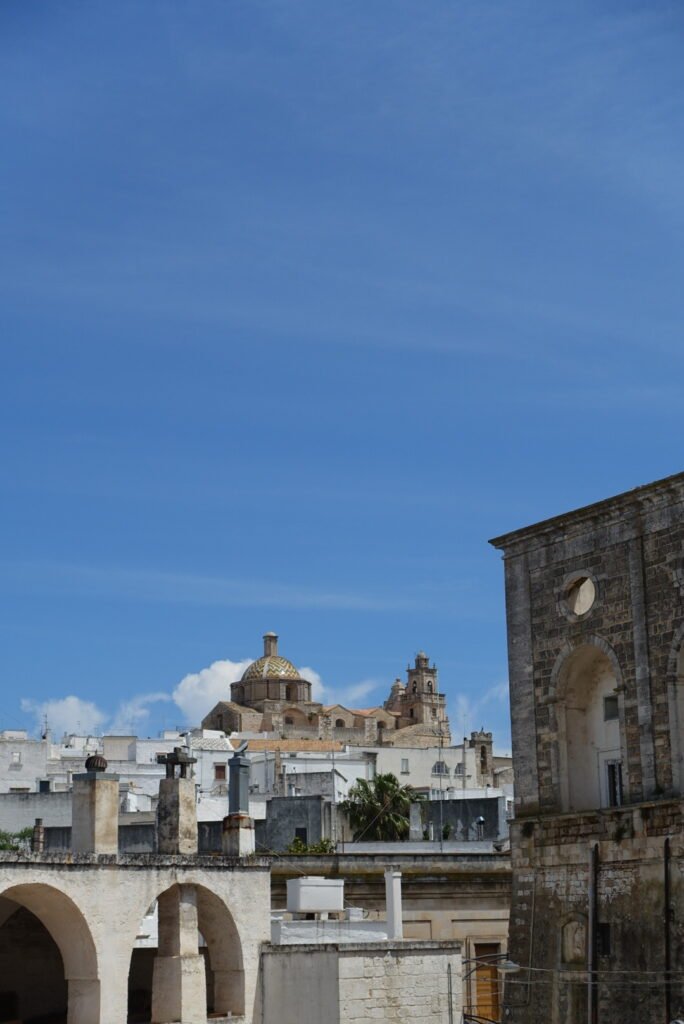
If you go a little past the “typical” route and happen to pass by “Via Cesare Battisti” you’ll get a cool view of the Cathedral and it’s cupola.
Church of Saint Vito the Martyr
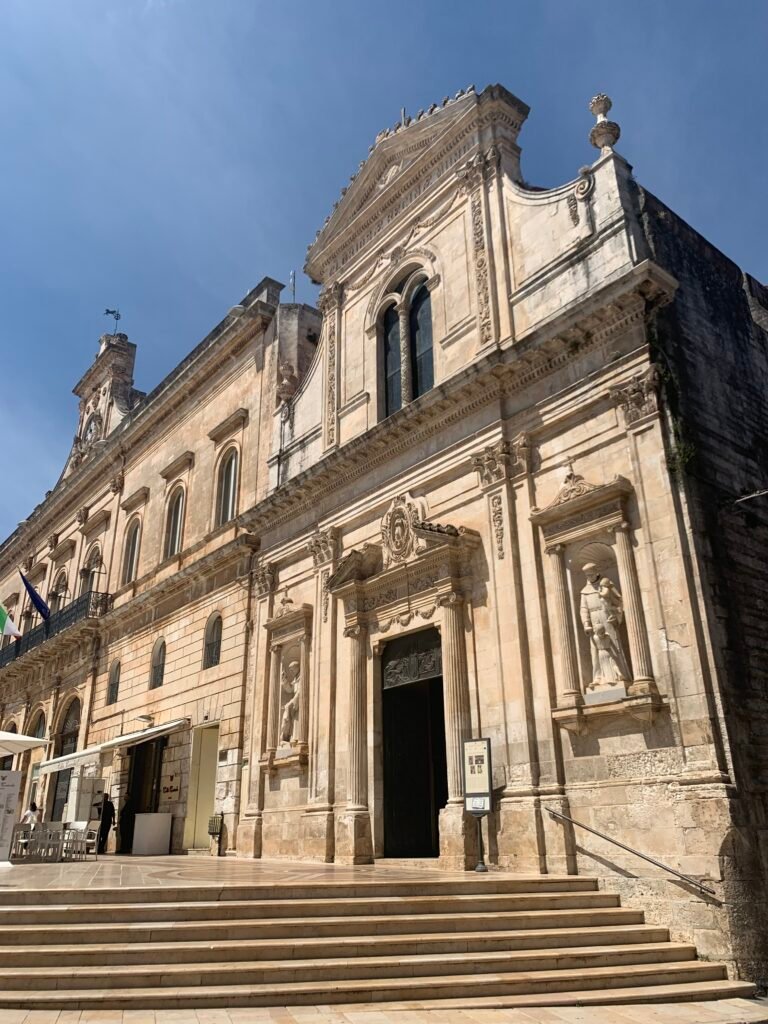
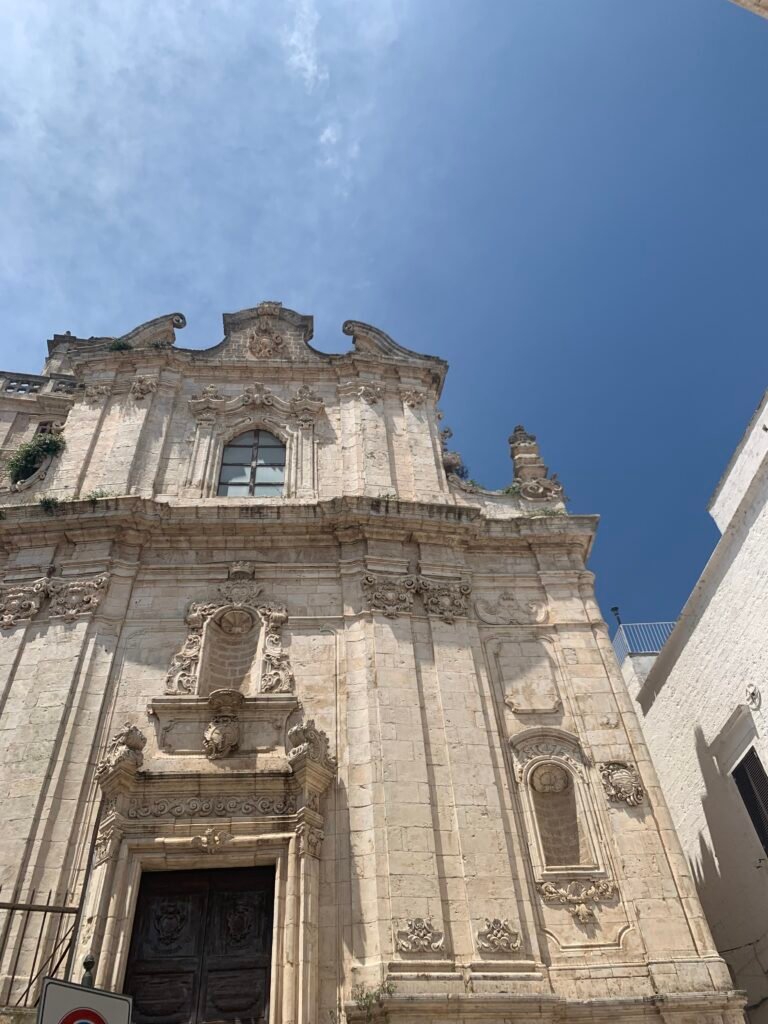
The Chiesa di San Vito Martire is a smaller but architecturally significant stop along the route to the cathedral. It’s worth a quick stop both for the building itself and for a change of pace from Ostuni’s usual mix of piazzas and viewpoints.
Note: opening hours are limited and can’t be found online, so don’t expect to be able to enter the church.
Obelisco del Santo Patrono Ostuni Italy
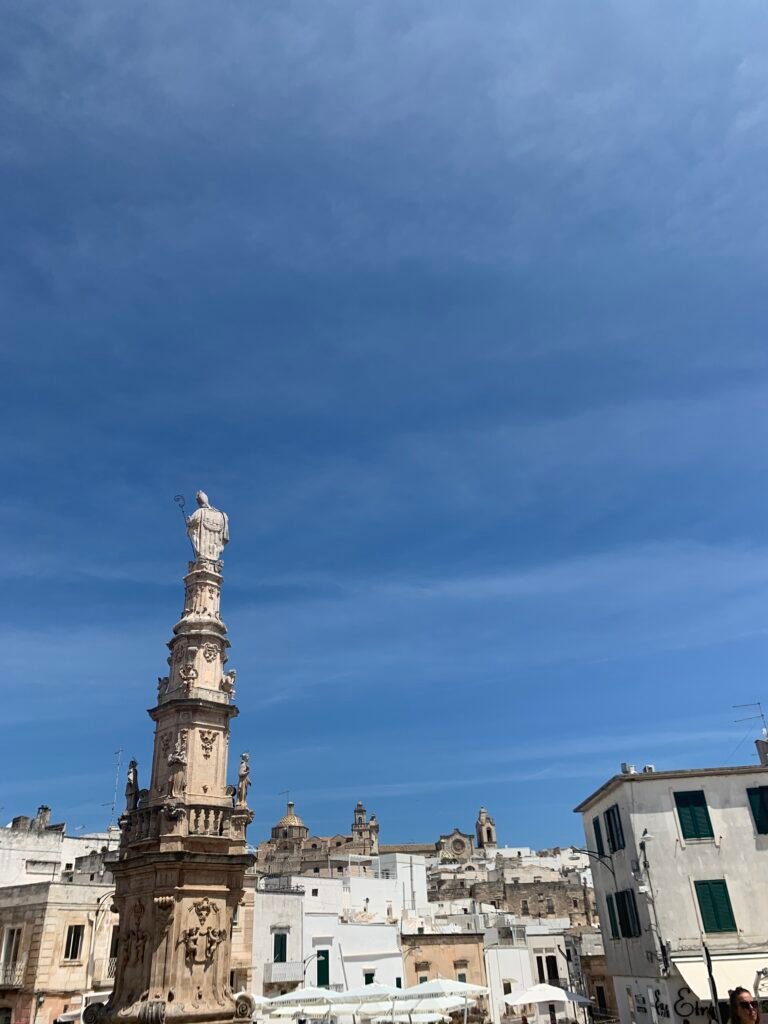
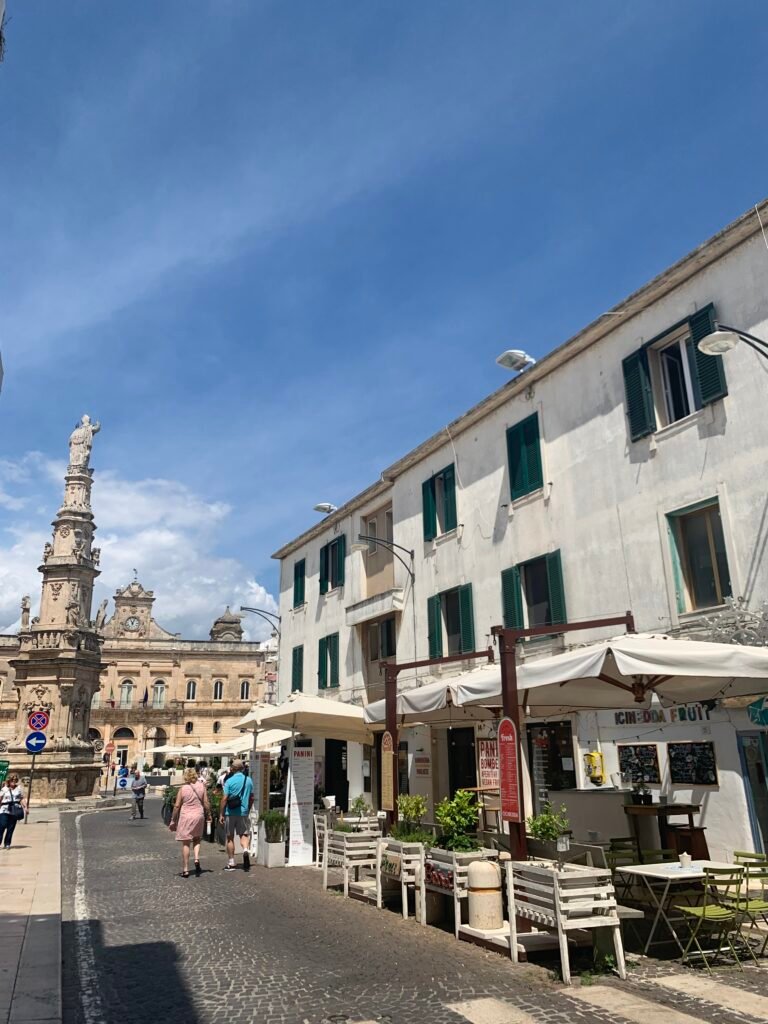
In the center of the main square of the old city, Piazza della Libertà, stands the Obelisco di Sant’Oronzo (also called the Colonna), a roughly 20-meter Baroque column dedicated to Saint Oronzo, Ostuni’s patron saint. It was sculpted in 1771 by a local artist and often seen as the visual centerpiece of Ostuni Italy.
Viewpoints of Ostuni Italy
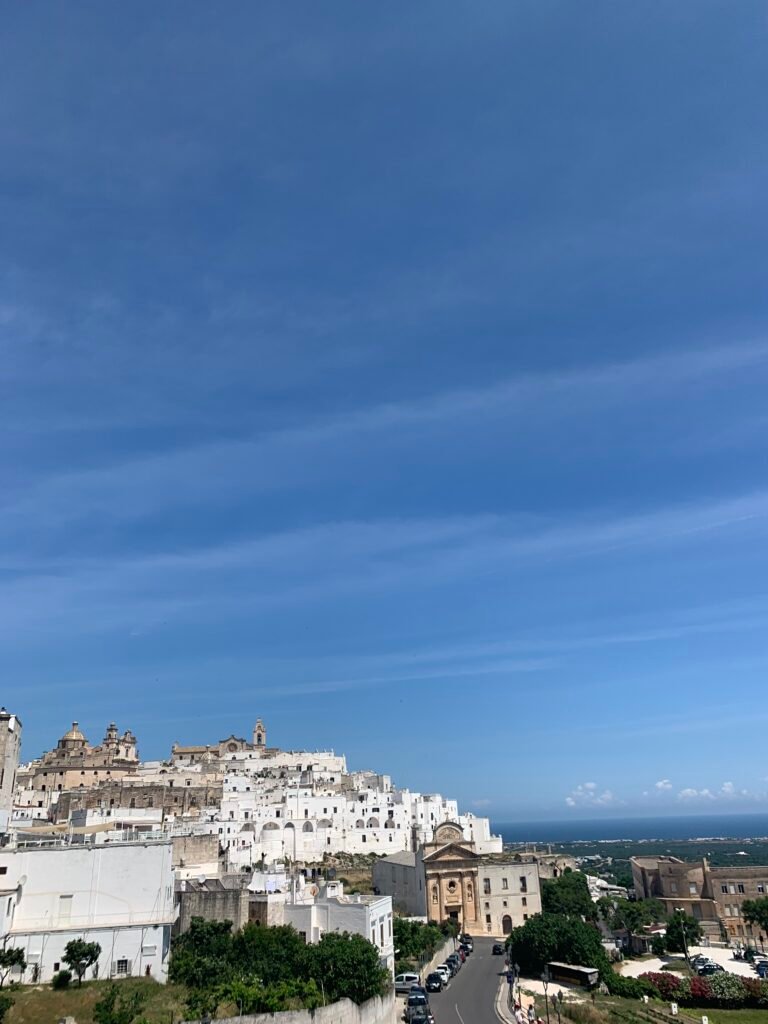
Because Ostuni sits on a hilltop, several spots around the edges of the old town open up onto stunning views across the olive-grove countryside toward the Adriatic Sea but most people are more interested in getting a good viewpoint of the white city itself.
Along the ancient city walls that ring the historic center, there are several informal lookout points. These wall-side viewpoints are less crowded than the town’s more famous overlook and offer a quieter perspective on Ostuni’s layered, hilltop architecture – so I encourage you to just wander around and find your own spot.
Aussichtspunkt Ostuni Altstadt
About 250m from the Obelisco del Santo Patrono, is the viewpoint of Ostuni that I liked the most. You can also try putting in “Point to View Storico Centro” or the coordinates 40.73128, 17.58029.
Osteria del Tempo Perso
While primarily known as a restaurant rather than a formal viewpoint, Osteria del Tempo Perso deserves a mention here as it has an outdoor seating area on stairs looking out over the surrounding area of the olive-grove countryside.
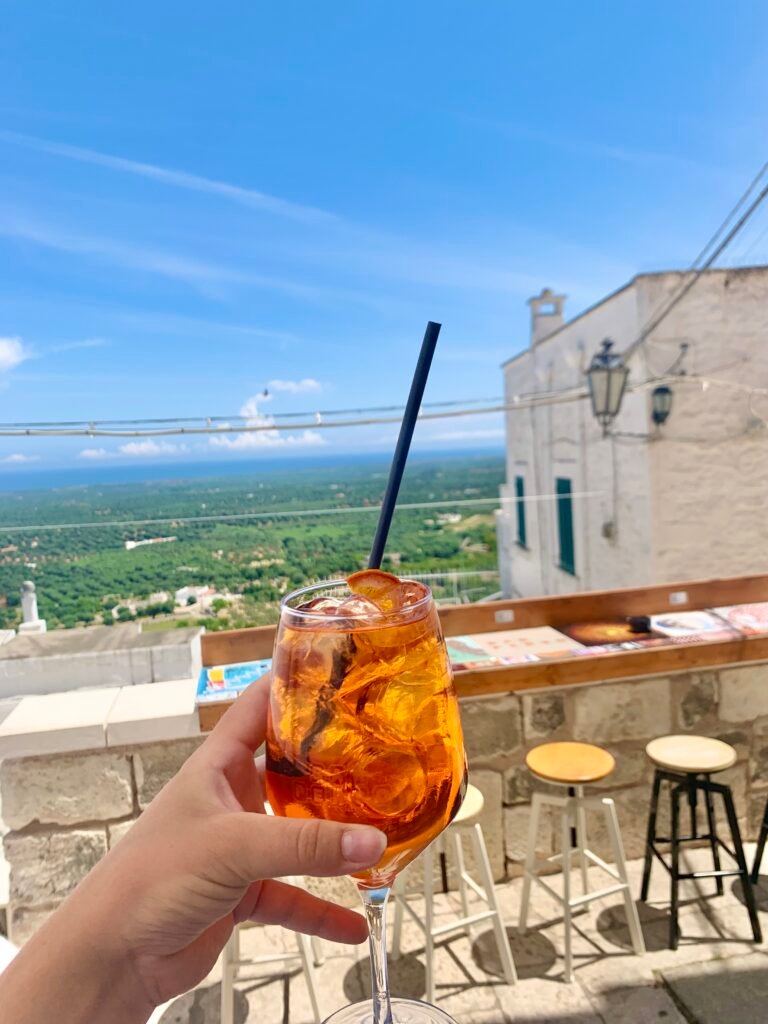
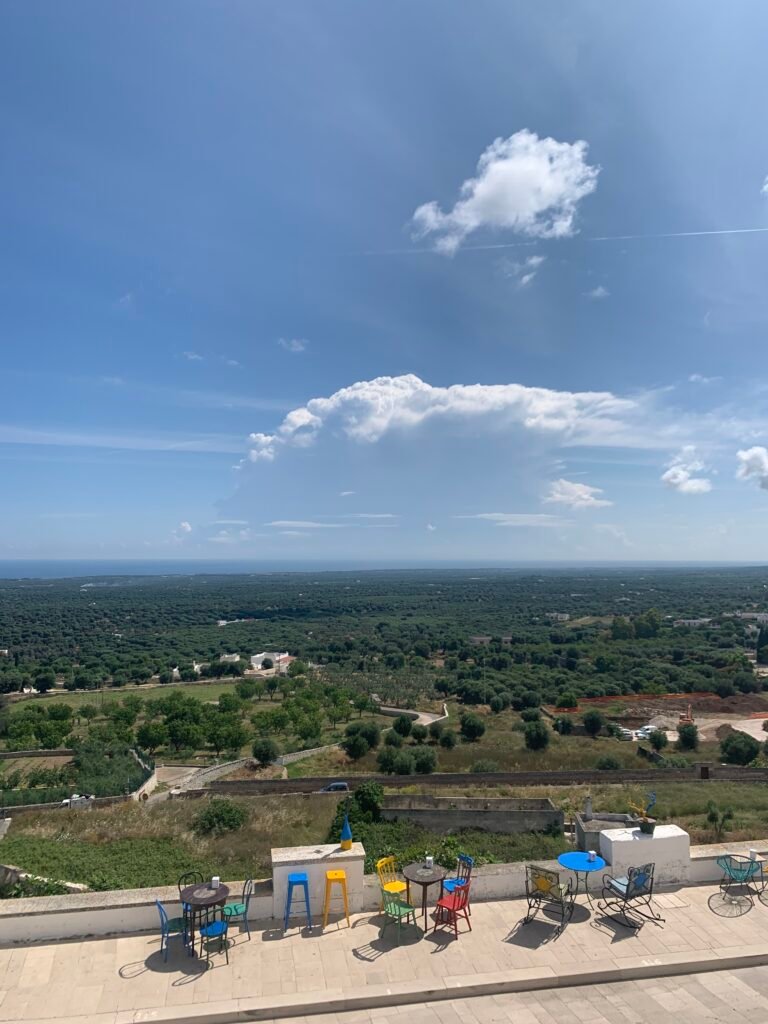
From the street
This is not an actual point on a map, but if you come to Ostuni by foot from the train station, you’ll get some cool views of the old city from “below” / street level. The spot I used to take a photo from have the coordinates: 40.73634, 17.57811
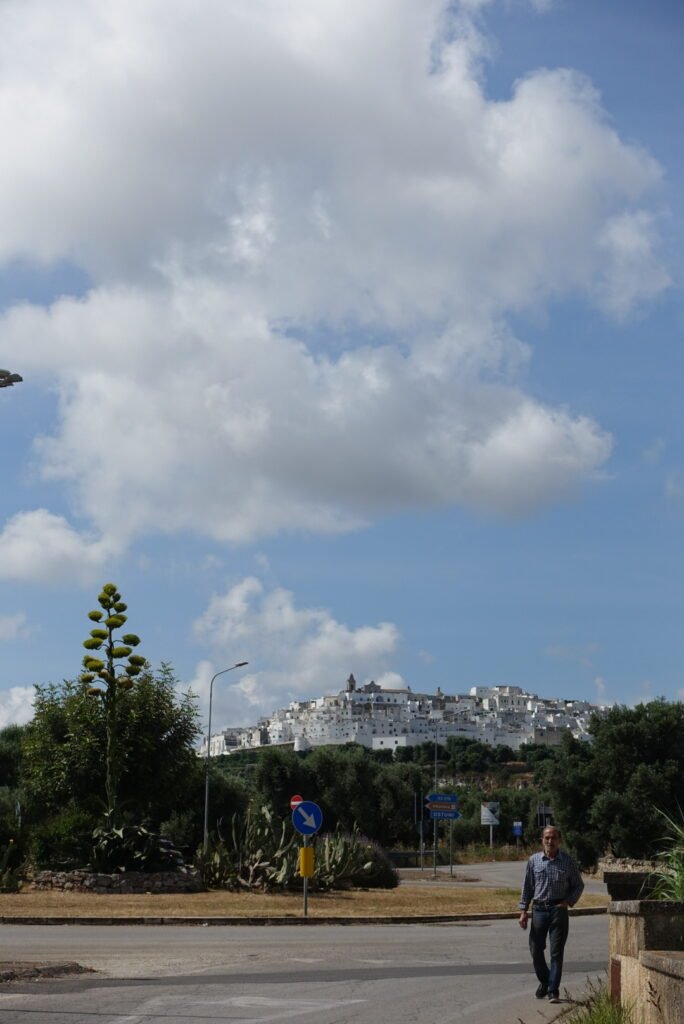
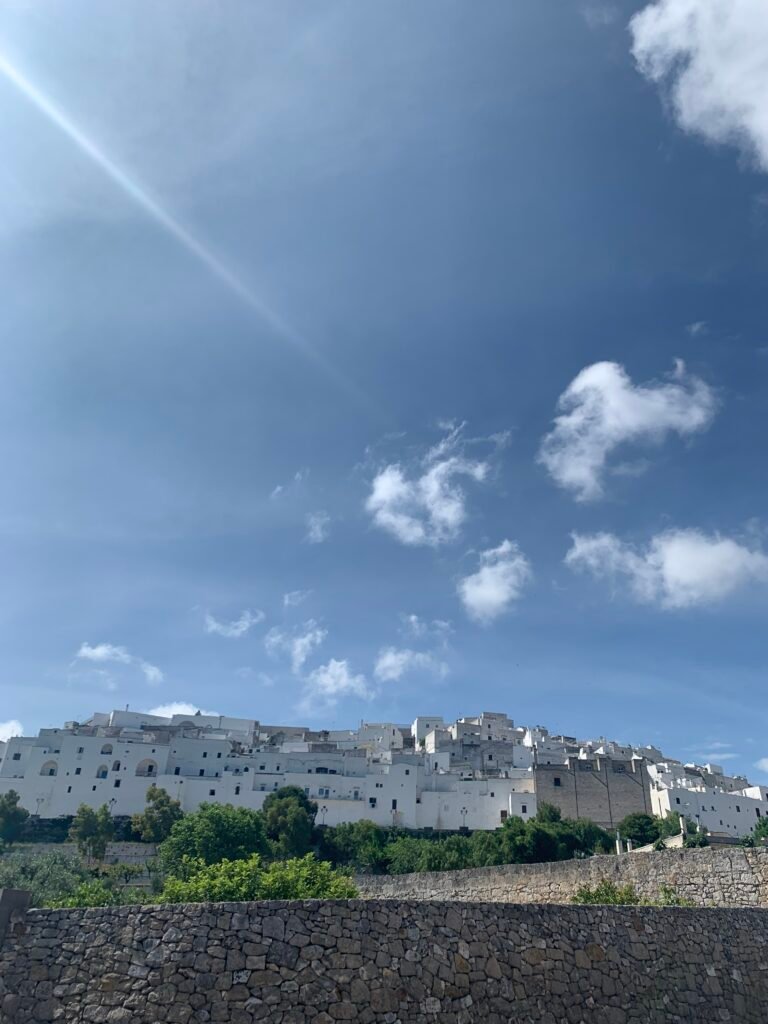
How to get to Ostuni Italy
By car: Renting a car is the most commonly recommended way to explore the wider Puglia region. However, keep in mind that Ostuni’s historic center has a ZTL (a restricted traffic zone common in protected Italian cities), so you’ll need to park outside the area and walk in.
By train: Ostuni has a train station 3 kilometers outside the historic town center, with connections to Bari, Brindisi, and Lecce. From the station, a taxi or local bus will take you up to the historic center. Or you can just walk, like I did, and explore the area on foot – it’s about a 40 minute walk mostly on the side of the road.
Getting around once you’re there: The old town itself is compact and best explored entirely on foot – but as I started the post explaining – you should expect steep, uneven cobblestones and plenty of stairs, so comfortable shoes matter. For a quicker, guided overview, tuk-tuk (ape) tours are a popular way to see the town’s main sights in about 45 minutes to an hour.