Romeo and Juliet put Verona Italy on the map, but trust me: this city has far more going for it than a fictional balcony.
With Roman ruins around every corner, some of the most stunning medieval architecture in all of Italy, and a food and wine scene that punches well above its weight, Verona Italy is one of those rare cities that genuinely surpasses expectations.
Whether you’re planning a weekend stopover or a longer stay, this guide covers what you need to know: main things to see, where to eat, and why this UNESCO World Heritage Site deserves a permanent spot on your Italian itinerary.
Verona Italy map
Verona sits in the Veneto region of northern Italy, roughly halfway between Milan and Venice. Verona’s old city is compact, mostly flat, and almost entirely pedestrianised, which means you can realistically cover the main sights on foot without ever needing a bus or taxi. The historic centre sits inside a wide loop of the Adige River, which curves around the city.
Getting to Verona: Verona has its own airport (Valerio Catullo), well connected to major European cities. Alternatively, the city is just over an hour by train from both Venice and Milan. The central train station, Porta Nuova station, is about a 20-minute walk from the historic centre.
Best time to visit: Spring (April–May) and early autumn (September–October) offer the best balance of good weather and manageable crowds. Summer is peak season, but if you do visit then, start early and take lots of cold-drink-fuelled breaks.
Who are the Della Scala Family?
You can’t visit Verona without knowing at least a little bit about the Della Scala Family. This family (also known as the Scaligeri or Scaligers) are one of the most fascinating dynasties of medieval Italy, and their fingerprints are all over Verona. Here’s a quick overview:
The House of Della Scala ruled Verona and mainland Veneto (except Venice) from 1262 to 1387 – a total of 125 years. They started out as ordinary merchants before seizing political control of the city, and went on to become one of the most powerful families in northern Italy.
Virtually every major medieval landmark in Verona was either built by them or built because of them. During their rule, Verona experienced a period of great prosperity and cultural development, and their influence can be seen in the city’s architecture and culture to this day.
The name Scaliger, or in Italian della Scala, means “of the stairs.” Ladders were incorporated into the family’s iron grillwork, their coat of arms, and their tombs. Today that ladder symbol appears everywhere in Verona – on buildings, flags and even the badge of Hellas Verona football club.
The dynasty eventually collapsed through a mix of overexpansion, enemies on all sides, and – in true medieval fashion – brothers murdering brothers.
The Romeo & Juliet Connection
The family also provides the historical backdrop for the tragedy of Romeo and Juliet. Under Bartolomeo della Scala (d. 1304), Romeo Montague and Juliet Capulet are said to have loved and died, according to the legend that eventually became Shakespeare’s play. The rival Montecchi and Cappelletti families were real Veronese factions of the era, and their feuding took place during the Scaligeri rule. Regardless of whether Romeo and Juliet is based on a true story or not, Shakespeare’s famous love story was set in Verona and adds to the city’s reputation as one of the most romantic cities in Italy.
Things to do in Verona Italy
If you plan on sightseeing, it’s worth picking up the Verona Card. The card gives you free or discounted entry to the city’s major museums and monuments, including the Verona Arena, Torre dei Lamberti, Castelvecchio Museum as well as public transport. It comes in 24-hour and 48-hour versions, so you can tailor it to your trip.
Personally, I booked a city tour with Guru Walks, which was such an amazing tour (sadly my guide no longer offers tours, but there’s still some other good options).
Duomo of Verona Italy (Verona Cathedral)
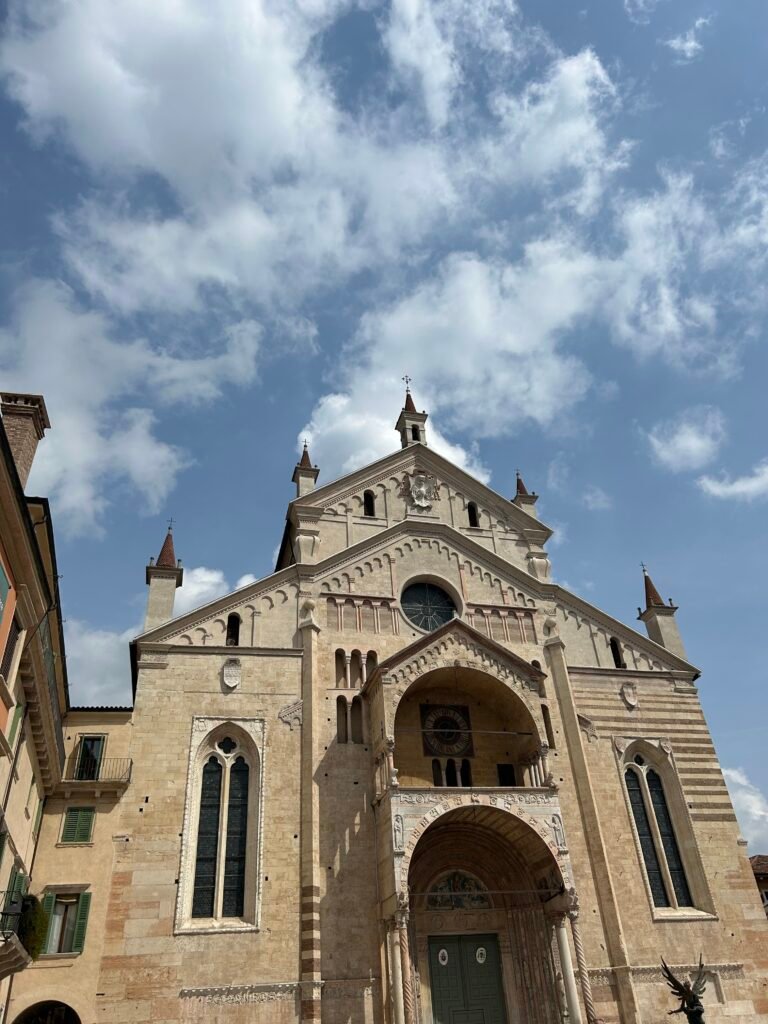
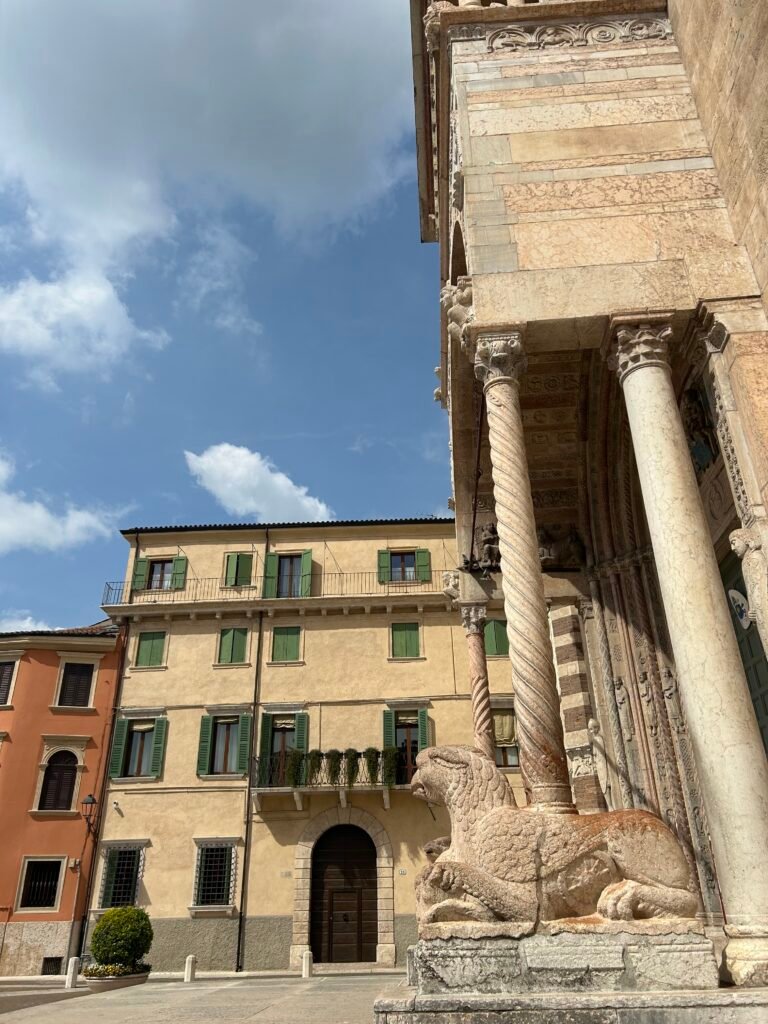
Officially known as the Cattedrale di Santa Maria Matricolare, the Duomo of Verona is tucked down a relatively quiet side street near the river, which means many visitors walk straight past it.
The cathedral dates back to the 12th centuryand blends Romanesque and Gothic architecture in a way that feels uniquely Veronese.
Viewpoint Castel San Pietro
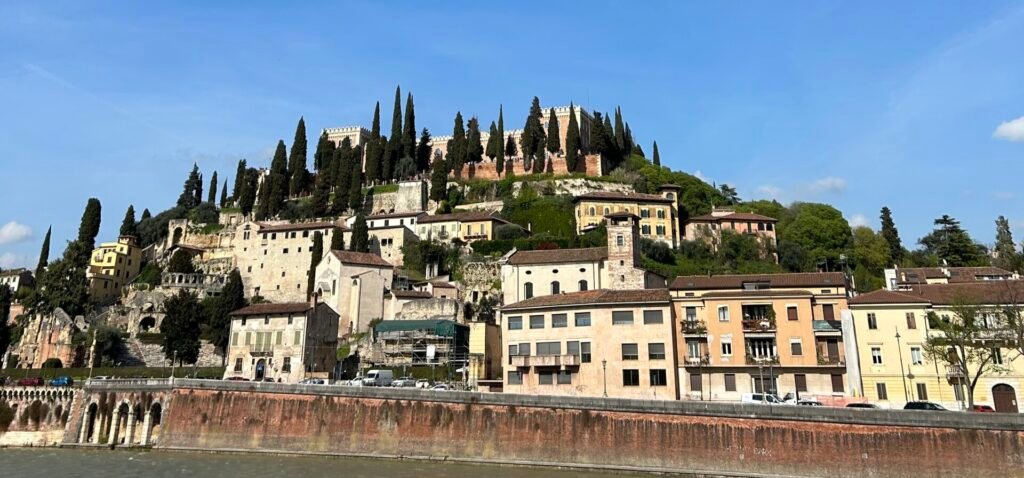
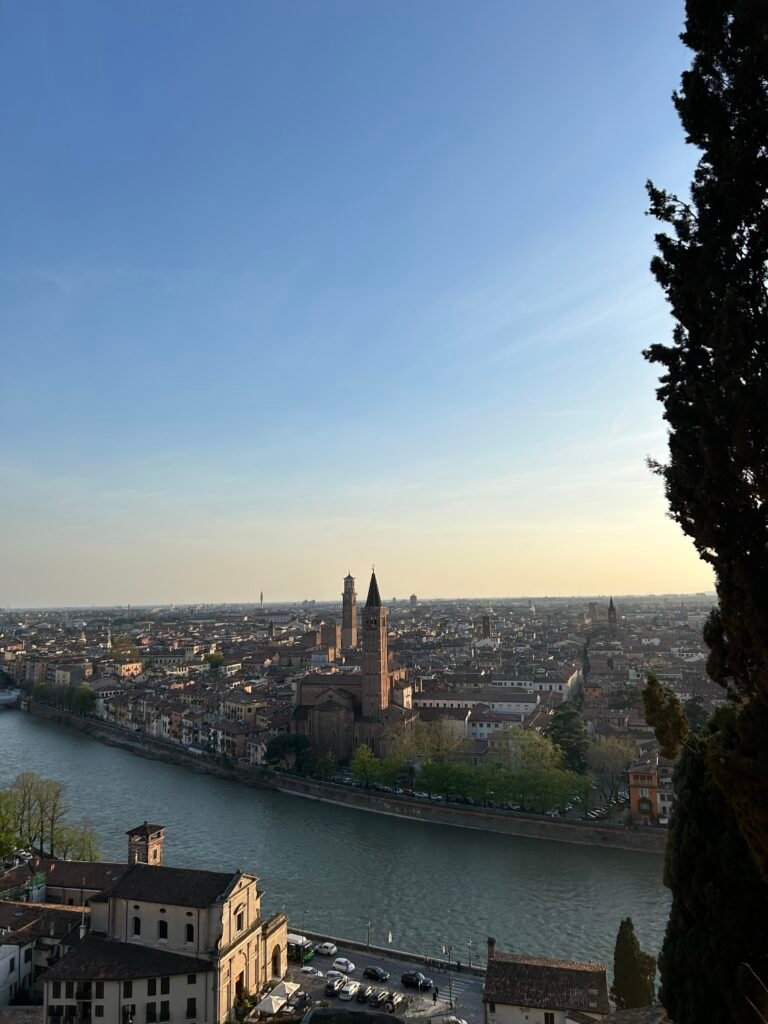
If you do one thing in Verona Italy, make it the climb up to Piazzale Castel San Pietro for sunset. Located on a hill on the far bank of the Adige, accessed via a short walk across one of the city’s ancient bridges, this hilltop viewpoint offers the single best panorama of Verona.
There are two ways up: you can climb the pine-lined path on foot (not too strenuous, maybe 10–15 minutes), or take the funicular, which is €3 for a roundtrip.
The buildings of Castel San Pietro itself are currently closed for restoration, but the viewing terraces are open and that’s really what you’re here for. Go about an hour before sunset. Bring wine. Bring snacks. You’ll want to stay longer than you planned.
Ponte Pietra, Verona Italy
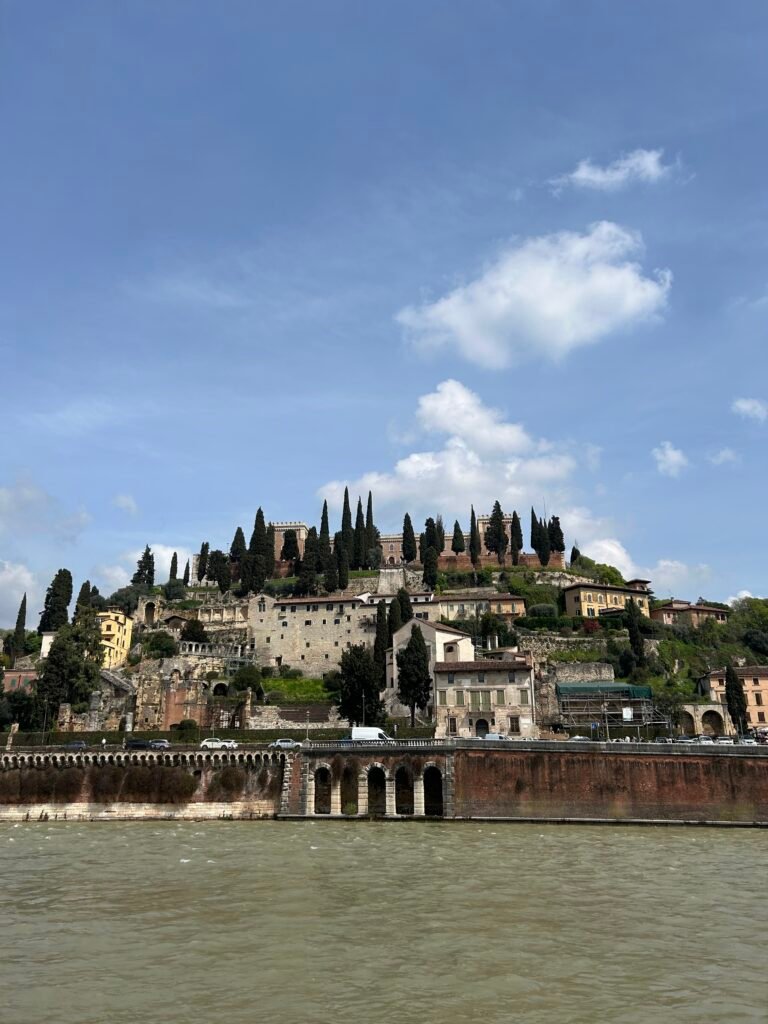
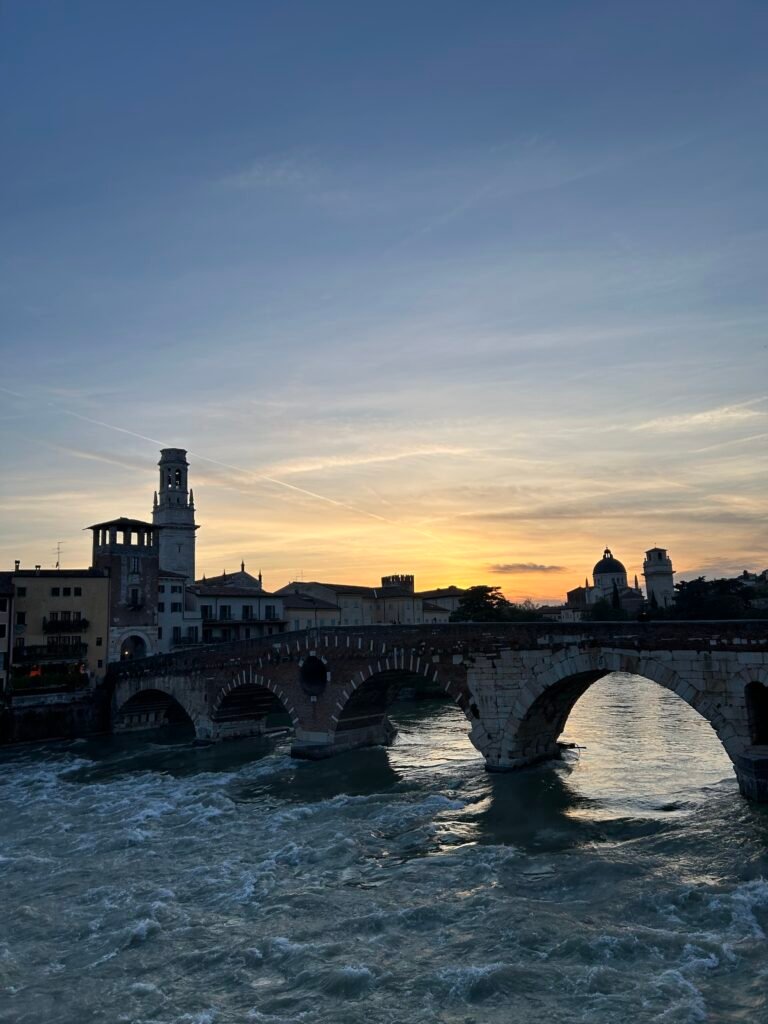
Dating back to 100 BC, the Ponte Pietra is the oldest bridge in Verona, and one of the oldest Roman bridges still standing in the world.
Like the Castelvecchio Bridge nearby, it was blown up by retreating German forces in 1945 to slow the Allied advance. After the war, the people of Verona painstakingly recovered the original stone from the riverbed and rebuilt the bridge to its original design — the white sections are the surviving Roman arches; the darker stone is the reconstruction.
Piazza Delle Erbe
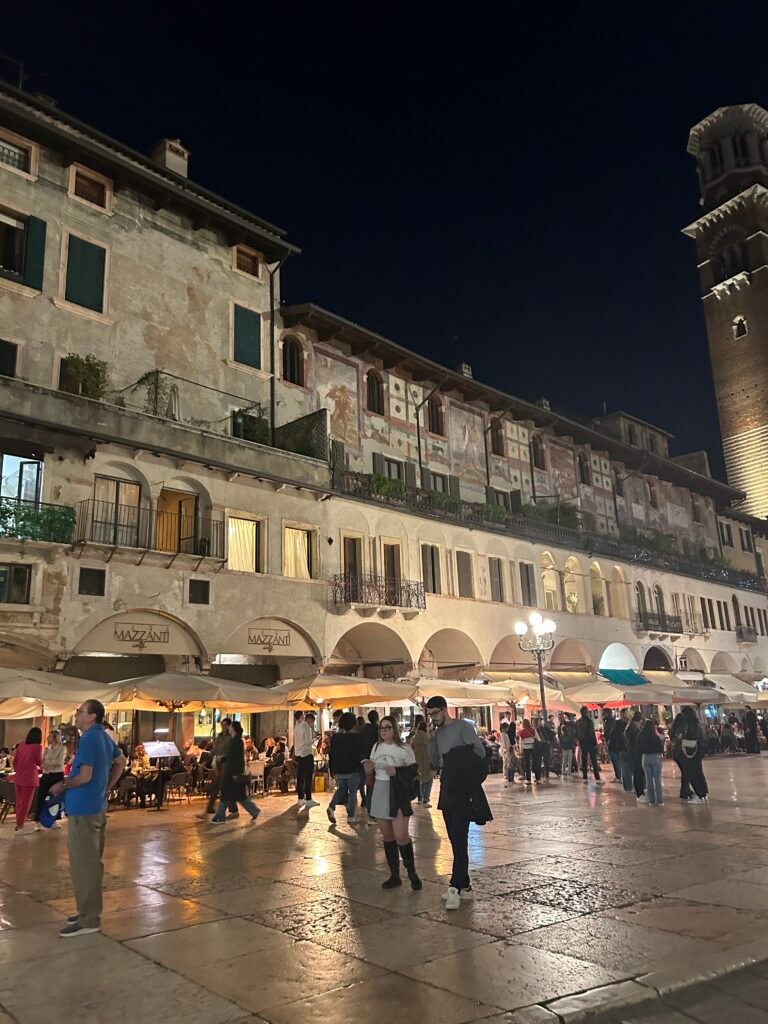
This is the oldest square in the city, built on top of the ancient Roman forum. By day it hosts an open-air market selling everything from fresh produce to tourist souvenirs; by evening it fills with locals and visitors alike spilling out of the surrounding bars and restaurants.
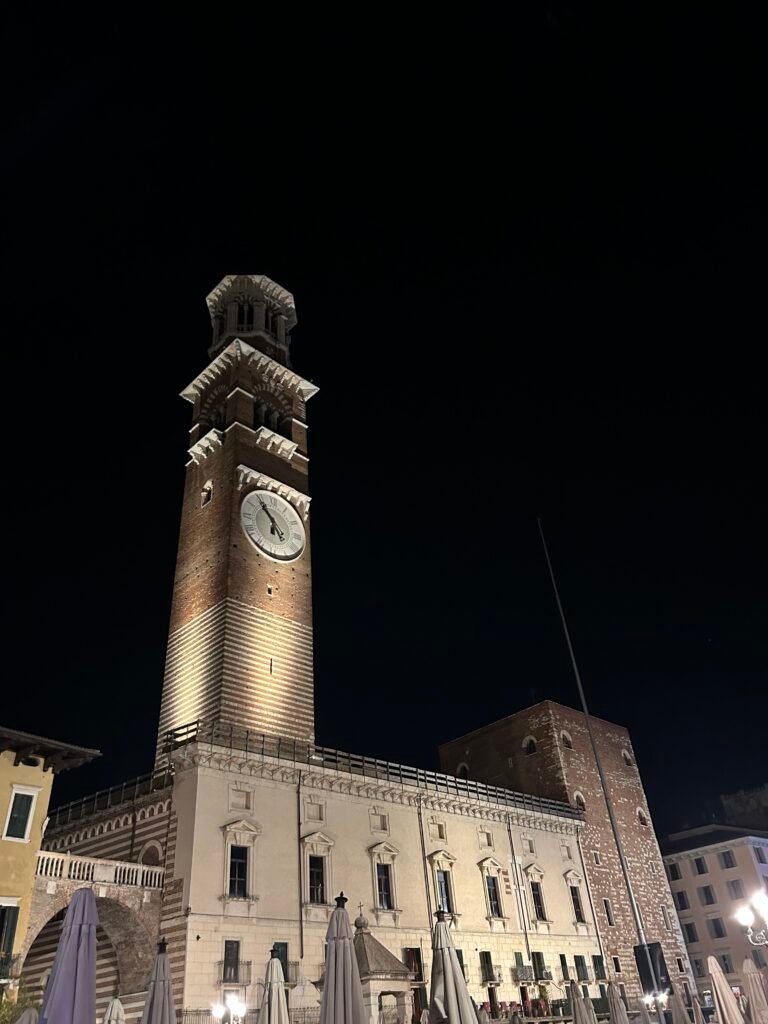
The square is ringed by palaces and medieval towers, and the whole thing glows magnificently at night. Look up and you’ll spot the Torre dei Lamberti. You can climb it – or take the elevator – for €6 (included in the Verona Card) to get extraordinary panoramic views over the rooftops of Verona.
Juliet’s House Verona Italy (Casa di Giulietta)
Yes, it’s touristy. Yes, the entire premise is fictional. And yes, you should still go.
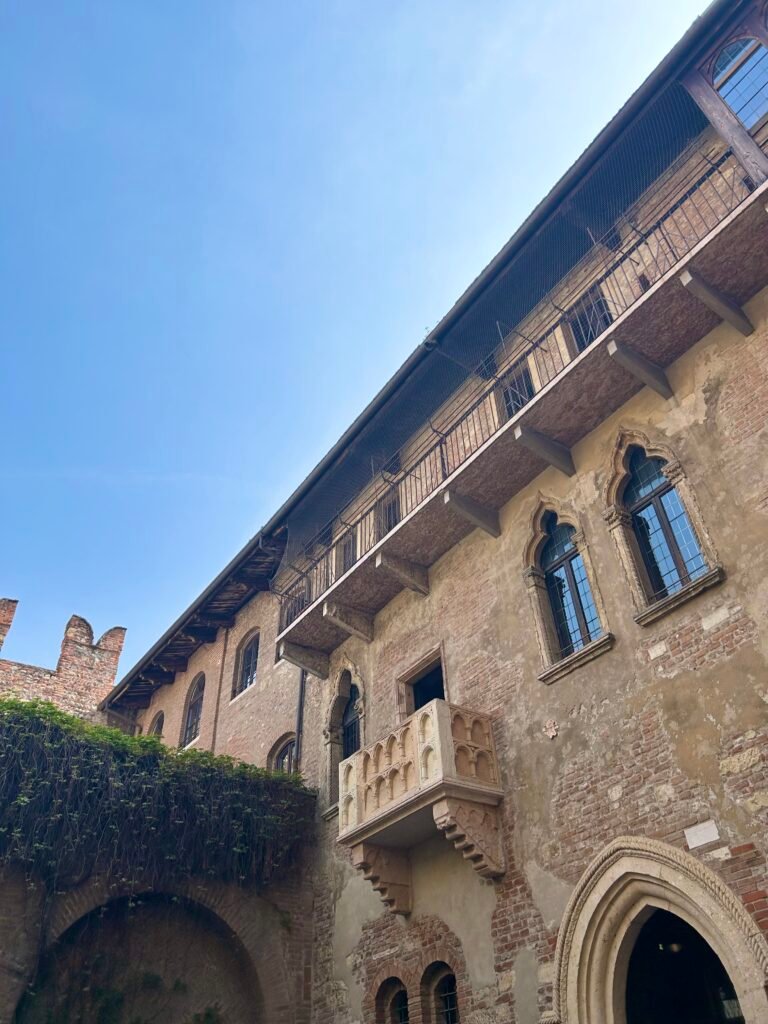
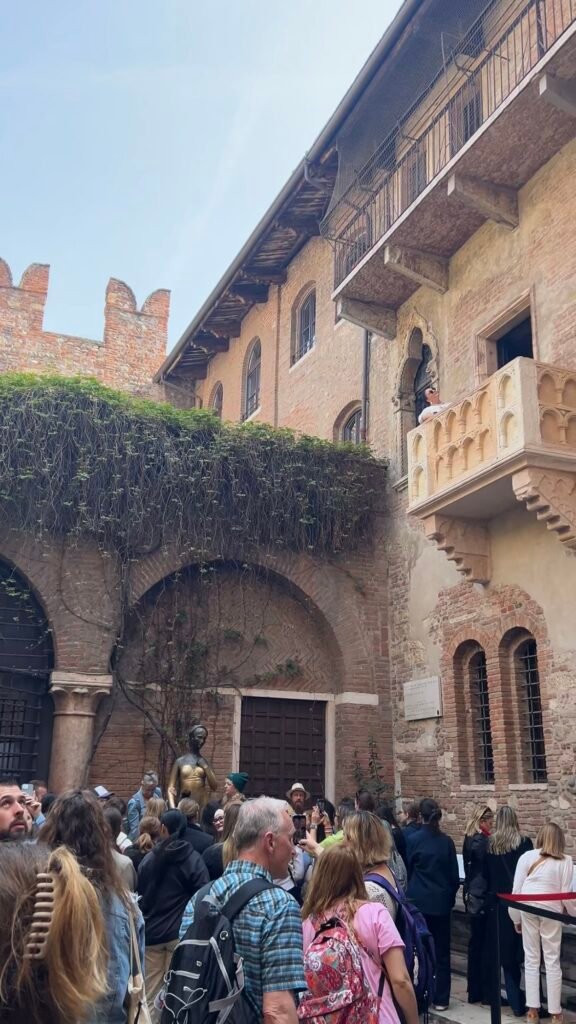
Casa di Giulietta is the medieval home associated with Shakespeare’s Juliet from the unmistakable love story of Romeo and Juliet. The courtyard outside is free to enter, but it’s always busy, particularly when tour groups arrive. However, visiting the house requires a ticket. A visit is included in the Verona Card or you can get a single ticket here.
Pro tip: Visit early morning before the tour groups arrive. The courtyard is a completely different, far more peaceful experience at 8am than at noon.
Castelvecchio Verona Italy
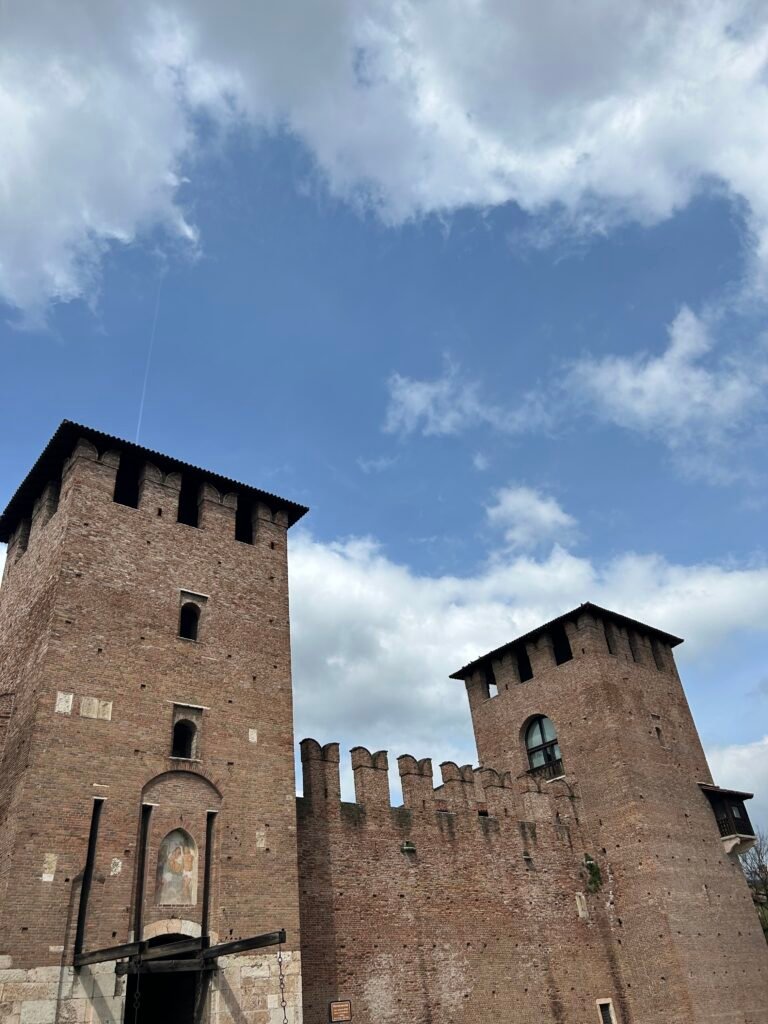
If the Scaligeri left one monument that sums up their power, paranoia, and architectural ambition all at once, it’s Castelvecchio. This great red-brick fortress that sits on the bank of the Adige in the western part of the old city was initiated by the Scaligeri family in 1354, at a moment where rulers from Venice and Milan posed serious threats to Verona. The castle served as a military base, a residence, and, crucially, an escape hatch. The fortified bridge running alongside it (Ponte di Castelvecchio, also called Ponte Scaligero) was built by the ruling della Scala family so they could flee should their empire crumble
Today, Castelvecchio houses one of the finest art museums in the Veneto region.
Arco dei Gavi
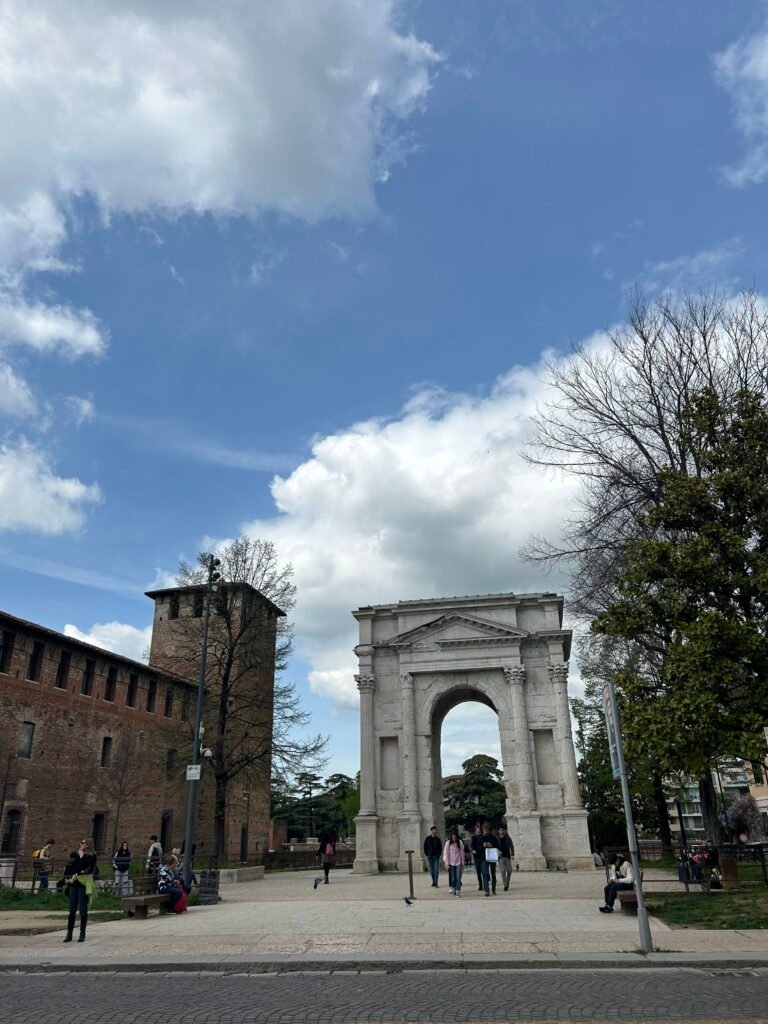
Just steps from the famous Castelvecchio museum is a remarkably well-preserved Roman triumphal arch standing in front of you. It was originally positioned elsewhere in the city as it served as a gate on the old Roman road (you can still see the wheel marks in the stone under the arch from horsecarriers).
It’s not somewhere you need to spend a lot of time, but take a moment to appreciate the history. A first-century Roman arch standing beside a 14th-century castle, in a city people still live and work in today. Verona is full of gems like this, which is why it’s such a special city.
Arena di Verona Italy
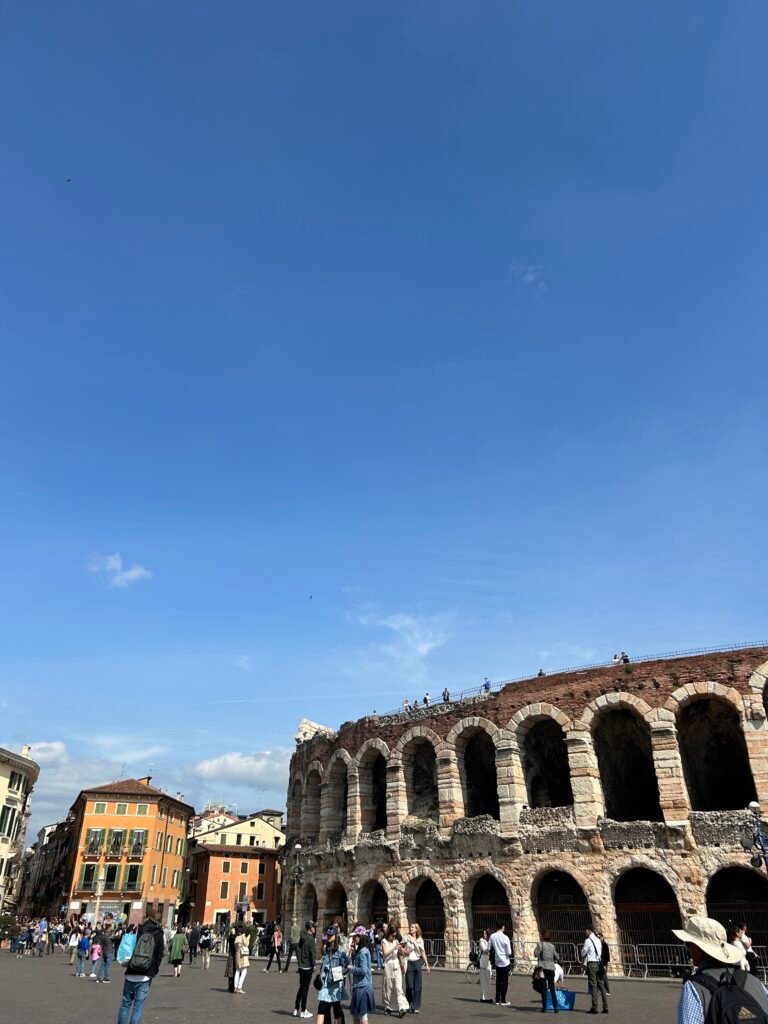
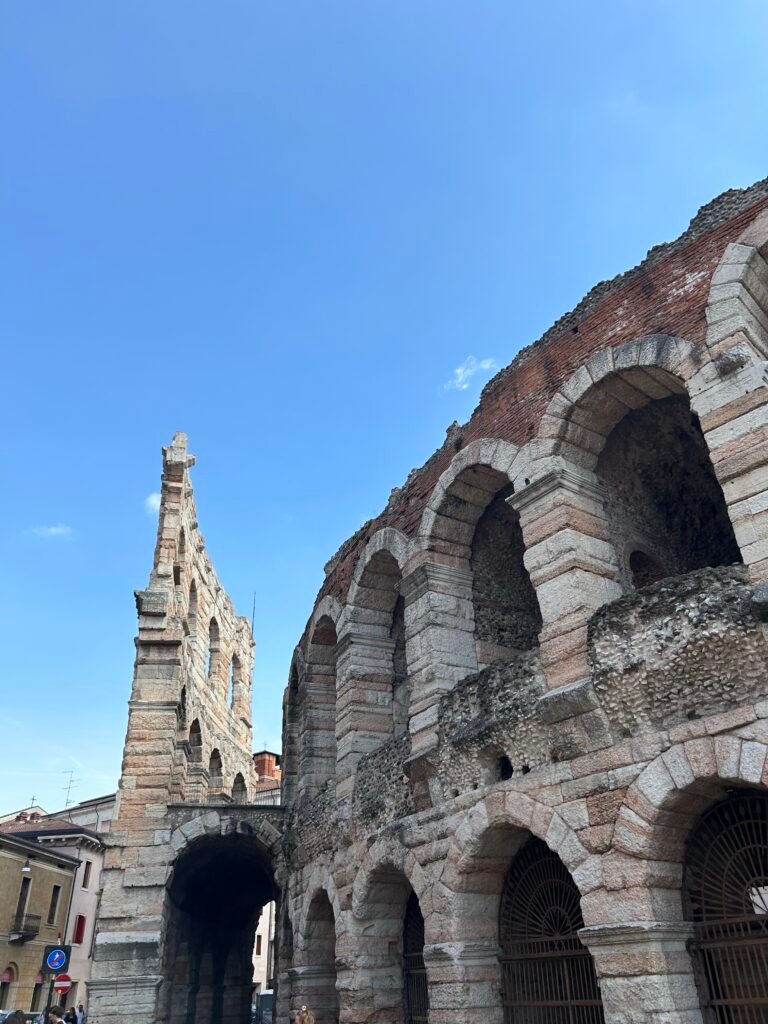
There is simply no missing the Arena of Verona. It dominates Piazza Bra, the main square of the city, and is nearly 2,000 years old. Built around 30 AD, it is the third-largest surviving Roman amphitheatre in the world, and arguably the best preserved. In its Roman heyday it could hold up to 30,000 spectators for gladiator fights, public executions, and wild animal hunts. Today, due to safety regulations, it seats 15,000 for opera concerts. Yes, you read that right. Since 1913 open air opera concerts have been held in the arena. The elliptical shape of the amphitheatre creates extraordinary natural acoustics, and watching a concert under the stars in a 2,000-year-old Roman theatre should be on everyone’s bucket list! See the 2026 schedule here.
You can tour the inside of the arena during the day. Walk through the ancient tunnels, climb the tiers to the top and get a much more immersive experience than most other amphitheatres in Italy!
A skip-the-line entry ticket to the Arena is included in the Verona Card, but if you want inside information about this historical monument, I’d recommend booking a guided tour.
Piazza dei Signori (Piazza Dante)
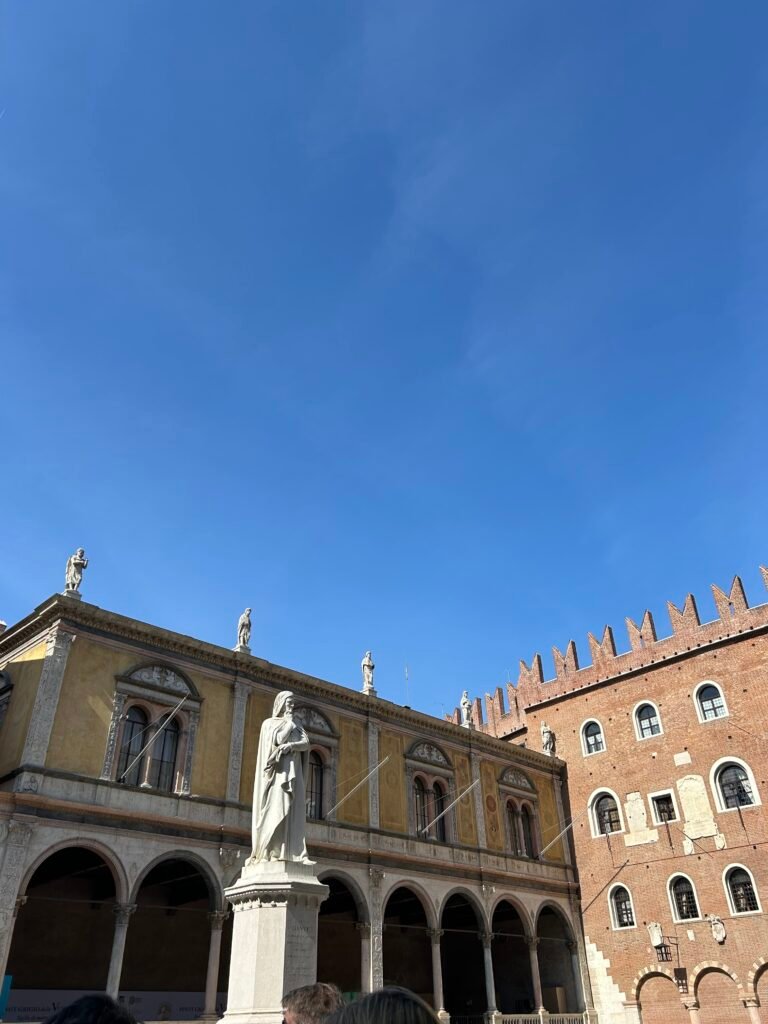
Just a short walk from Piazza delle Erbe (the two squares are connected by a passageway), Piazza dei Signori has a completely different atmosphere – quieter and more architecturally cohesive. It was the political heart of medieval Verona, surrounded by the palaces of the ruling Scaligeri family and the civic buildings of the commune.
At the centre stands a statue of Dante, who spent time in Verona as a guest of the Scaligeri during his exile from Florence. This is why the square is also called Piazza Dante. Around him are the Palazzo del Governo, the Palazzo della Ragione (one of the oldest buildings in Italy, which today houses a modern art gallery. Entry is covered by the Verona Card), and the elegant Loggia del Consiglio, that completes the square. It’s a more refined, less market-y space than Piazza delle Erbe.
Scaliger Tombs
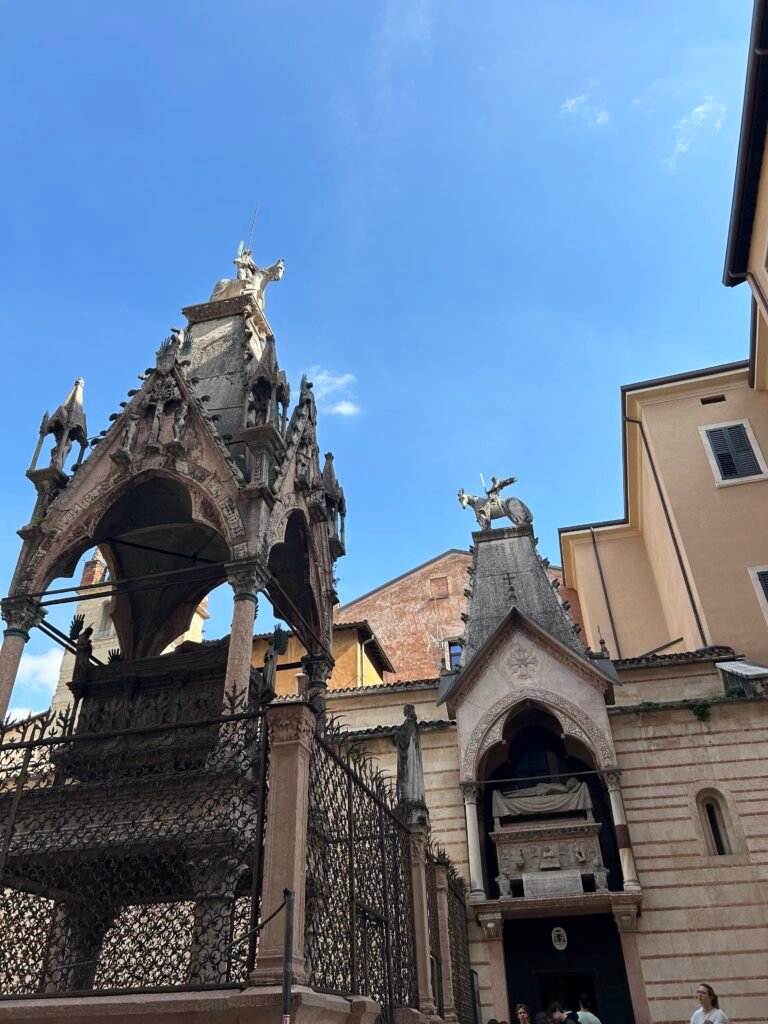
Just off Piazza dei Signori, are the Arche Scaligere (Scaliger Tombs). One of Verona’s most overlooked monuments. These are the Gothic funerary monuments of the della Scala family.
They left behind an impressive legacy in stone: Castelvecchio, the Castelvecchio Bridge, and these extraordinary tombs, which are widely regarded as among the finest examples of Gothic funerary architecture in Italy. The wrought-iron railing surrounding the tombs is decorated with staircases, a reference to the family name “della Scala” (from the staircase).
It’s free to enter in the courtyard during the summer season, from April to September (and some specific days over winter).
Where to eat in Verona Italy
Verona Italy punches well above its weight when it comes to food. I normally don’t do food recommendations, as I rarely have the budget to eat out on my travels. However I did splurge a bit as I was visiting local friends, who also gave me local recommendations! So I’ll of course pass them to you:
Osteria Caffè Monte Baldo
Tucked in the heart of the old city, Osteria Caffè Monte Baldo is the kind of place that feels like a local secret, even though it’s a popular local place. It has the warm, slightly worn-in feel of a proper Italian osteria: low lighting, close-set tables, the hum of conversation, and a menu that changes with the seasons.
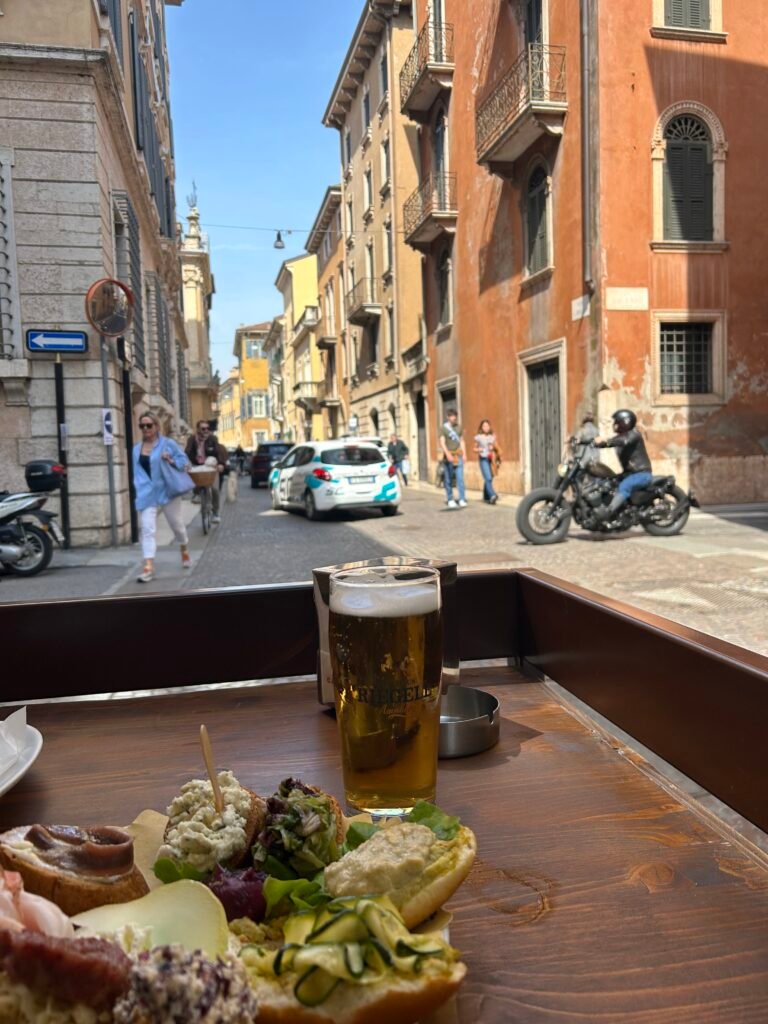
I got their platter of homemade canapés (10 pieces) for €20. I’m a bit of a picky eater, so I didn’t eat some of the fish that came with the menu, but I was still full nonetheless.
Osteria Giulietta e Romeo
This Osteria leans into the city’s most famous love story without becoming a tourist trap! The setting is lovely and gives exactly what a Veronese osteria should.
As a starter I had their Tortelli Fresh pasta filled with pumpkin, and for the main course I tried the braised horsemeat with polenta. I know eating horse is a little controversial, but I can recommend it, if you’re willing to try.
Romeo Bistrot & Cocktail Bar
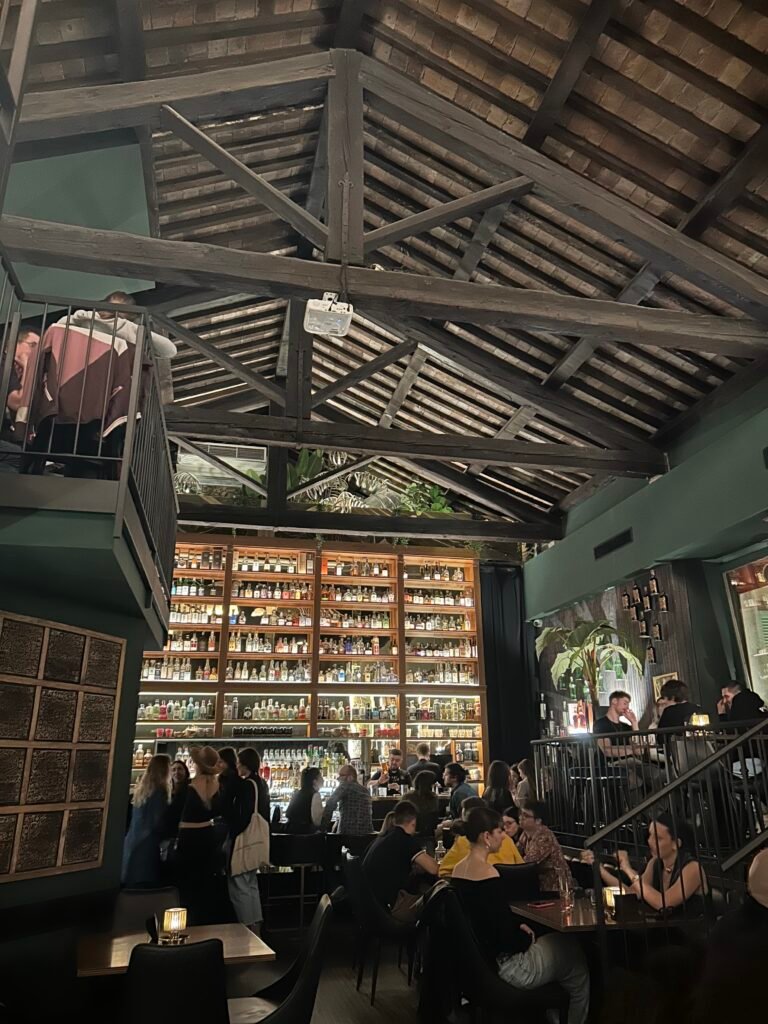
For something a little more contemporary this bistrot brings a modern edge to the Veronese dining scene. We didn’t go for dinner, but had drinks here. The cocktail programme is taken seriously and the bartenders definitely know what they’re doing. They have their own signature cocktails like a Fermented Banana Daiquiri (served in a glass banana), but the menu keeps changing while staying creative. Even if drinks is not your vibe, I still recommend visiting their bar, as their self-renowned spirits monastery is too cool to not see.