Capri Italy has a reputation as a playground for the rich with luxury yachts, designer boutiques and €20 cocktails in the Piazzetta. And sure, that side of the island exists. But here’s what most travel guides won’t tell you: you don’t need a thick wallet to experience the magic of Capri.
This tiny volcanic island is every bit as stunning (and annoyingly so) as the Instagram reels suggest – cobalt waters, dramatic limestone cliffs, lemon groves dripping with fruit, and a glamour that’s been attracting visitors since the days of Roman emperors.
I spent 3 days on Capri in 2023 and had an amazing time even though I was on a tight budget. So whether you’re planning a quick day trip or a longer stay, this guide covers everything you need to make the most of your visit to Capri Italy on a budget.
Capri Italy Map
Getting your bearings before you arrive will save you both time and money on Capri. The island is tiny, but the terrain is steep and hilly, so understanding the layout means fewer wrong turns and unnecessary bus rides or hikes.
There are two towns: Capri Town, the busier and more expensive hub centered around the famous Piazzetta (Piazza Umberto I), and Anacapri, which sits higher on the hillside and tends to be slightly cheaper and is also where Mount Solaro, the island’s highest point, rises above the whole island. Marina Grande is the main port on the north side where ferries arrive.
How to get to Capri Italy
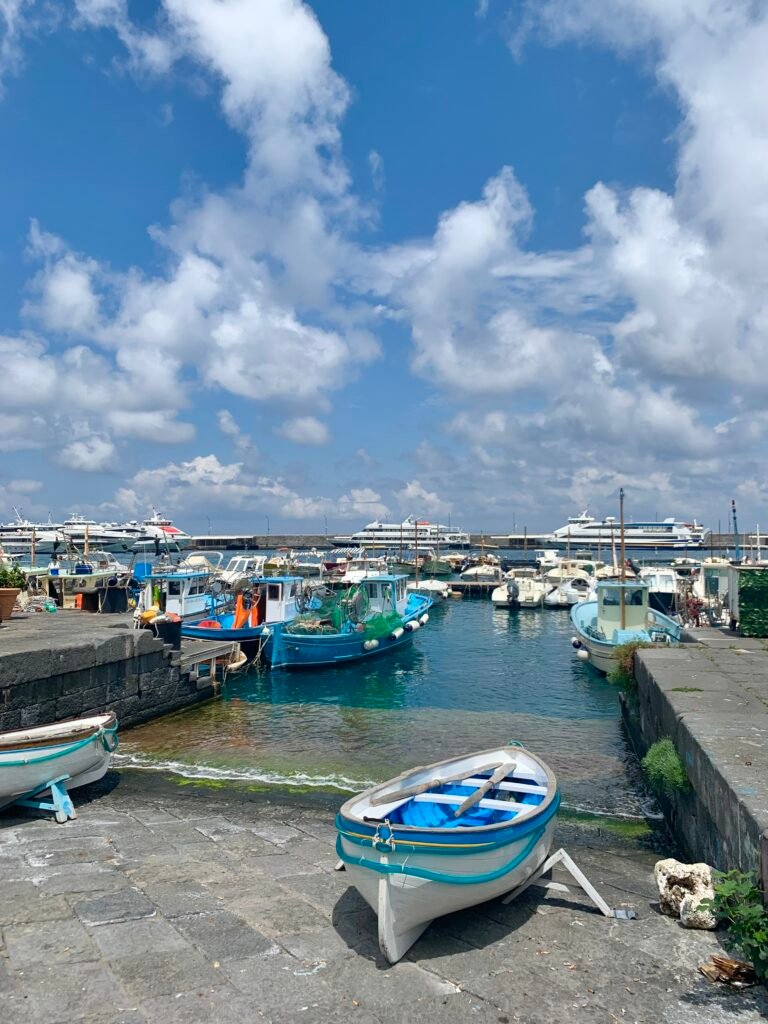
The only way to reach Capri Italy is by boat
This means ferry tickets are your first and unavoidable expense, so it pays to be strategic about where you depart from.
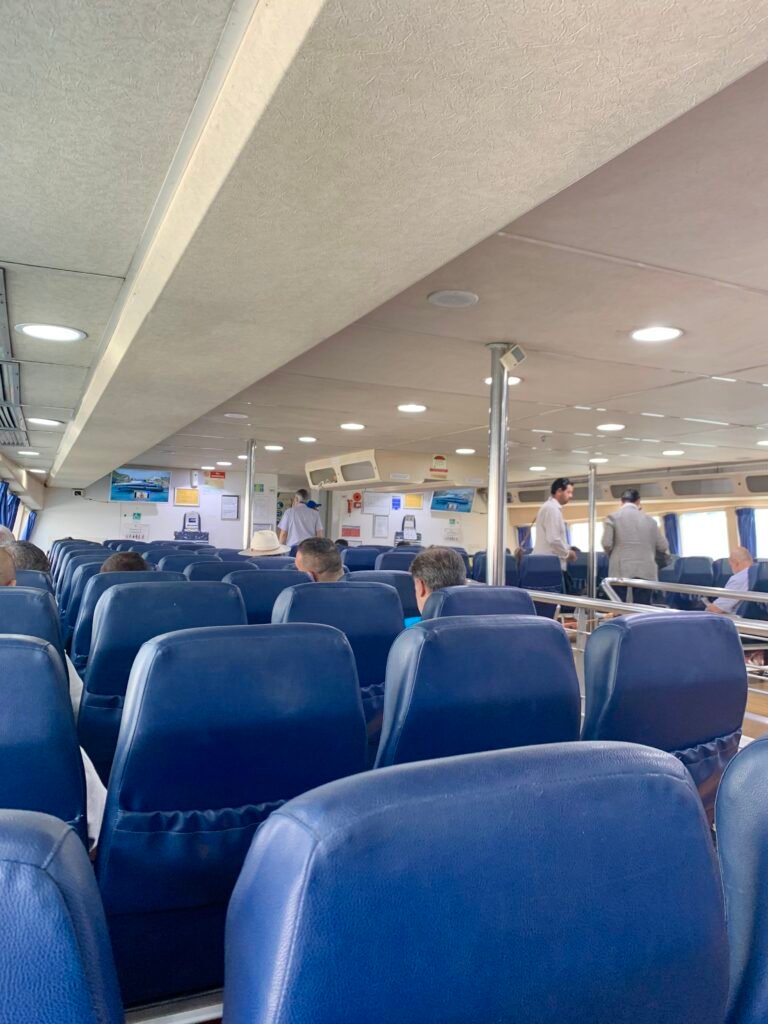
Ferries run from Naples, Sorrento, Positano, Amalfi, and Salerno. The cheapest and fastest crossing is typically from Sorrento, where a hydrofoil takes just 20 minutes. From Naples or Salerno, expect about an hour. One important seasonal note: most ferry routes shut down or become very limited after mid-October, resuming in April. Only the Naples route runs year-round.
Be aware as of april 2026 there’s a fuel surcharge on most ferries due to the rising diesel costs.
Booking your ferry to Capri Italy is straightforward. Several companies operate the routes, and you can compare schedules and prices on the Capri tourism website or through apps like Omio.
Pro tip: catch the earliest departure you can. An early ferry means you arrive before the cruise-ship crowds flood the island, and it also gives you more time to explore. Return ferries typically run until early evening (around 6pm depending on the season), so an early start gives you a full day without needing to pay for accommodation on the island.
How to Get Around on the Island
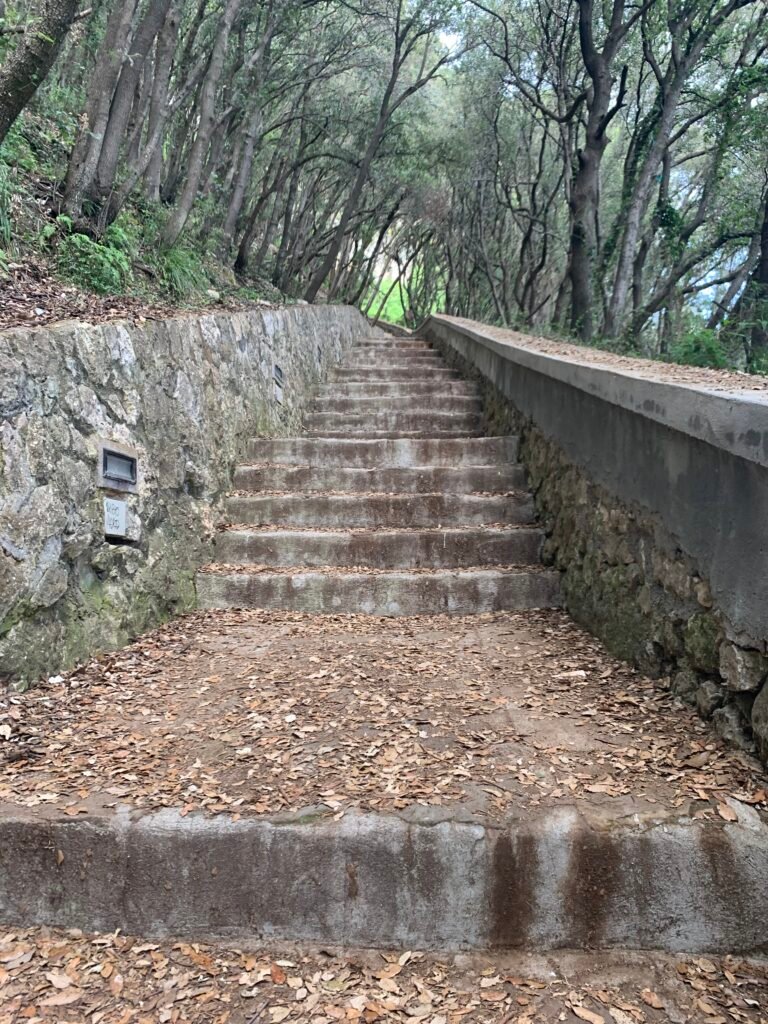
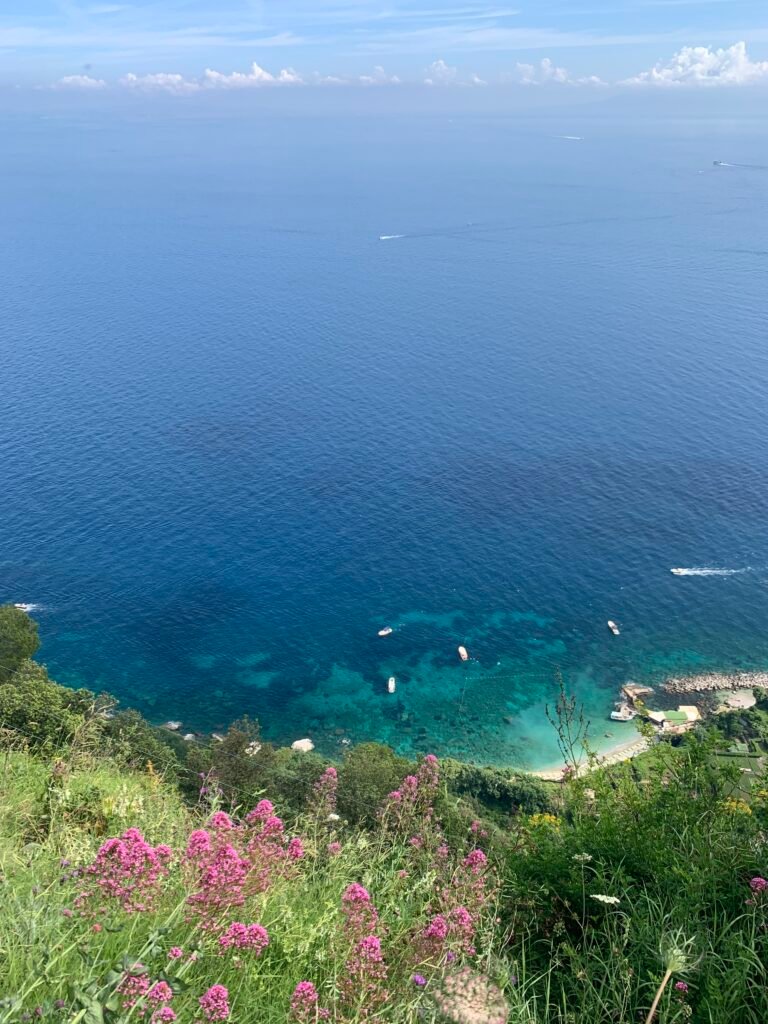
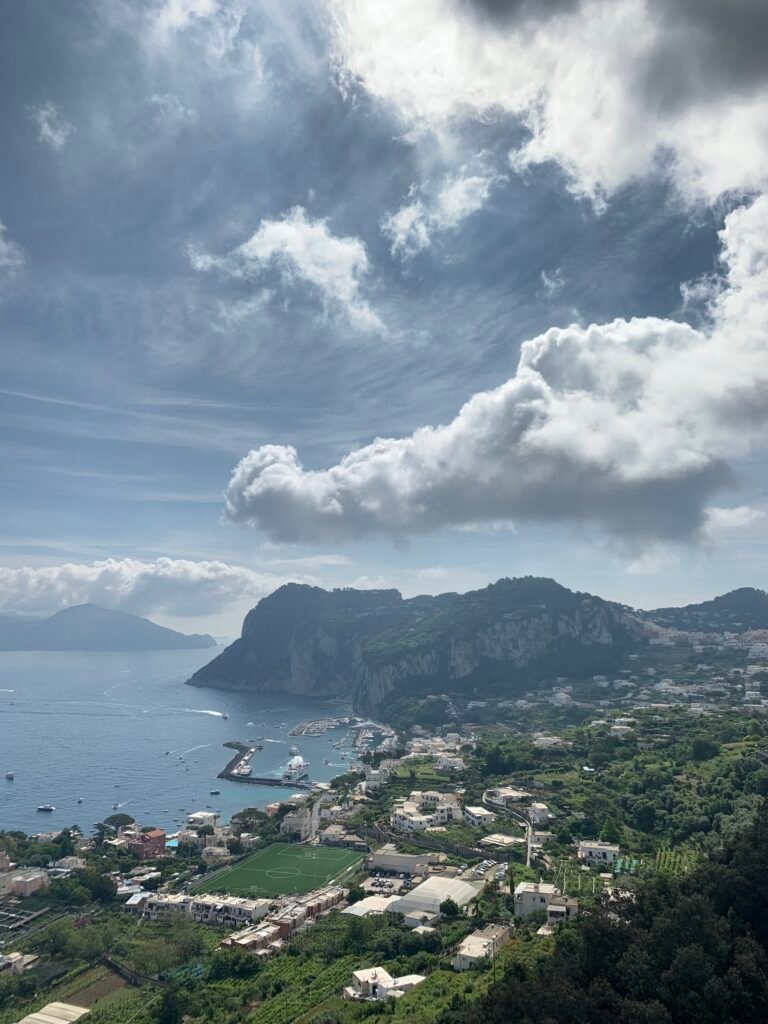
I didn’t know about the mini buses on Capri when I arrived, and I had booked accommodation in Anacapri, so me being on a budget, I decided to walk there… How do you ask? The Phoenician Steps (Scala Fenicia)
Did you know: For thousands of years the steps were used by anyone who needed to transport goods from Marina Grande up to Anacapri. Much of the hard work was done by island’s womenfolk, who regularly climbed up and down the steps balancing heavy vases on their heads.
Depending on your fitness level it takes about 30 minutes to ascend the stairs, but it will take you longer if you make frequent stops (and with views like the ones you’ll see from the Phoenician Steps, you’ll no doubt want to make a lot!) Now don’t be fooled – it’s a steep climb and if you, like me, bring your luggage with you – it’s a serious workout. Now you’ve been warned.
Walking
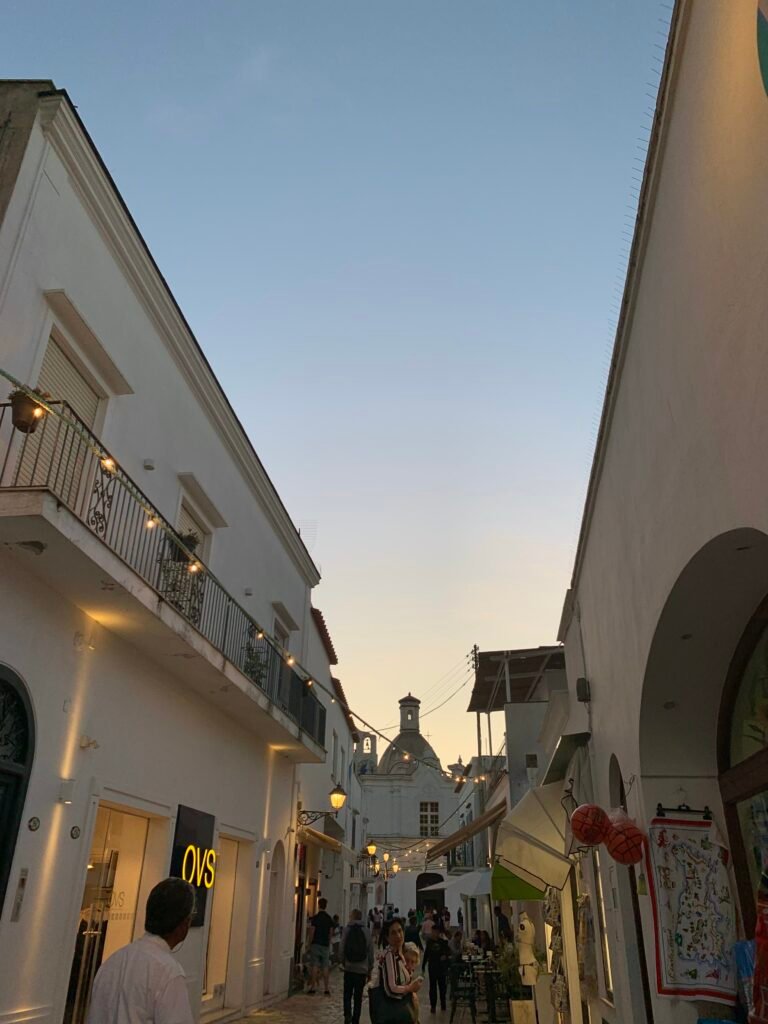
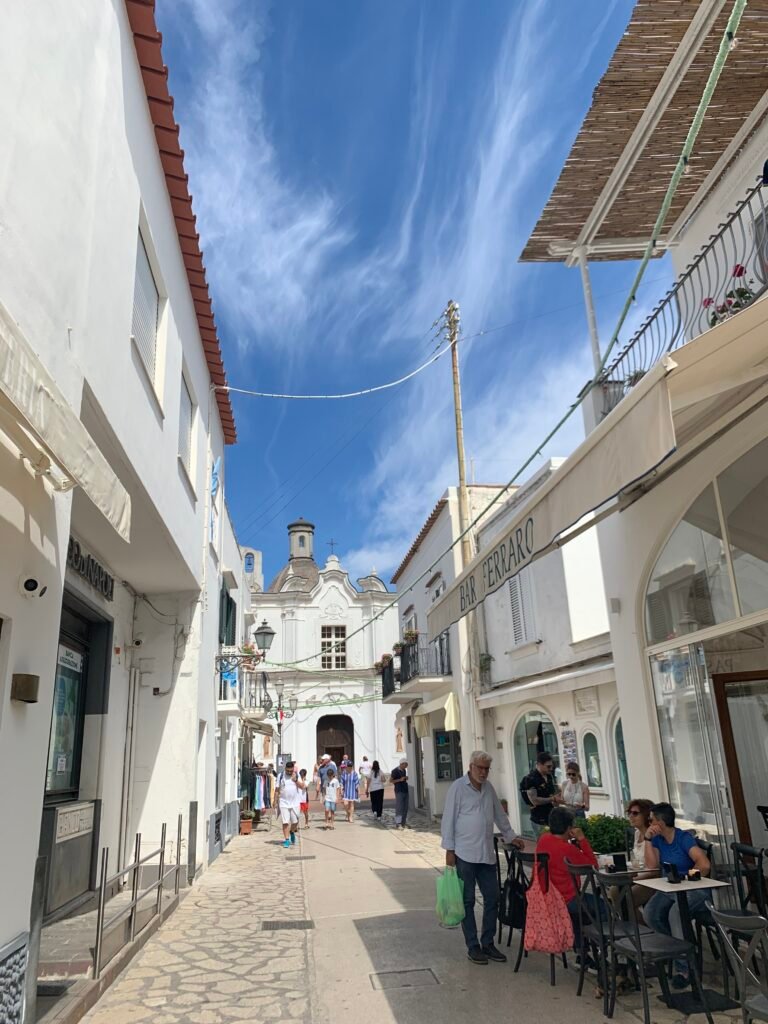
Walking is by far the best and cheapest way to explore Capri, and honestly, it’s also the most enjoyable. Many streets are pedestrian-only, and the narrow cobblestone alleys of both towns are full of surprises you’d miss from a bus window.
Pro tip: Bring comfortable shoes (you’ll thank me later ;))
Buses
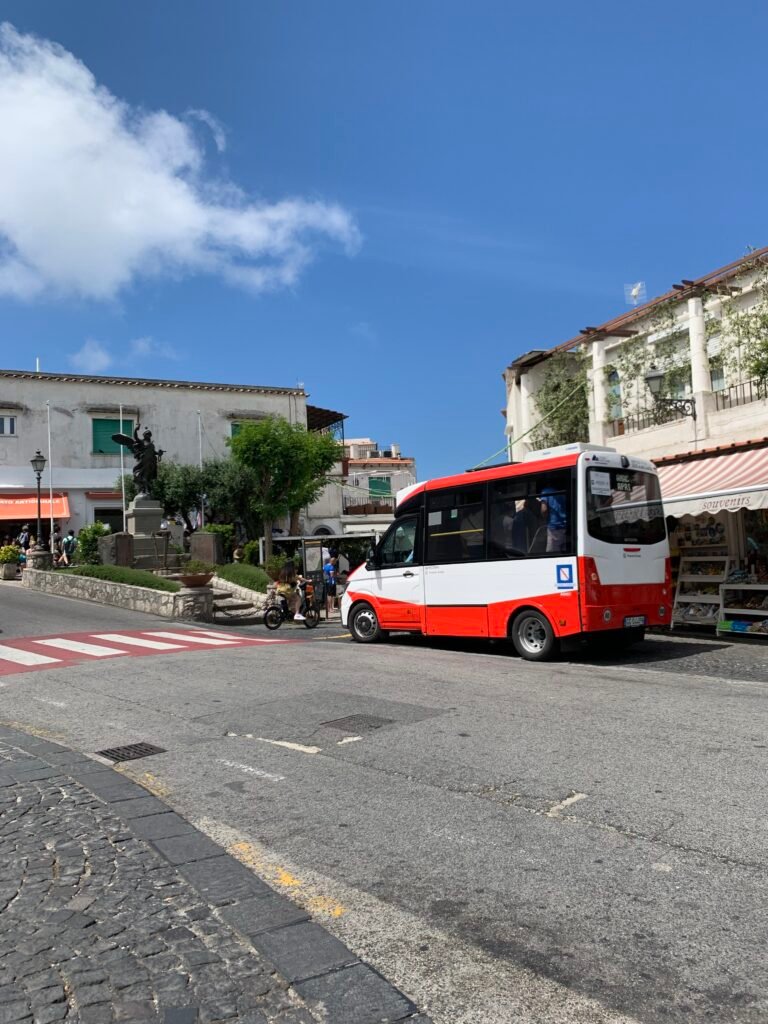
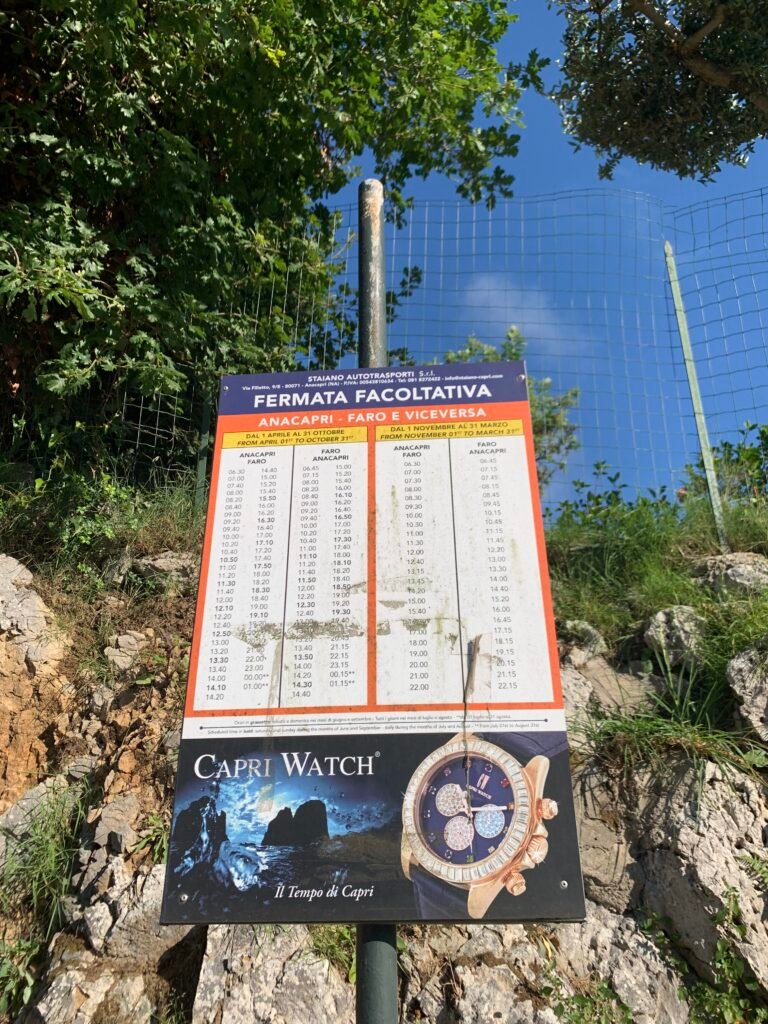
That said, the terrain between key areas is genuinely steep, so you’ll likely want to take the bus at some point. Buses (really more like minivans on Capri’s narrow roads) connect all the key spots: Marina Grande, Capri Town, Anacapri, Marina Piccola, the Blue Grotto, and the Punta Carena Lighthouse.
A single ticket for the bus costs around €2.20. See updated prices and timetables here.
BUT be aware that the buses get CROWDED… they’re small and there’s a lot of people who opt to use them. So either plan to use them before everyone else wakes up or just be prepared to be squeezed for a short ride.
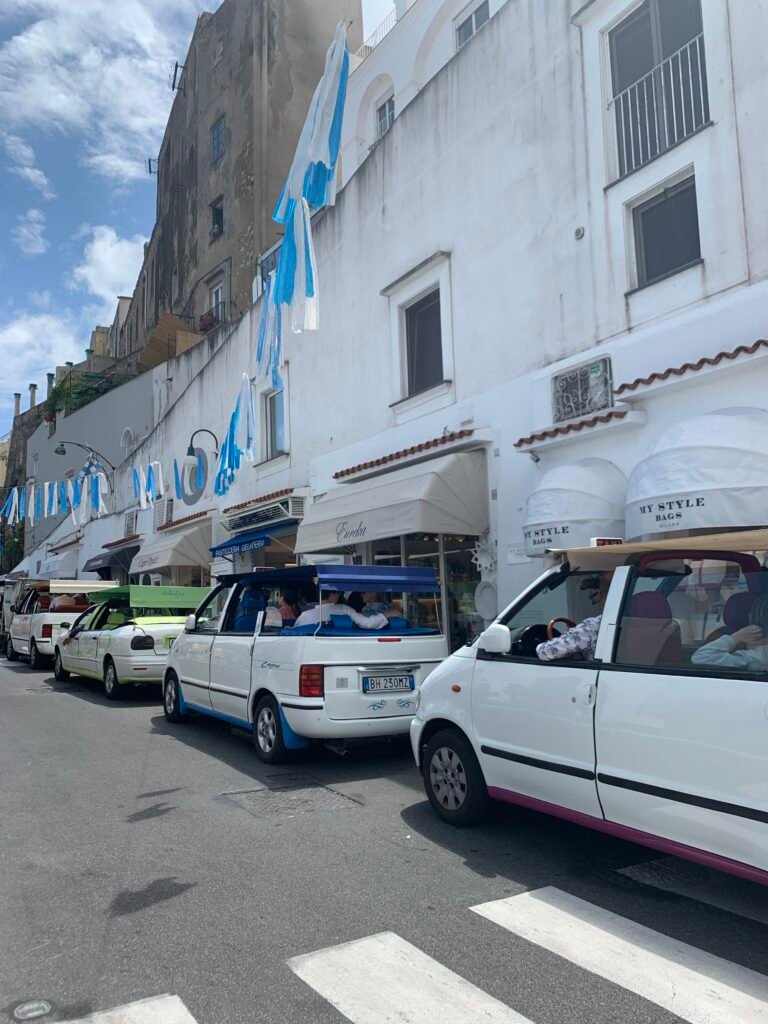
The alternative being taxis. Capri’s open-air vintage taxis look charming but the fares are steep, especially in high season.
Things to Do in Capri Italy
Here’s the good news: many of the best things to do in Capri Italy are either free or remarkably cheap. The island’s greatest assets: its views, its coastline, its walking paths, its village atmosphere don’t come with a price tag. Here’s how to fill your day without draining your wallet.
Blue Grotto Capri Italy
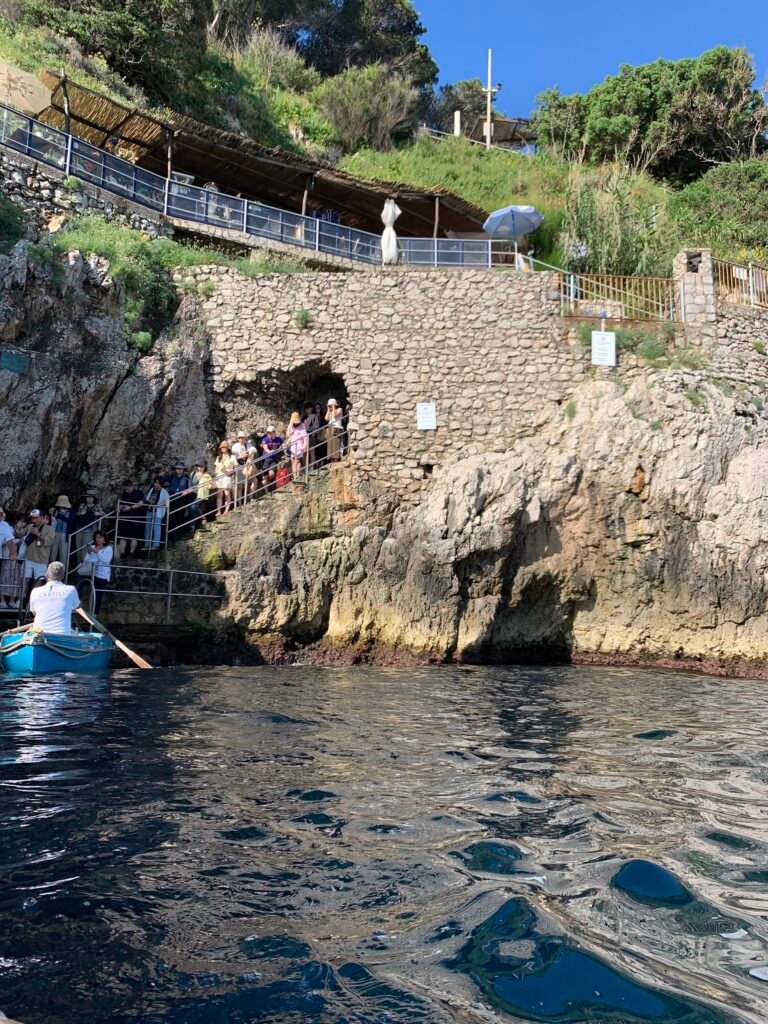
Starting off with a no-so-budget friendly activity is the Blue Grotto (Grotta Azzurra in italian). It’s Capri’s headline attraction, and costs €18.
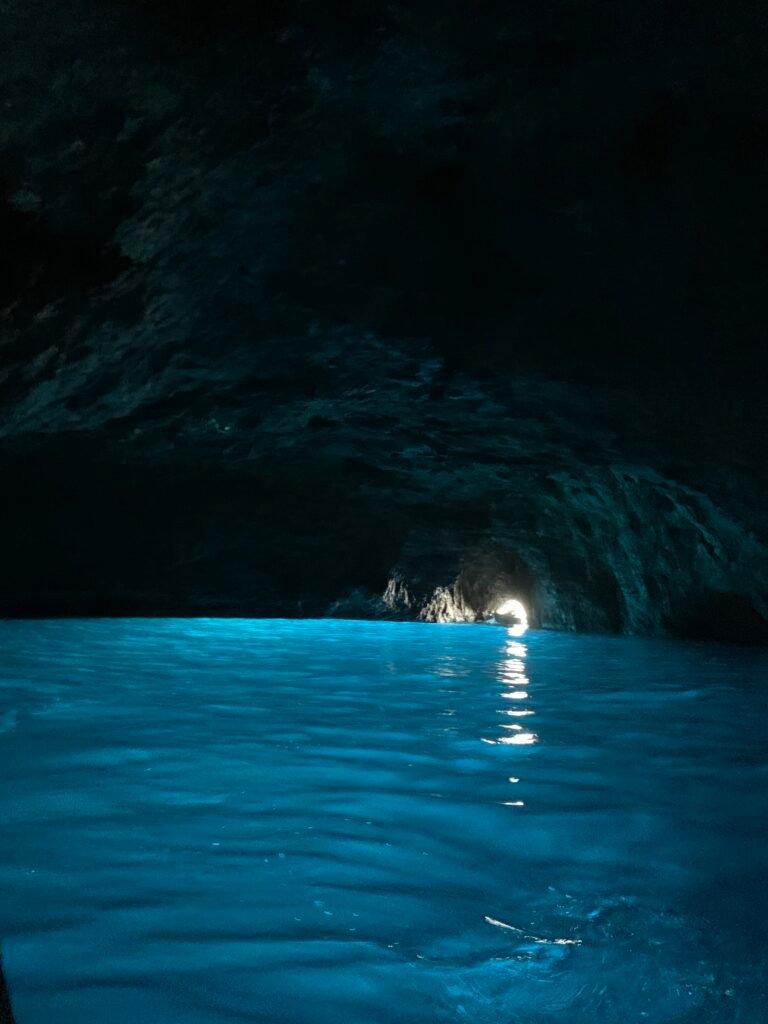
The sea cave glows with a stunning blue light created by sunlight filtering through an underwater entrance and reflecting in the white sand beneath the water. Because of the narrow entrance, visiting means being rowed through a tiny opening in a small wooden boat.
Good to know:
- The grotto is open daily from around 9am to 5pm, but access depends entirely on sea conditions and season.
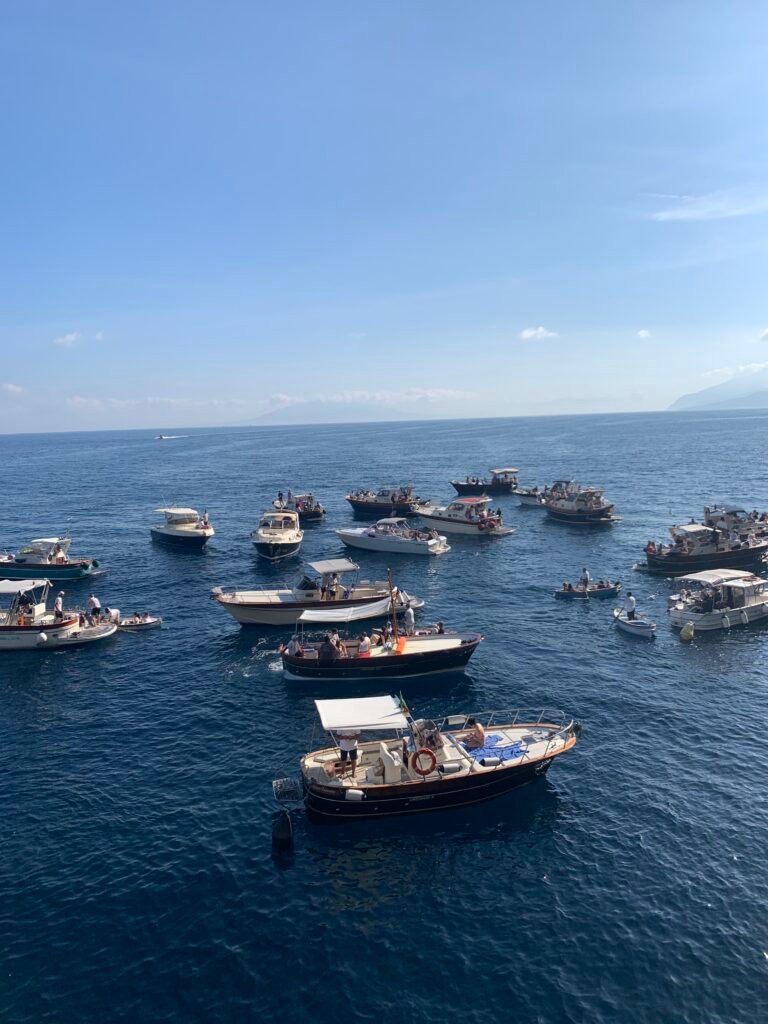
- You can either queue from land or from the sea, as many boat tours stop by the Blue Grotto as part of the trip. I’d recommend getting here as early as possible by land, because the waiting times can be loooong and personally I’d feel like my boat tour was ruined by just waiting…
- You can ONLY pay with cash
- Tips for the boatmen are expected on top of the entry fee.
- The visit itself is brief (10 to 20 minutes).
If €18 feels like too much of a splurge, it’s completely valid to skip the grotto and spend that money on a longer boat tour or a great meal instead. The island has plenty of other natural wonders that cost nothing including dozens of stunning sea caves and grottos along the rocky coastline. Read more about the other caves here.
My honest opinion: it’s not really worth it. I was really lucky as I was the first to enter the grotto, which made it much more enjoyable. But I wouldn’t do it again.
Rent a Kayak
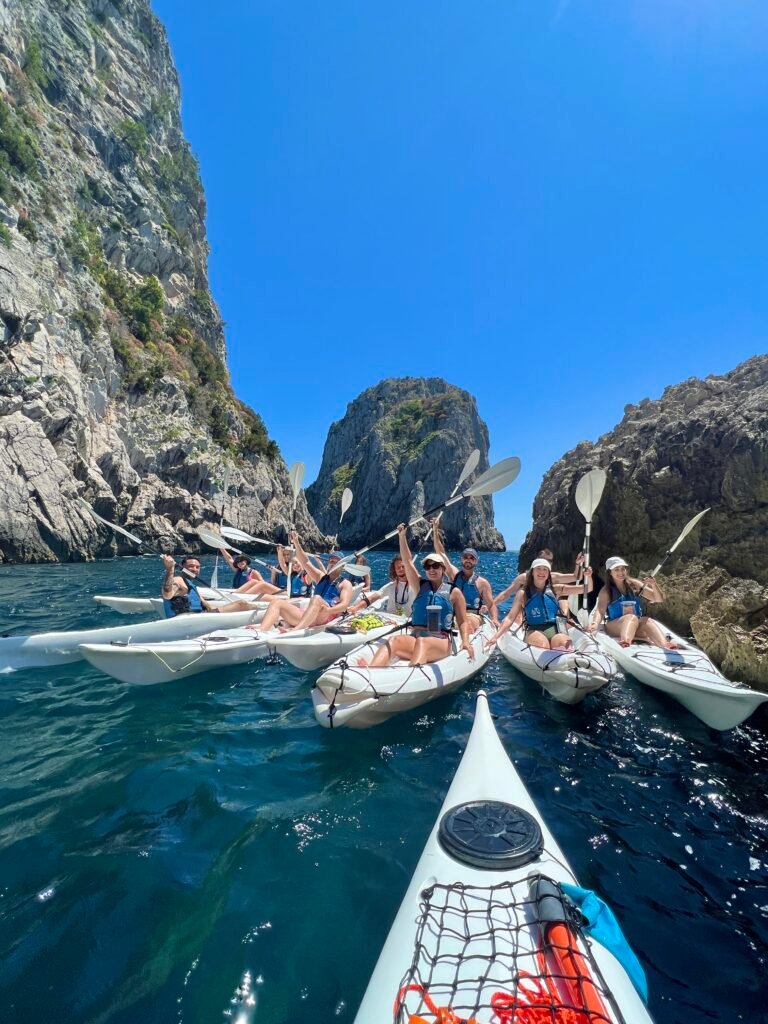
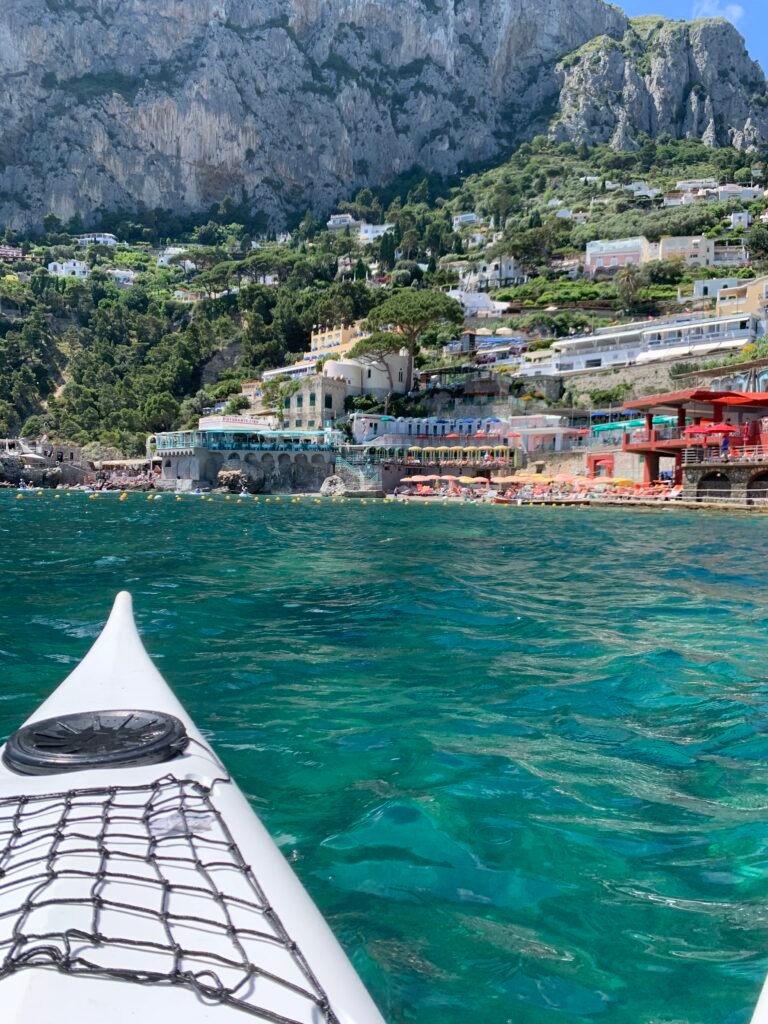
Renting a kayak is one of the smartest budget moves on Capri. For a single rental fee, you get hours of coastline exploration on your own terms with hidden coves, swimming spots, and sea caves that larger tour boats can’t access. It’s far more flexible than a group tour, and you set the pace: paddle, swim, snorkel, repeat.
BIG DISCLAIMER: because of the many boats going around Capri every day, the water can be very choppy and not very beginner friendly. So if you’re not completely confident going solo in a kayak, you can also join a kayak tour.
I did both.
I went on a tour with Capri Hydro and later rented a kayak for myself. And it was honestly one of the best experiences I had in Italy.
What to bring
Wear a normal swimsuit potentially with a t-shirt, flip flops (or beach shoes). Bring a hat and sunscreen to protect yourself from the sun, which rays are even stronger when reflected on the water! And a smartphone waterproof cover to take photos (if you want). I’d also recommend bringing a water bottle.
You can also rent a snorkeling kit for all day.
I don’t remember exactly what I paid, but I think it was €10 per hour.
The Faraglioni Rocks
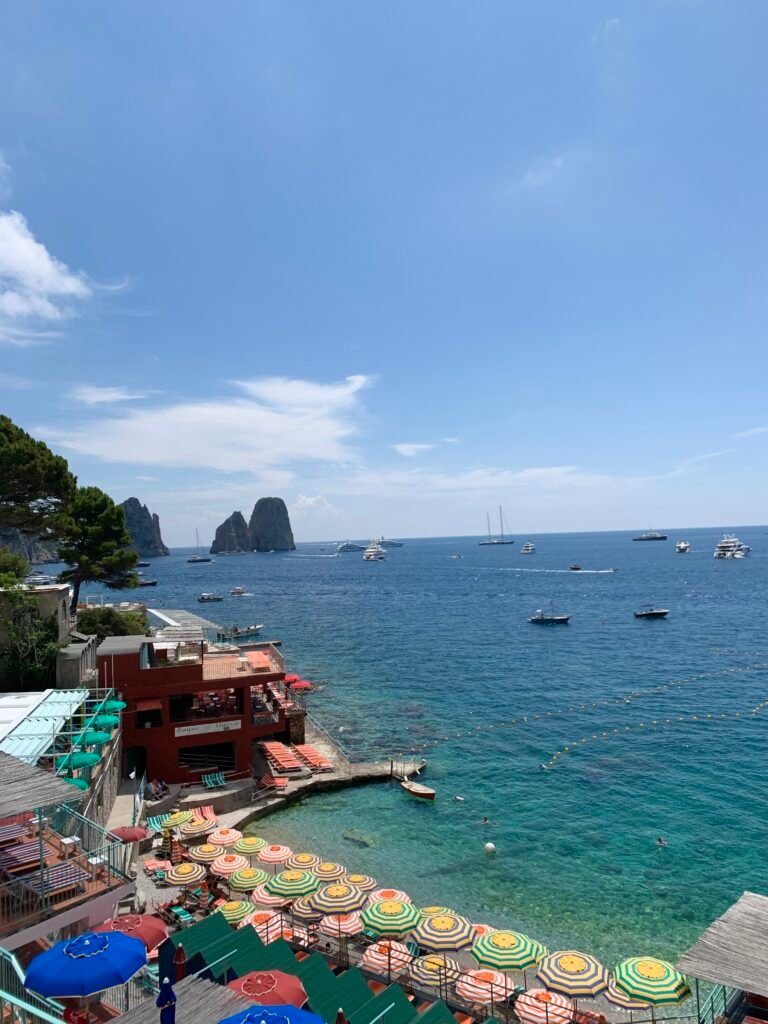
The three towering Faraglioni Rocks are among the most iconic sights of Capri Italy and they’re completely free to enjoy ;)) These volcanic sea stacks rise from the water on the southeast coast and are estimated to be around 20 million years old. Yup you read that right. The middle rock, Faraglione di Mezzo, has a natural arch at its base that boats and kayaks can pass through.
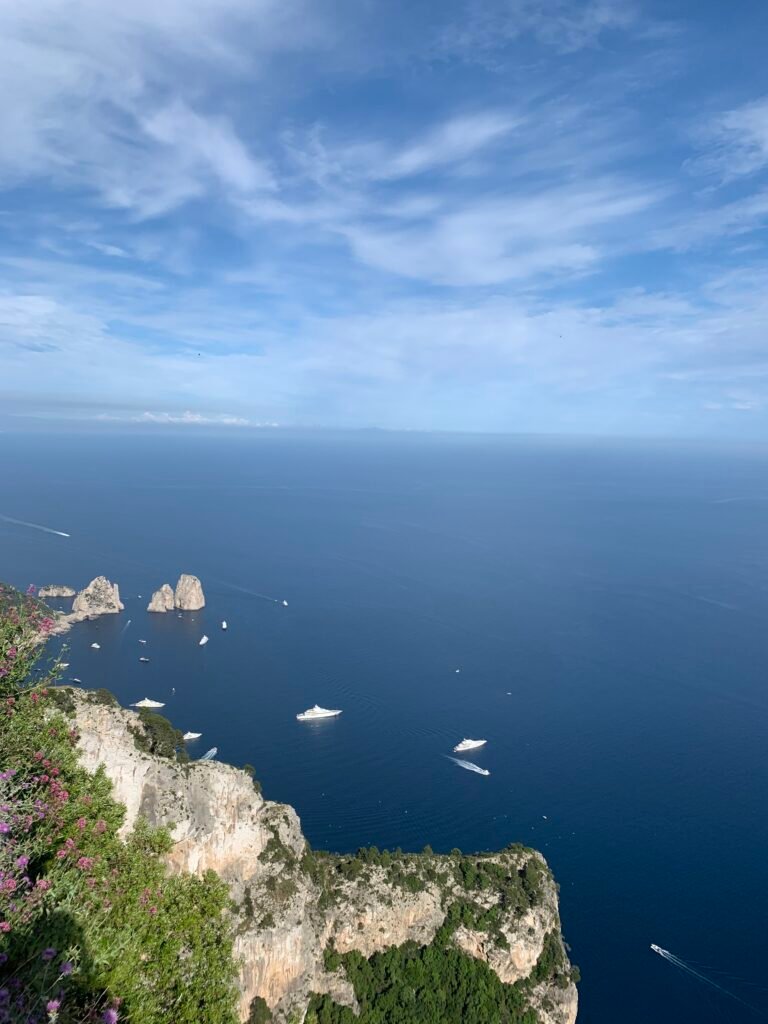
You can admire the Faraglioni from multiple free viewpoints around the island, including the Gardens of Augustus and Monte Solaro.
Monte Solaro Chairlift
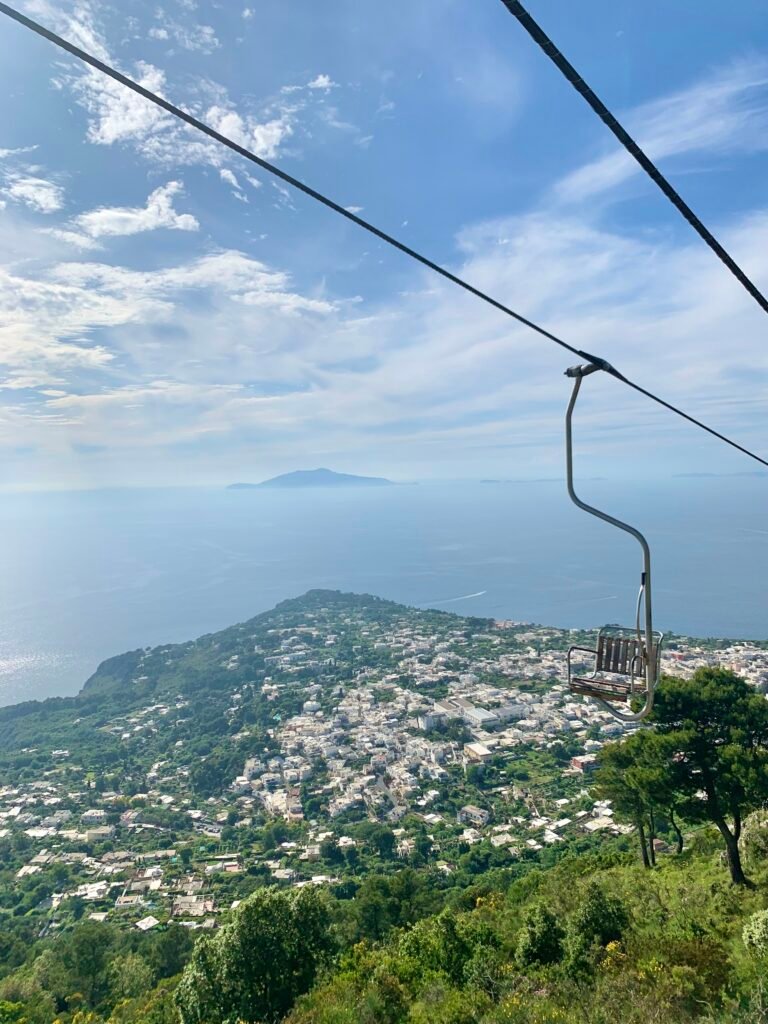
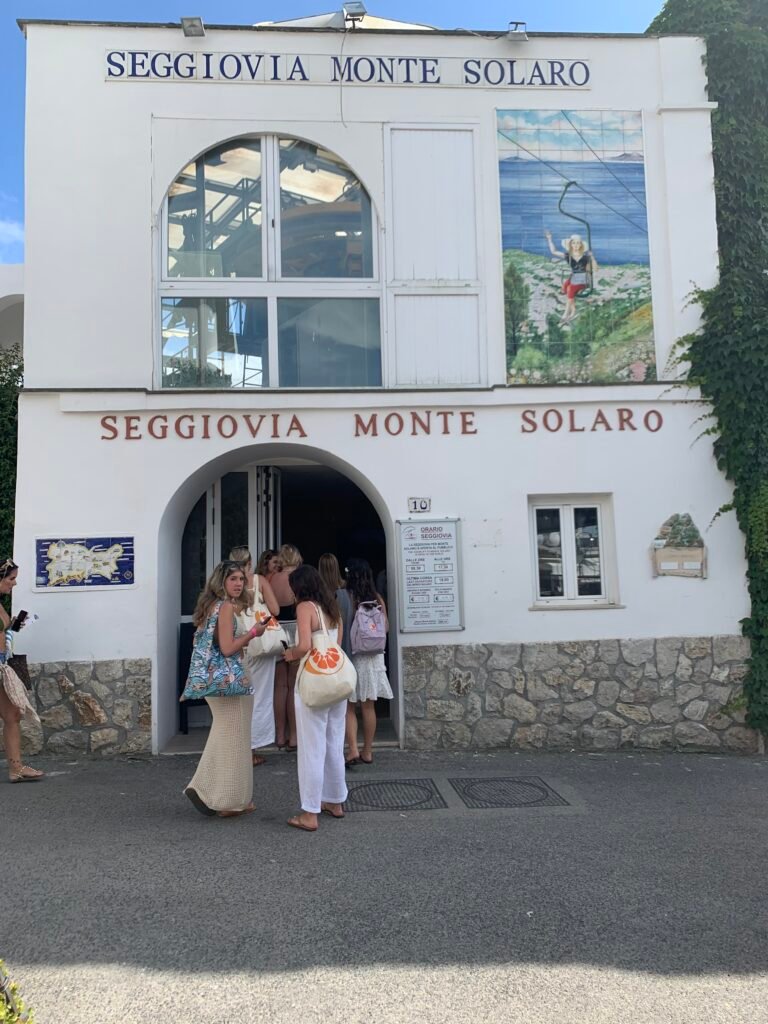
The Monte Solaro chairlift carries you from Anacapri to the island’s highest point (589 meters) on a single-seat open-air lift. The ride takes about 12 minutes and the panoramic views are extraordinary.
At the top, the hiking trails and viewpoints are all free, so the chairlift ticket is your only cost. It’s well worth it for the views alone, and if you want to save on the return trip, you can hike back down instead of riding the lift. The trailhead is well-marked and the walk down offers its own stunning scenery. The chairlift starts from Piazza Vittoria in Anacapri.
A round-trip cost €14 and a single trip is €11.
If you want to, you can hike up for free ;))
Sunset at Faro di Punta Carena Lighthouse
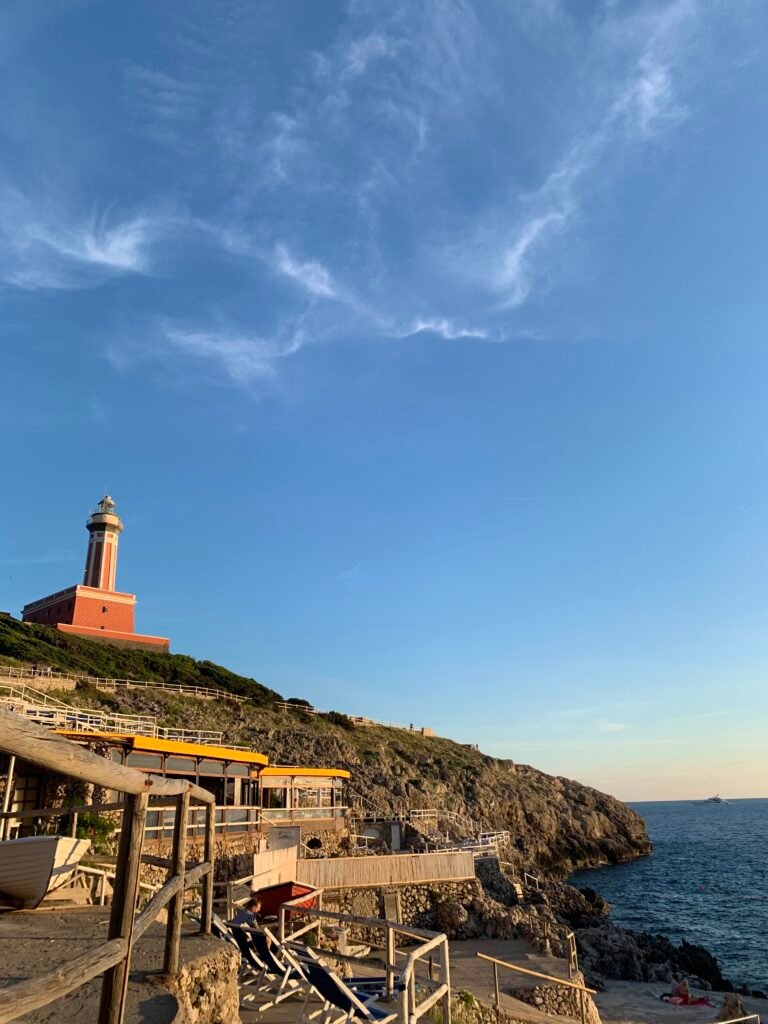
The Punta Carena Lighthouse sits on Capri’s western tip and is one of the oldest lighthouses in the Mediterranean, built in the late 19th century. The location makes it the island’s best sunset spot, with an unobstructed view of the sun sinking into the Tyrrhenian Sea.
The rocky coastline around the lighthouse is popular with swimmers and birdwatchers, and the whole area has a relaxed, off-the-beaten-path feel compared to the busier tourist zones. You can reach it by bus from Anacapri (a direct route runs there) or on foot.
Gardens of Augustus Capri Italy
The Gardens of Augustus (Giardini di Augusto) are one of the best-value attractions on the island. For just €2.5, you get access to a beautifully maintained botanical garden perched high above the sea in Capri Town, with sweeping views of Marina Piccola, the Faraglioni Rocks, and the famous switchbacks of Via Krupp.
See updated prices and opening hours here.
Where to Stay in Capri Italy
Accommodation is where Capri’s luxury reputation hits your wallet hardest.
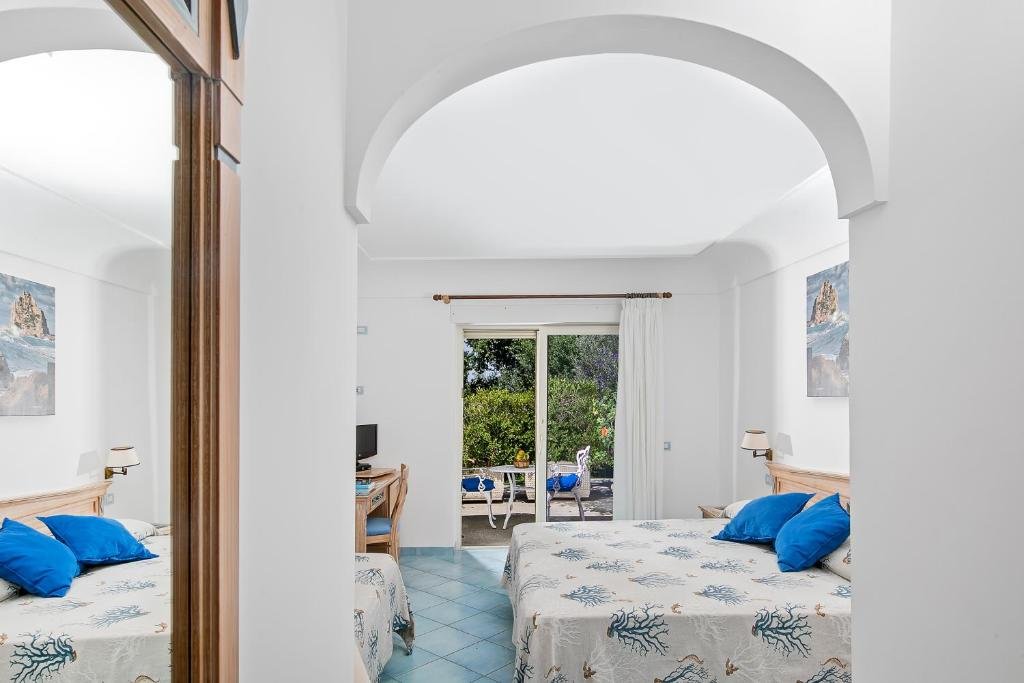
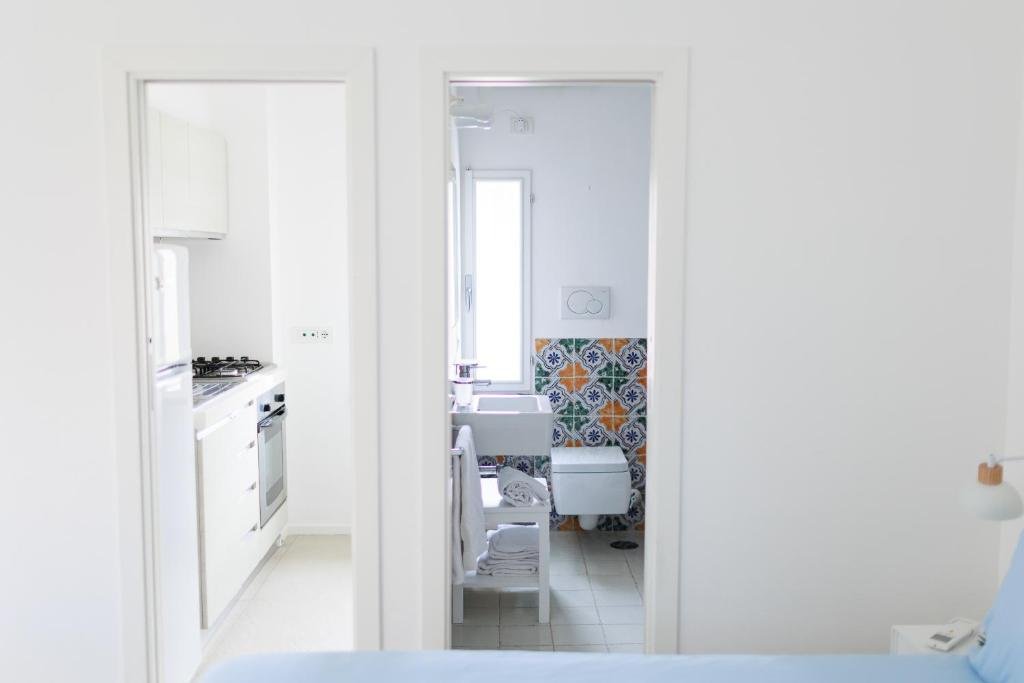
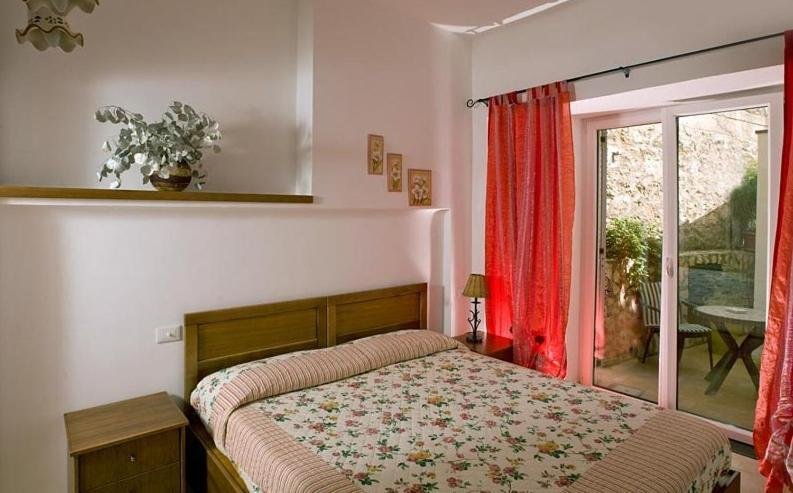
The most popular budget approach is to skip staying on the island entirely. Base yourself in Sorrento, where hotels and rentals are significantly cheaper, and take the ferry over for a day trip. But if you, like me, want to experience the quieter, more magical part of the island after the day-trippers leave, look into holiday apartments in Anacapri.
A rental with a kitchen also lets you save by cooking some meals yourself. The island’s small grocery shops and markets sell beautiful local produce, and a homemade dinner on a terrace with a sea view easily beats a rushed tourist-trap restaurant meal.
|
Where I stayed
|
|
|
Primary Rating:
4.6
|
Primary Rating:
4.6
|
Primary Rating:
4.3
|
|
€129 / night
|
€135 / night
|
€95 / night
|