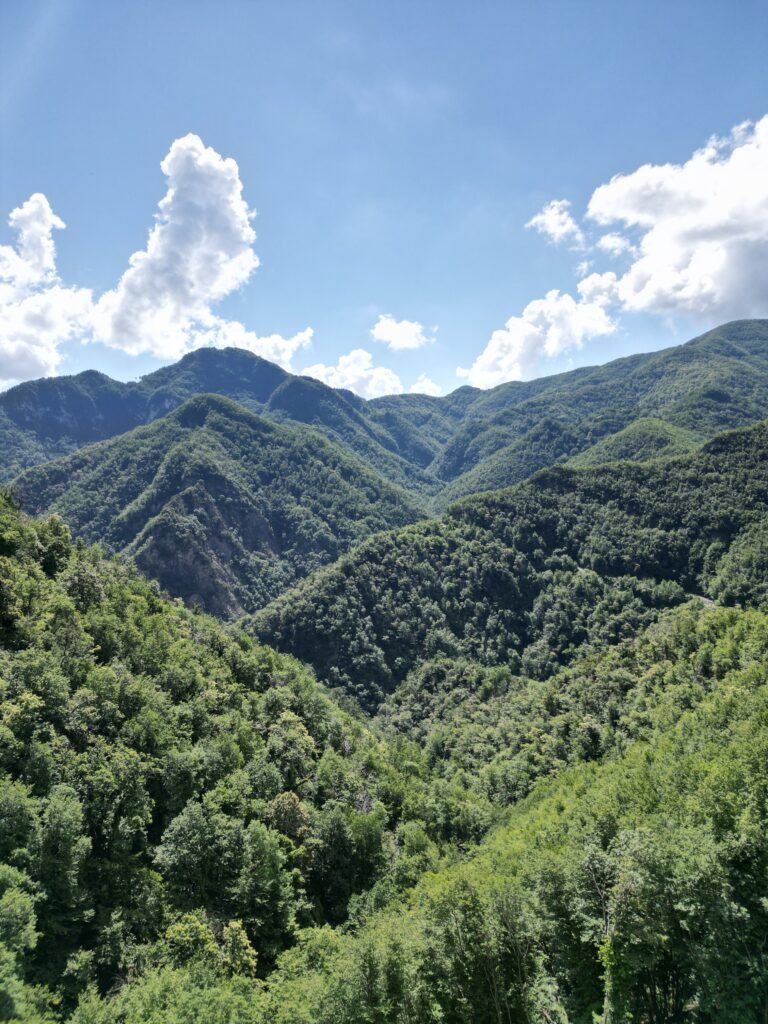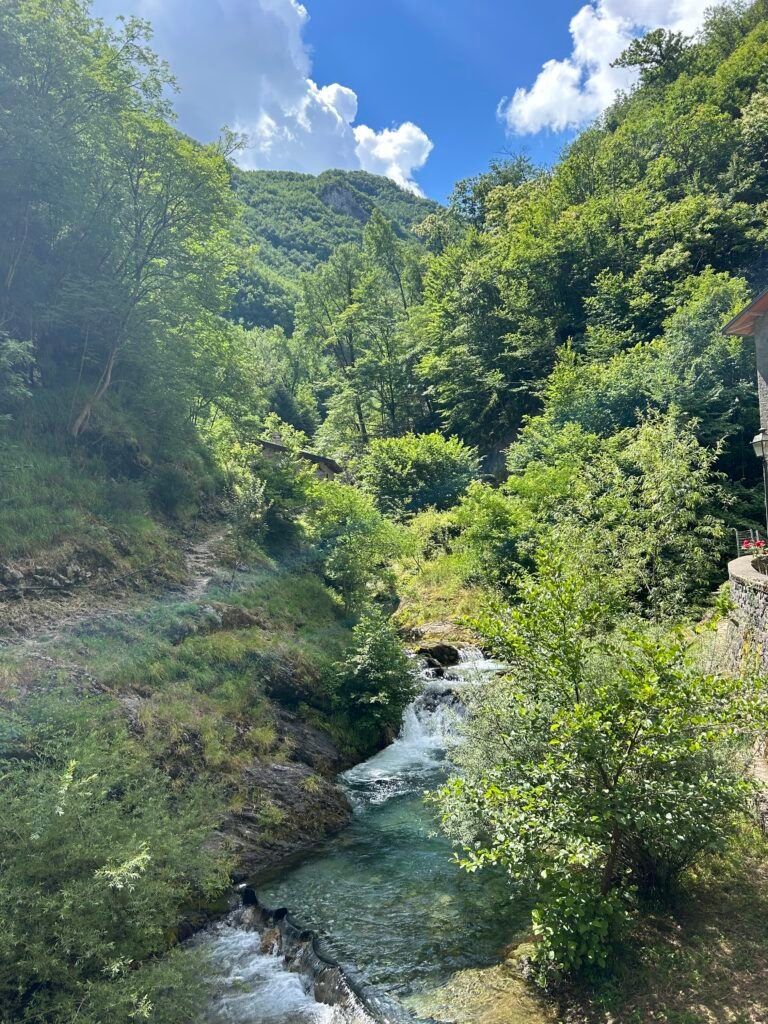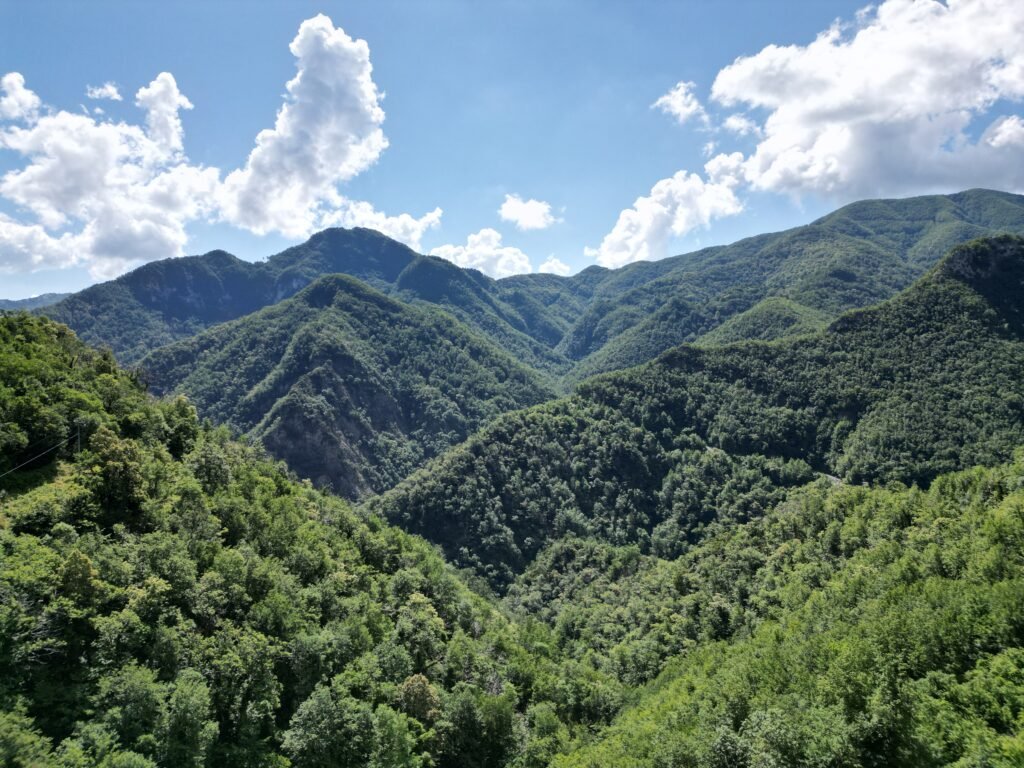
Tucked into the Apuan Alps in the province of Lucca, Grotta Del Vento (the “Wind Cave”) is one of Tuscany’s most fascinating underground destinations, a limestone cave system where you can actually feel the mountain breathing. If you’re planning a trip through the Garfagnana area, here’s everything you need to know before you go.
The cave offers three guided routes of varying length and difficulty, along with a scattering of nearby attractions — a cliffside hermitage, another major cave system, and mountain villages — that make it easy to build into a full day trip.
If you’re planning a trip through the Garfagnana area, here’s everything you need to know before you go.
Where is Grotta Del Vento
Garfagnana, is a green valley of Northern Tuscany between the Apuan Alps and the Tuscan-Emilian Apennines is 2 hours north-west from Florence, Italy. The cave’s tourist entrance sits at approximately 627 metres above sea level, deep in a landscape of dramatic peaks, forested valleys, and small mountain villages.
Fornovolasco: the city beneath Grotta Del Vento
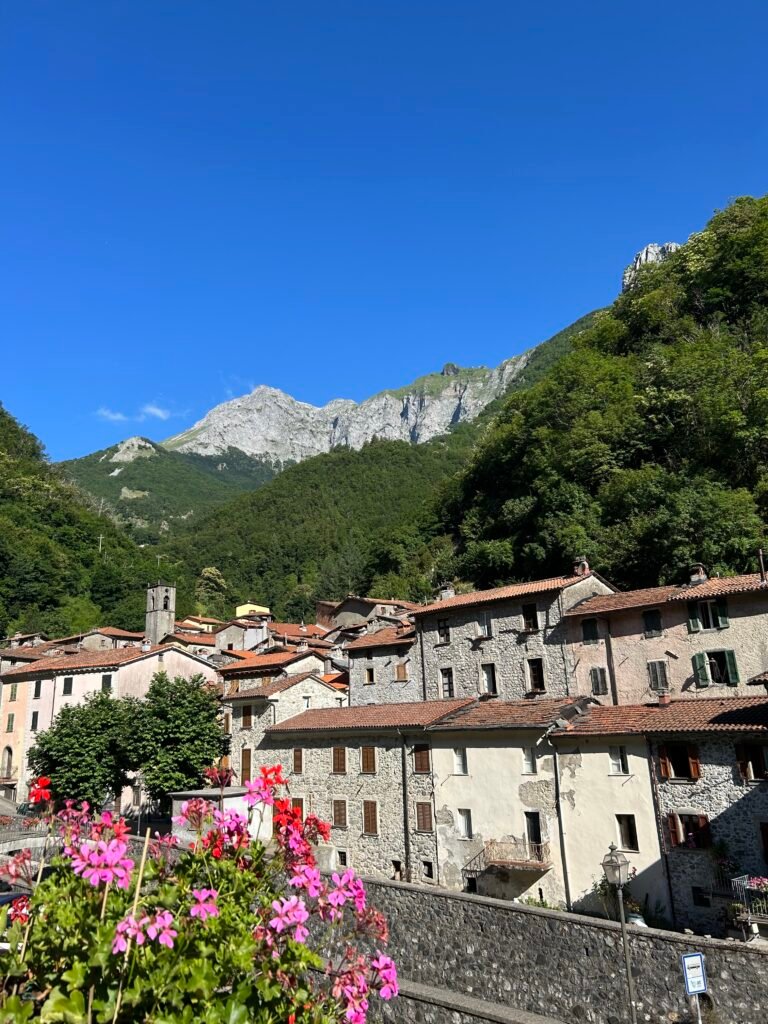
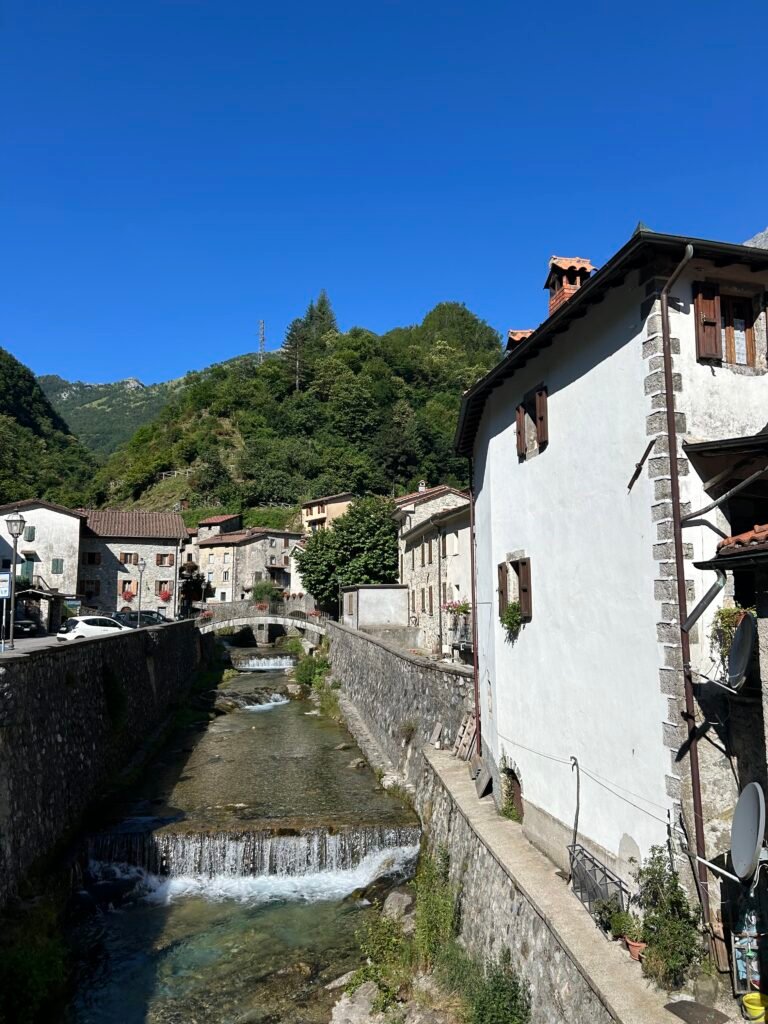
The cave rises above Fornovolasco, a tiny hamlet that belongs to the municipality of Fabbriche di Vergemoli, sitting at roughly 480 metres above sea level. It’s home to only around sixty residents, giving it an almost timeless, uninhabited feel, narrow lanes, stone houses, and mountain silence.
Fornovolasco has a free parking area, a small bar and restaurant, making it a serene daytrip from Florence.
Why is it called Grotta Del Vento (the cave that breathes)?
The name “Wind Cave” isn’t poetic license, it’s physics. Grotta Del Vento has two entrances at very different altitudes: the lower, tourist-accessible entrance at around 627 metres, and a second, inaccessible entrance roughly 800 metres higher.
Because warm air rises and cool air sinks, the temperature difference between these two openings drives a genuine air current through the cave. In summer, the cooler, denser air trapped inside flows out through the lower entrance. In winter, the pattern reverses, and warmer internal air escapes through the upper opening instead. The strength of the draft depends on how large the temperature gap is between the cave’s interior and the outside world, which is exactly why the cave seems to “breathe” with the seasons. During guided visits, a reinforced door is used to control the airflow at the entrance.
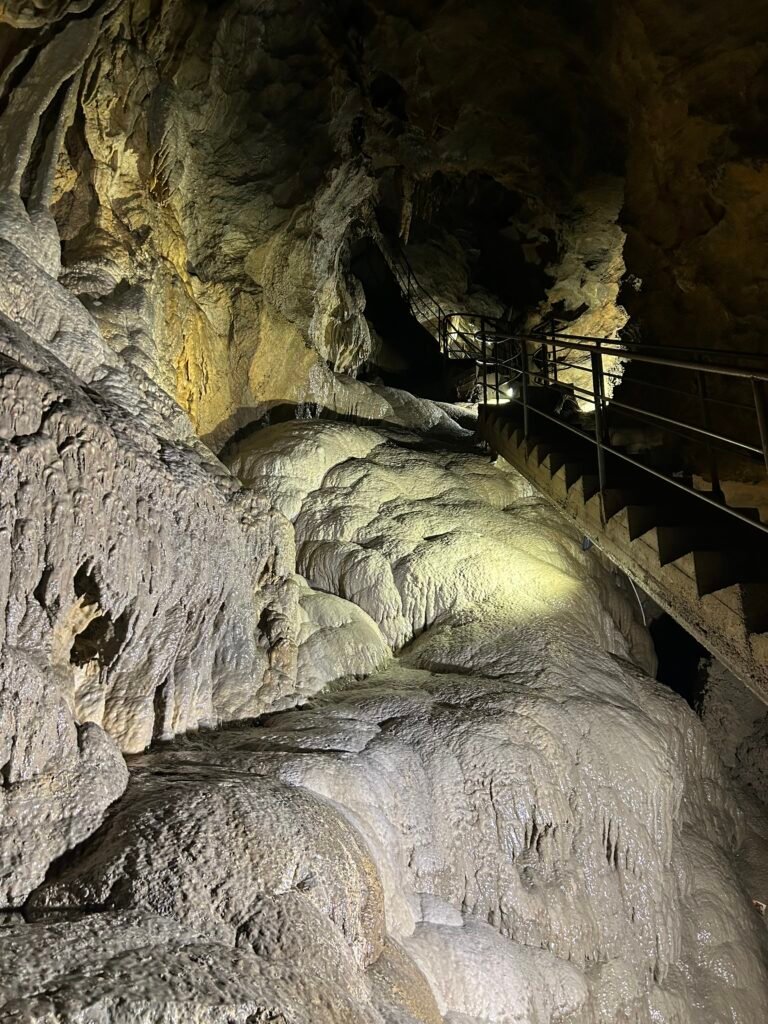
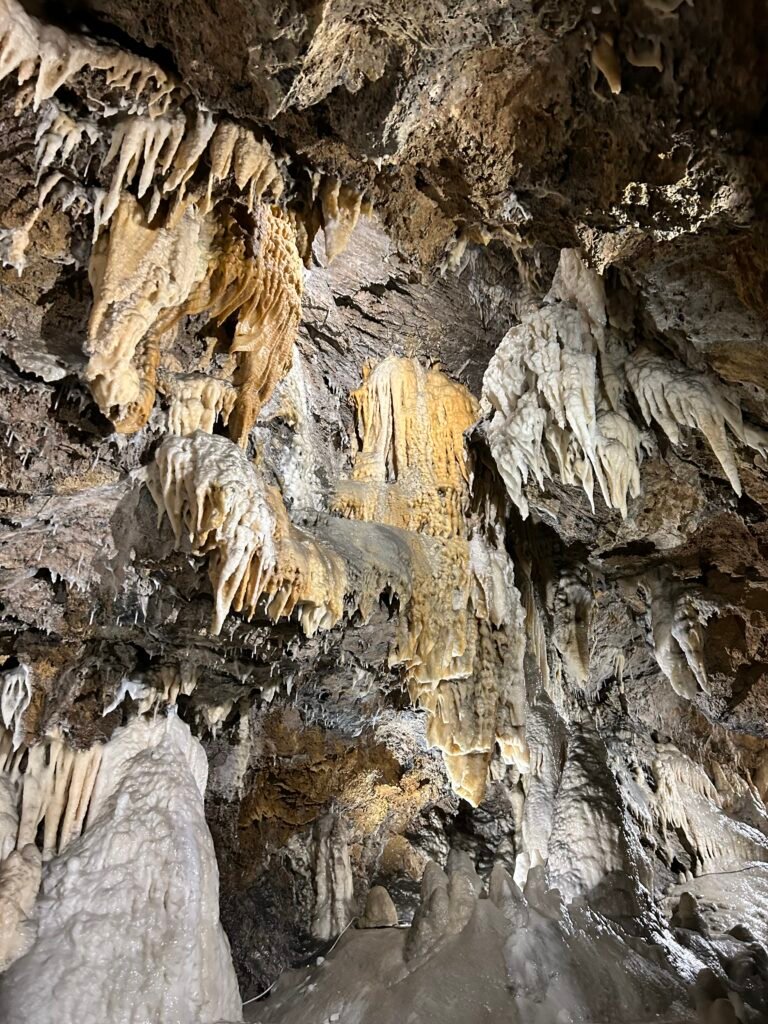
Like most caves, Grotta Del Vento has formed over an extraordinary timeframe: the limestone began as sediment on an ancient seabed roughly 200 million years ago, built up over some 170 million years, and was pushed upward by tectonic activity around 20 million years ago. From there, rainwater slowly dissolved and carved the passages and chambers we walk through today.
What to know before visiting Grotta Del Vento
How to get to Grotta Del Vento
Grotta Del Vento is reached via the town of Fornovolasco, which is a 2h drive from Florence. It is possible to reach the cave by public transport, but it will take 4,5 hours and requires you to stay overnight in either Barga or Lucca.
I visited Fornovolasco and Grotta Del Vento in the summer of 2024, having rented a Campervan and driving through northern Italy to Spain.
What to wear
The interior of Grotta Del Vento stays at a fairly constant cool temperature — reported as somewhere around 10.7–11°C. Bring a warm layer and, ideally, a hooded rain jacket, since some sections of the cave are reported to have dripping water. The paths are paved with non-slip concrete and fitted with metal railings, so ordinary sneakers are generally fine.
Opening hours and tickets
Grotta Del Vento is open year-round except for Christmas Day, with multiple guided departures throughout the day depending on which route you choose.
There’s 3 tours/routes with different price points:
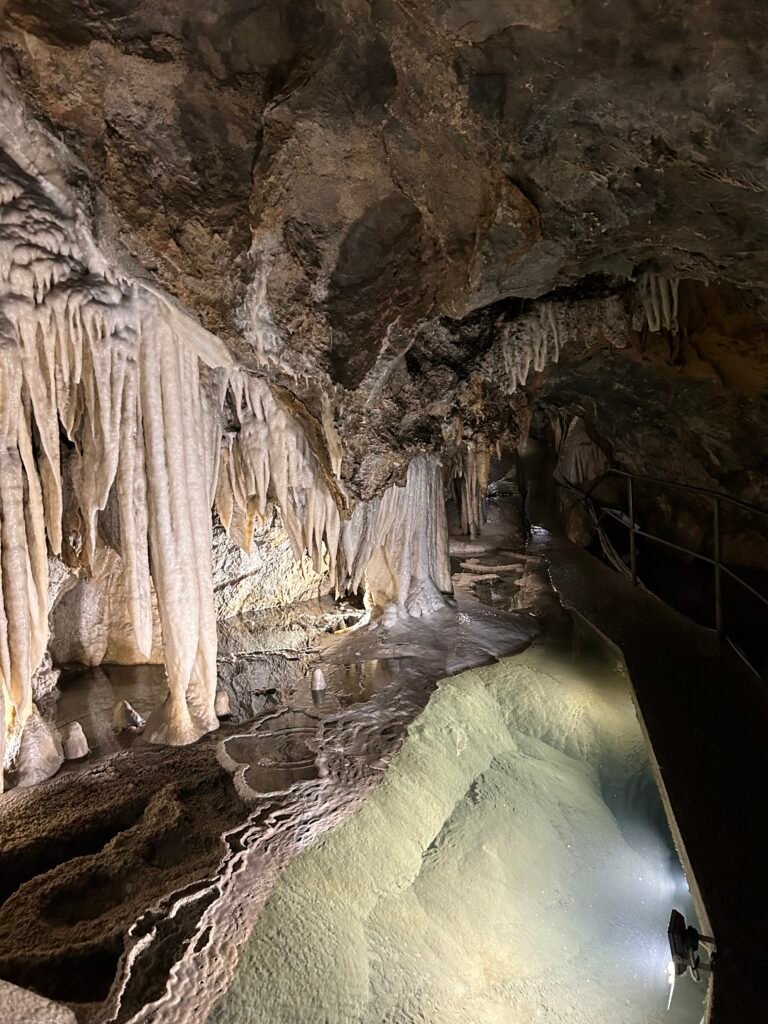
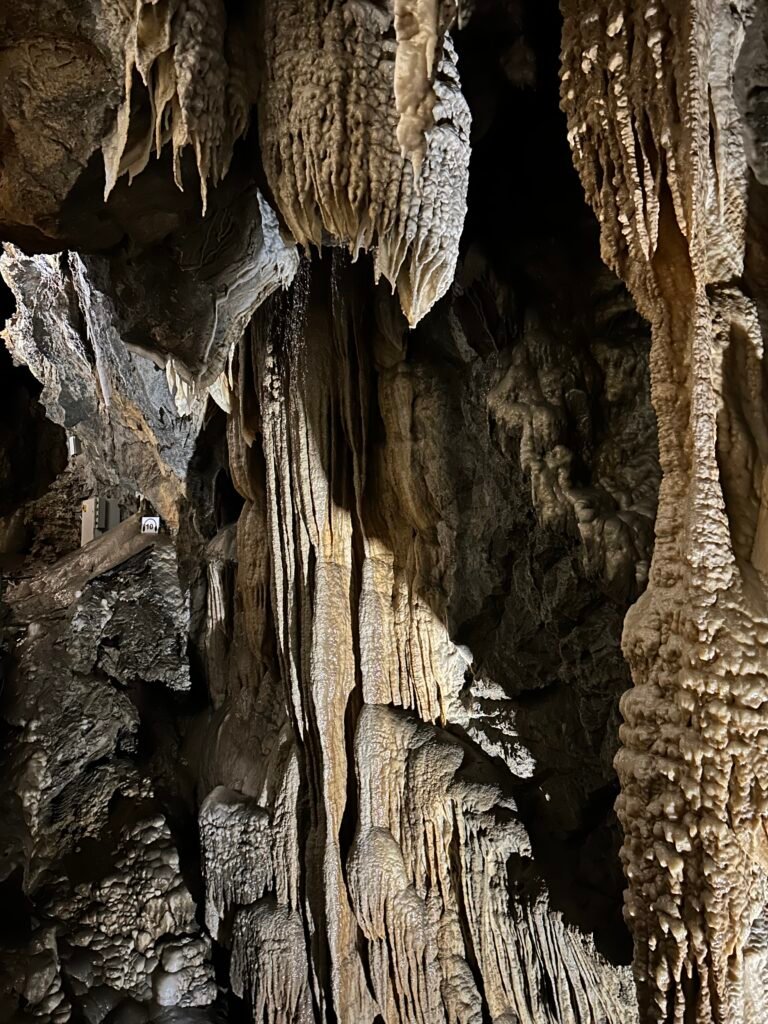
Route 1: On this easy route, you’ll walk through the flattest parts of the cave, stopping by a marvellous “crystal lake” and a great amount of shiny limestone formations where vivid colours can be seen.
Duration: 1 hour
Price: €10
Read more about the route here.
Route 2: This route includes the sights of the first itinerary. In the second part of the route you reach the deepest point of the cave, an area that is still expanding, without limestone formations, with forms of erosion on the walls and a little underground river on the bottom.
Duration: 2 hours
Price: €18
Read more about the route here.
Route 3: This route includes going through the first and second routes. In the third part you visit a perfectly vertical 90 meter shaft that you climb from the bottom up to reach a final chamber at the top, followed by a small underground canyon.
Duration: 3 hours
Price: €25
Read more about the route here.
Which route should you take in Grotta Del Vento
If you’re short on time, Route 1 offers a satisfying introduction without a major physical commitment. Adventurous visitors with a few hours to spare should consider Route 3 for the full underground experience, including the dramatic vertical shaft that the shorter routes skip entirely. If you plan on taking route 3, please contact the cave administration beforehand to ensure they are staffed for the tour before you arrive.
I was short on time, so I went with route 1. I really enjoyed the tour but I was the only one on the first tour and the guide joining me didn’t speak english (they have good audioguides though). I highly recommend going, but if you want to get the most out of our daytrip, I’d recommend contacting them beforehand.
As with hours and pricing, exact step counts, distances, and age recommendations are best confirmed with the official Grotta del Vento site, as these can be adjusted for safety or seasonal reasons.
Attractions Nearby Grotta Del Vento
If you’re visiting Grotta Del Vento, the surrounding Apuan Alps offer a couple of worthwhile add-ons to round out your day.
Monastero Eremo di Calomini
The Eremo di Calomini is a hermitage/monastery roughly 10 minutes from Fornovolasco. It’s a striking example of rock-cut architecture: the buildings are carved into, or built directly against, a cliff face. The hermitage originated in the 12th–13th century as part of the broader Augustinian hermitic movement.
Antro del Corchia Cave + Quicksilver Mines
Antro del Corchia is another tourist cave about 5 km from Grotta Del Vento. It’s known for being one of the deepest and longest cave systems in Italy.
Price for a guided tour: €18
The ticket includes a shuttle bus transfer service from the town of Levigliani. Read more here.
The Levigliani mines represent the oldest mining site in all of Upper Tuscany, first mentioned in a document from the municipality of Pisa in 1153. For centuries, the mines were a site for extracting cinnabar, a reddish mineral used to produce red pigment for Florentine workshops as early as the Middle Ages.
The visitable part of the mines is developed across two sites: the first area is one of the few places in the world where you can observe droplets of native mercury seeping from the rock wall. The second site, excavated with the first rudimentary pneumatic hammers in the early 1900s and equipped with a rail system for transporting carts, is a true testament to the industrial archaeology of the area.
Read more here.
Trekking tour in the Apuan Alps
From Levigliani, you can go to panoramic peaks of the surrounding mountains. The trek takes approximately four hours and 30 minutes.
Price: €25
Read more here