Visiting Pompeii Italy is one of the most extraordinary experiences the ancient world has to offer, but without a plan, it can also be one of the most overwhelming.
Spread across 163 acres of cobbled streets and roofless houses, Pompeii is not a site you can wander into unprepared and expect to get the most from.
The good news is that a little preparation goes a long way. Know which entrance to use, book your ticket in advance, understand the rough layout of the site, and have a shortlist of the things you most want to see, and Pompeii will reward you beyond anything you imagined. This guide gives you everything you need to plan a visit that does justice to one of history’s most remarkable places.
Overview of visiting Pompeii Italy on a map
Pompeii is enormous. The ancient city walls stretch 3 km in circumference and enclose roughly 66 hectares (about the size of a small town). Understanding the layout before you arrive is essential to making the most of your time.
There are three official entrances:
- Porta Marina is the main entrance and closest to the train station “Pompei Scavi Villa Dei Misteri”.
- Piazza Esedra is near the main entrance and less crowded.
- Piazza Anfiteatro is closest to “Pompei” train station stop.
Archaeologists have divided this ancient city into nine regions numbered after roman numbers (I – IX), each subdivided into city blocks called insulae. Official attraction points follow this system (for example I.16 – meaning region 1, insulae 16 – which is the Garden of the Fugitives). Download the official PDF map before you go or get the app.
I’ve tried to pin the most important spots below:
What you need to know about visiting Pompeii Italy ruins
Pompeii was a prosperous trading port city with a cosmopolitan population. Its residents spoke multiple languages, and DNA analysis of recovered remains shows people from across the Roman Empire and North Africa living there. The city had around 80 taverns (thermopolia) serving hot food from the street (the Roman equivalent of a street food), and election slogans painted on exterior walls of public houses show a remarkably democratic political culture.
Visiting Pompeii Italy also means stepping into one of the most extensively studied archaeological sites on the planet – and yet, remarkably, around a third of the city remains unexcavated. New discoveries are still being made every year.
Quick facts about Pompeii
- Remains of over one thousand victims of the 79 AD eruption have been found
- The site has 4 million annual visitors today
- The city walls stretch 3.2 km in circumference, pierced by 7 gates. The city is divided into 9 numbered regions (Regio I–IX).
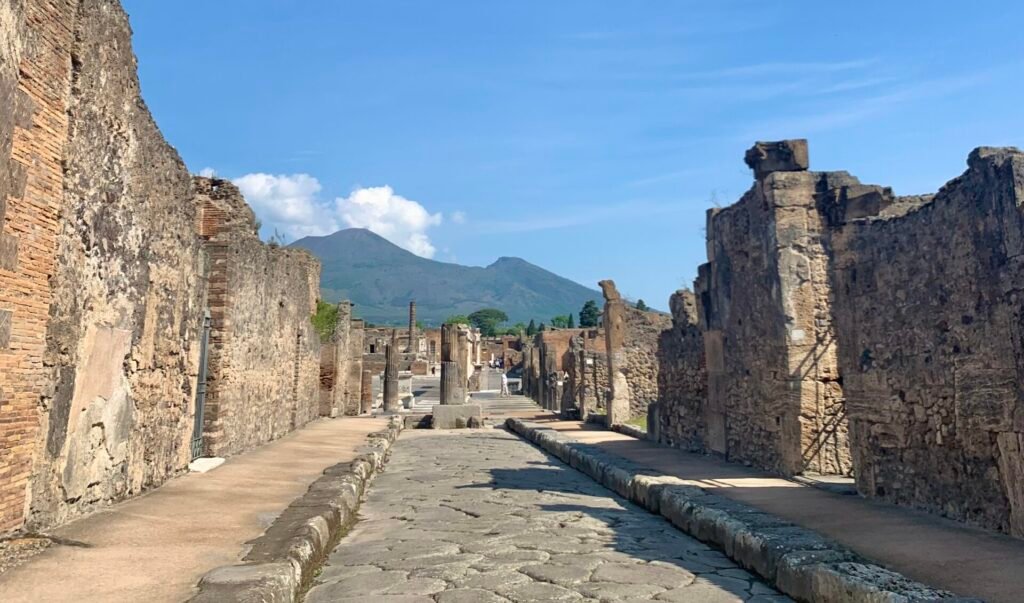
- The Vesuvius volcano stands 1,281 m tall. At the time of the eruption it had been dormant for centuries, so the residents of Pompii had no concept of it as a threat.
- Most of the people living in Pompeii were killed by pyroclastic surges which is superheated clouds of gas and ash travelling at up to 700 km/h between 100–300°C. Not lava.
- Over 1,150 bodies recovered to date. Most of the population (~16,000+) likely escaped during the initial ash fall phase.
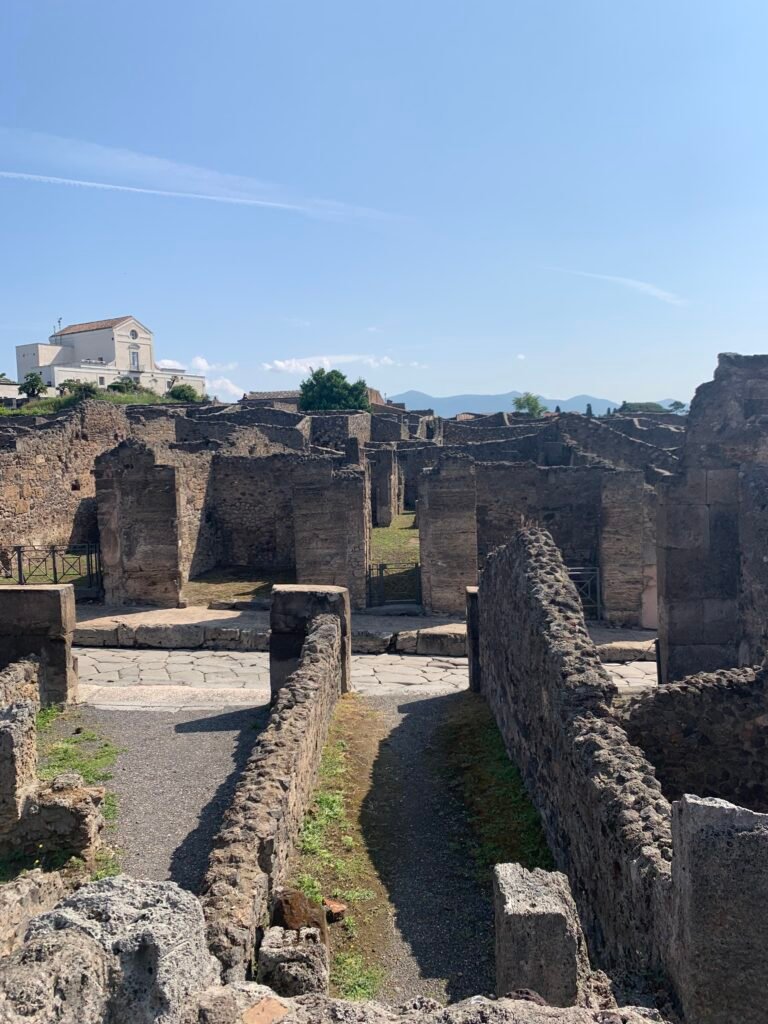
What happened to Pompeii?
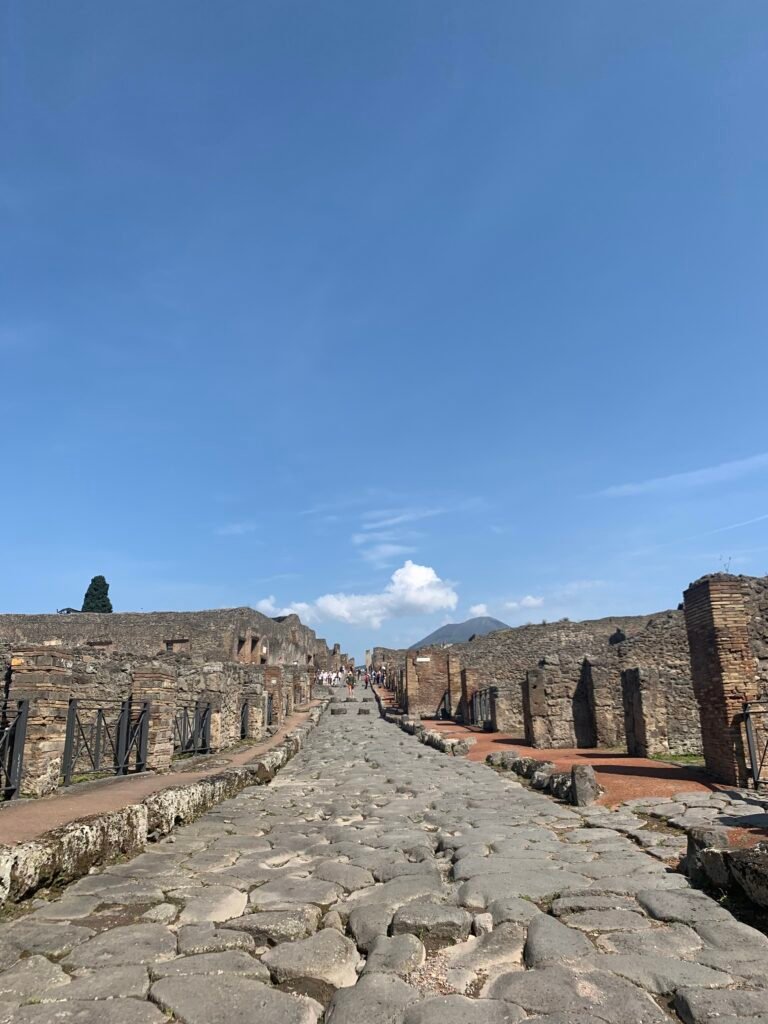
On the morning of August 24th, 79 CE, Mount Vesuvius began erupting with catastrophic force. A city of over 20.000 people – wealthy, cosmopolitan, and culturally rich – was buried beneath 4–6 metres of volcanic ash. The eruption lasted more than two days, but most inhabitants likely escaped during the initial 18-hour ash fall. Those who didn’t were immortalised forever.
The earliest excavations began in 1748, and archaeological work continues to this day. At over 160 acres, it’s one of the largest and best-preserved Roman sites in the world, with streets, frescoes, temples, bathhouses, taverns, and homes still largely intact.
Sadly, during the Second World War, between August and September 1943, the archaeological area of Pompeii was bombed by Allied forces, with the aim of accelerating the retreat of German troops. About 170 bombs were dropped by, hitting and damaging several points of the excavation area.
After removing the rubble and recovering the objects, a complete list of the 1.378 destroyed findswas drawn up at the Antiquarium, with their descriptions.
Even though you can see a lot of Pompeiis original art and artefacts on site, much of Pompeii’s finest original mosaics, frescoes, and artefacts have been moved to the National Archaeological Museum of Naples (MANN). If you want to see the full picture, visit the museum before or after the ruins.
Visiting Pompeii Italy bodies
One of the most haunting as well as most fascinating things to see in Pompeii are the so-called mummies or rather preserved body casts. When archaeologists discovered hollow cavities in the ash layers, they poured plaster into them to reveal the exact forms of people caught in their final moments.
The most popular place to see the casts is at the Garden of the Fugitives (Orto dei Fuggiaschi I.16). Here, 13 casts lie together, most likely a family, frozen, some clutching one another. It’s deeply sobering and, for many visitors, the emotional centrepiece of the entire experience. Don’t skip it simply because it’s far from the entrance.
Additional body casts can be found at the Stabian Baths (Terme Stabiane VII.16) and close to the House of Octavius Quartio (Casa di Cctavius Quartio II.1)
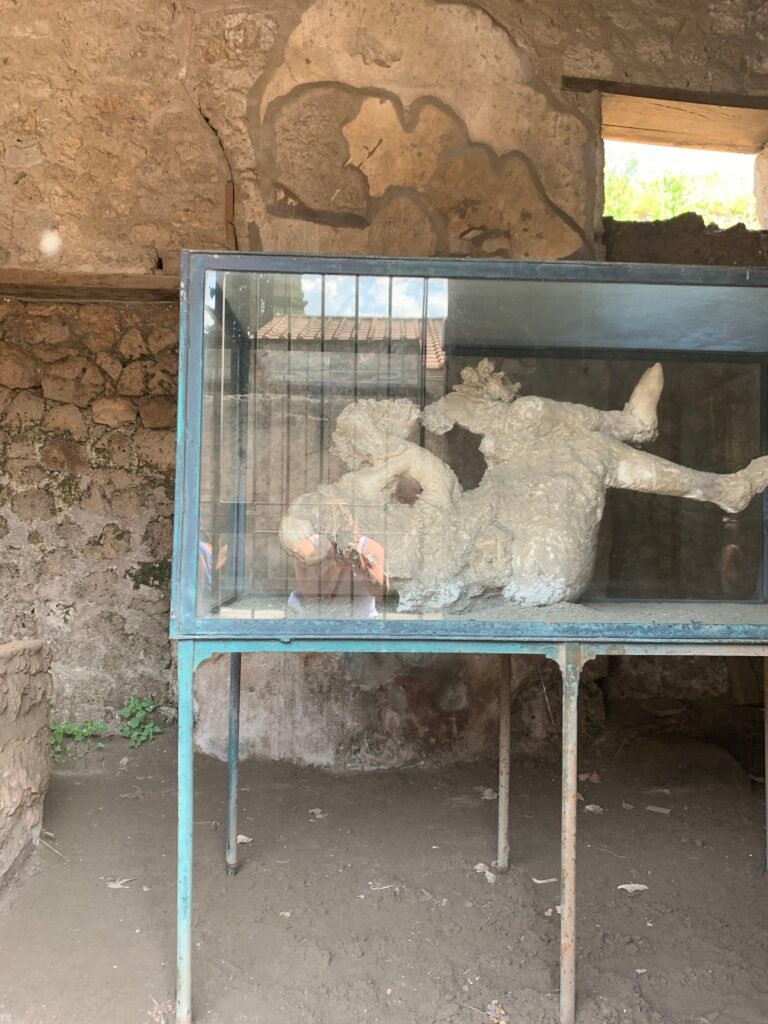
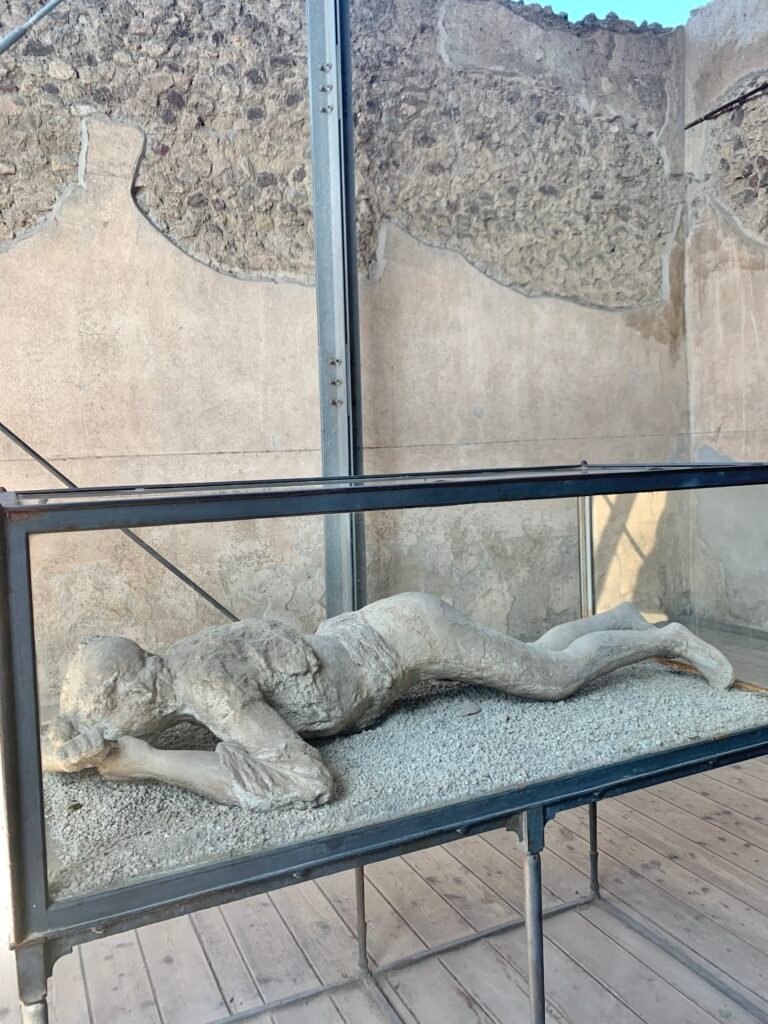
Cast close to the House of Octavius Quartio pictured on the left, and cast in the Stabian Baths pictured on the right.
Other sites to go to when visiting Pompeii Italy
Forum of Pompeii (VII.6a)
The beating heart of ancient Pompeii, a rectangular square 143 metres long and 38 metres wide, built originally in the 4th century BCduring the Samnite period and substantially renovated under Roman rule in the 2nd century BC. It was the focal point of the city’s political, religious, and commercial life.
Teatro Grande (VIII.10)
This 5,000-seat theatre was carved into the lava mass on which Pompeii was built, and today hosts the annual Pompeii Theatrum Mundi summer season of classical theatre. The current capacity is around 2,200.
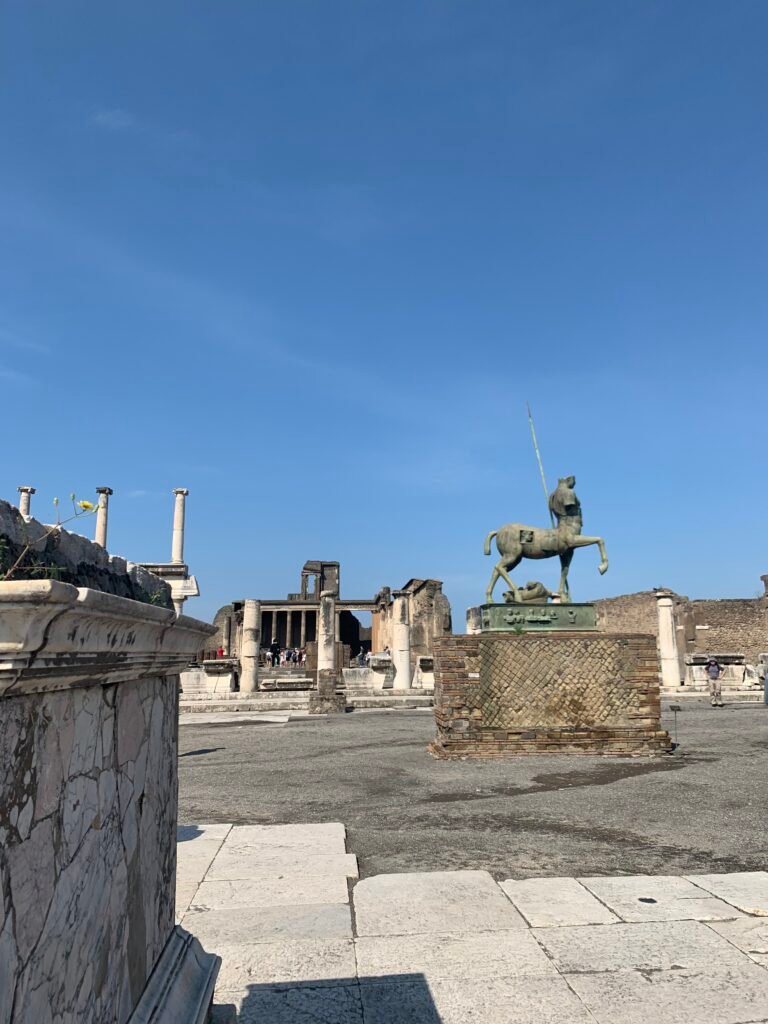
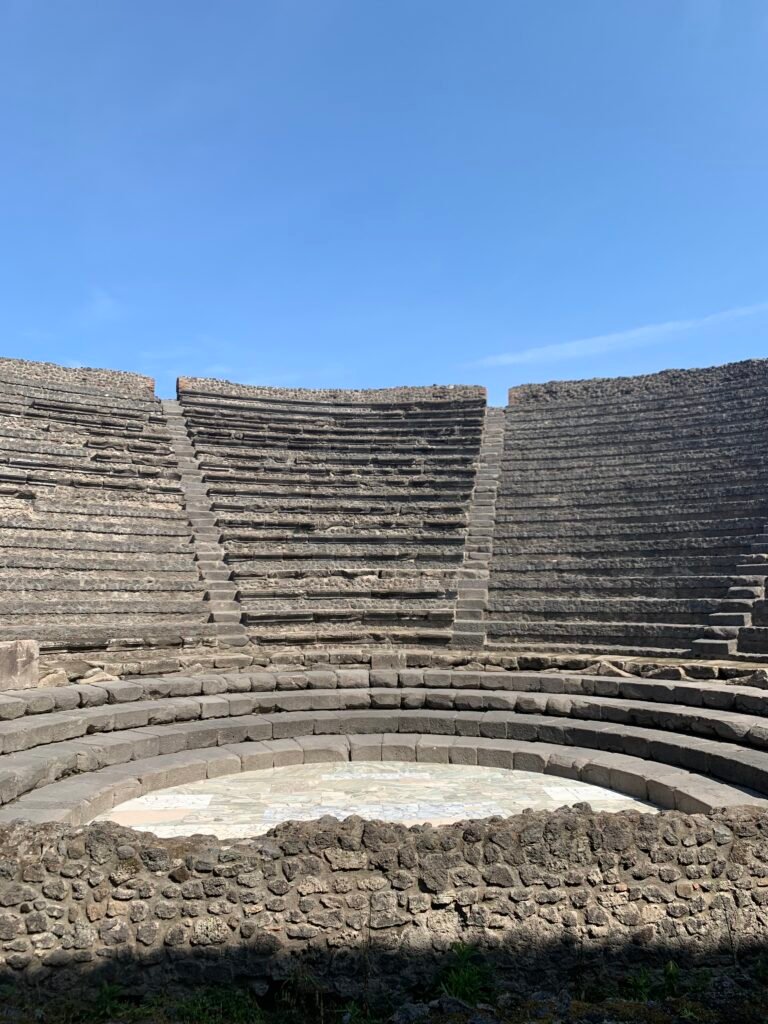
The Forum of Pompeii pictured on the left, and Teatro Grande on the right.
Amphitheatre of Pompeii (II.5)
Built around 70 BC this is one of the earliest Roman amphitheatres built of stone (previously, they had been built from wood). With 35 rows of seats divided into three social tiers – the ima caveafor the elite, the mediafor the general populace, and the summafor slaves and women – it could hold up to 20,000 spectators.
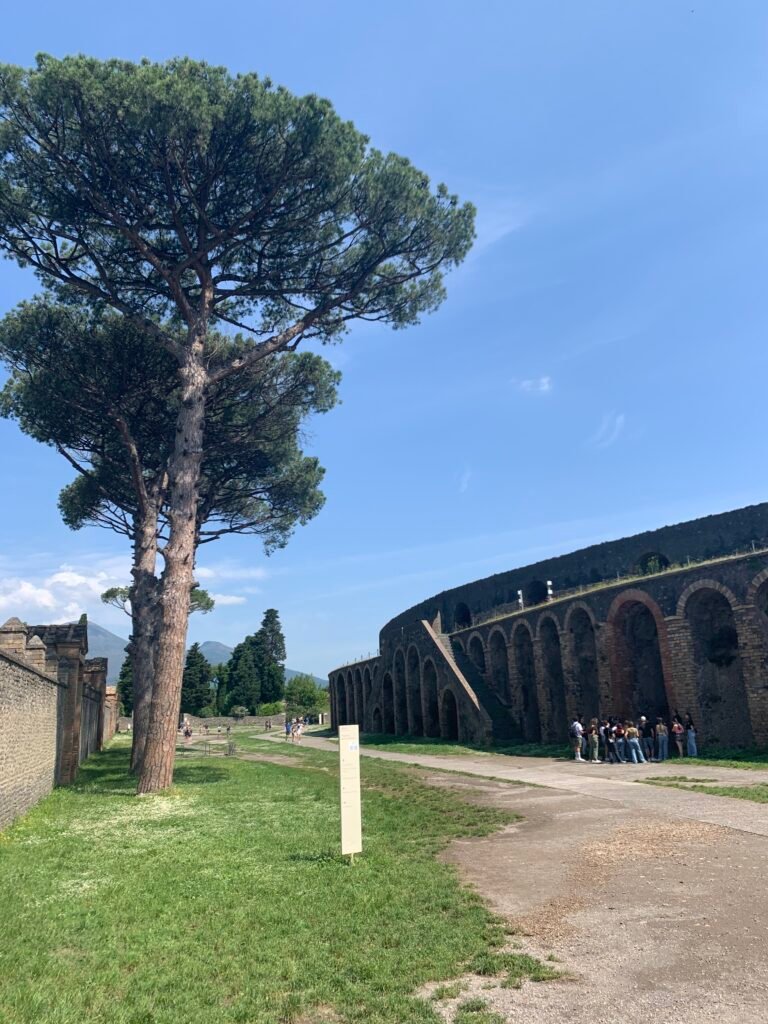
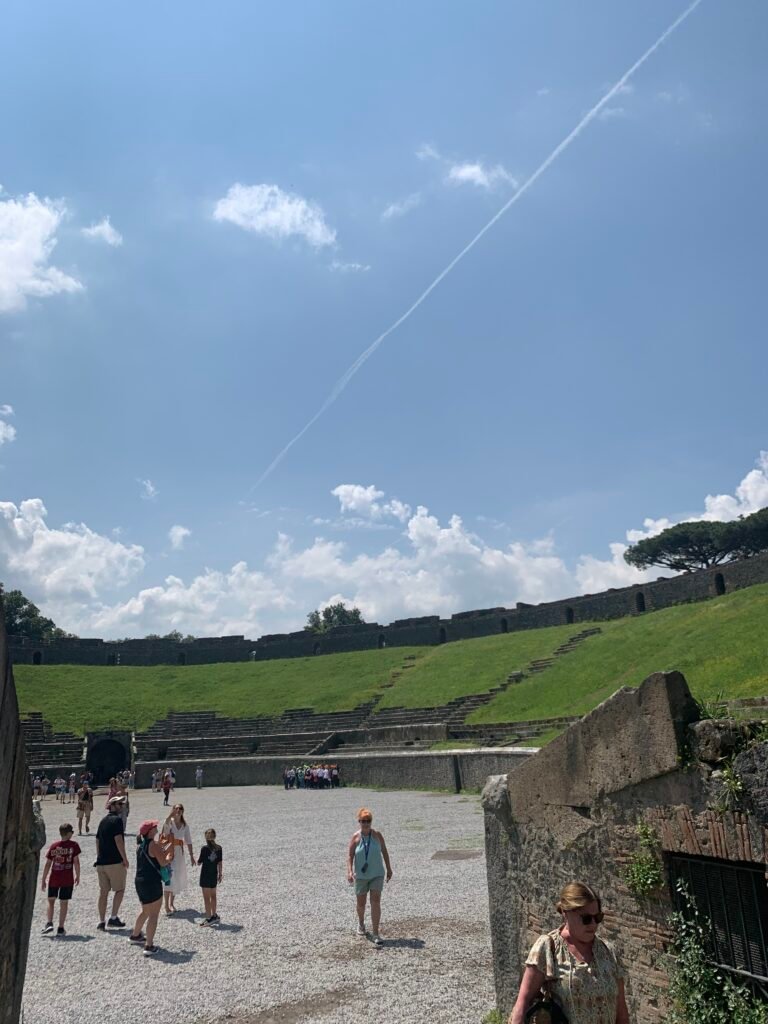
The Amphitheatre of Pompeii pictured from the outside and the inside.
House of Octavius Quartio (II.1)
Also known as the House of Loreius Tiburtinus, this house is famous for its large garden. The lower walls of the biclinium (an ancient dining room) feature two remarkable mythological friezes: one portraying the feats of the Greeks at Troy, the other the expedition of Hercules against Laomedon. It’s one of the more quietly remarkable houses on the site.
Palestra Grande (II.6)
During the Augustan era it served as a gymnasium where sports activities were used as propaganda to inculcate Imperial ideology in the younger generation. The site is now used to host temporary exhibitions.
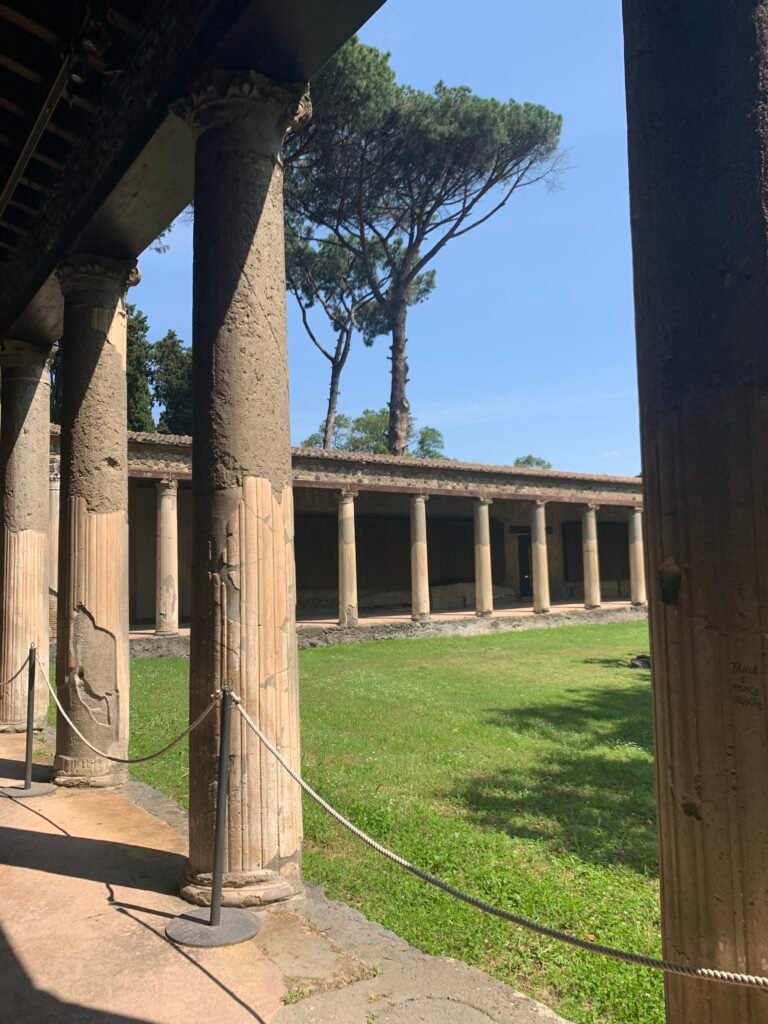
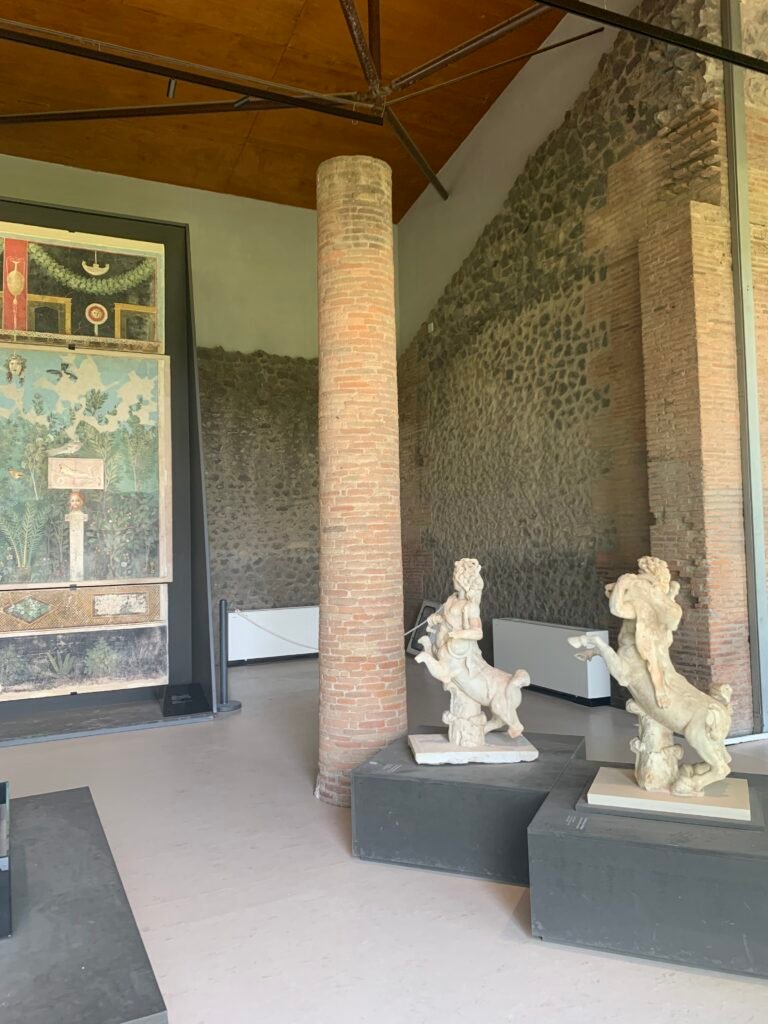
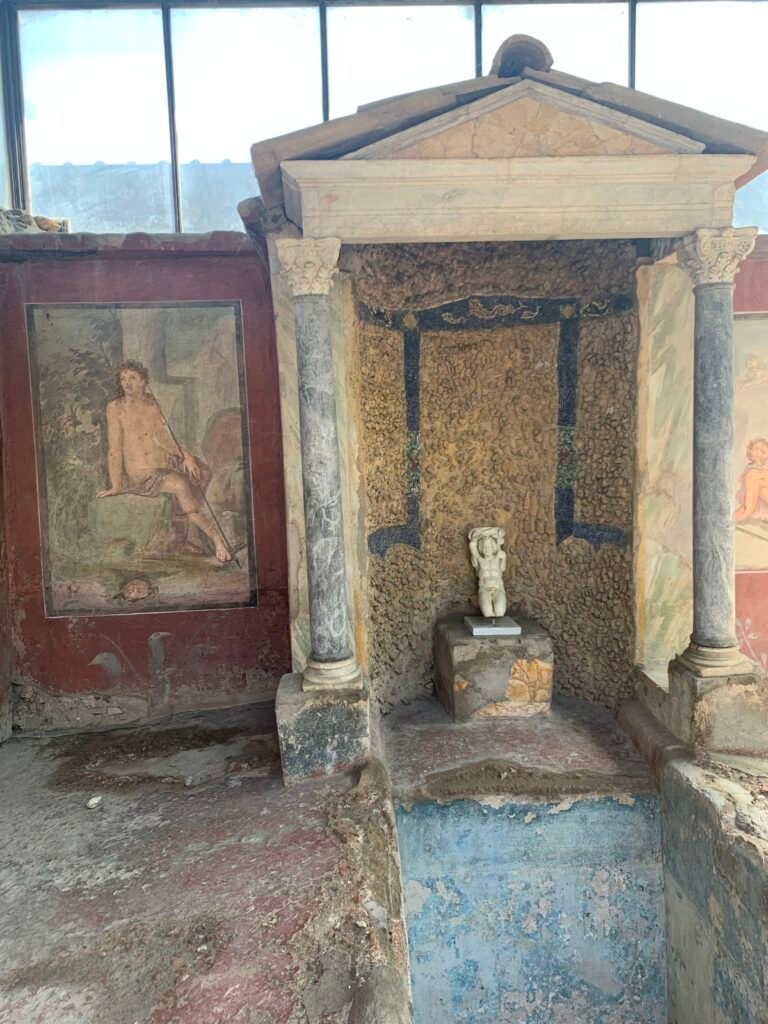
The Palestra Grande + exhibitions pictured on the left & middle, and the House of Octavius Quartio on the right.
Garden of the Fugitives (I.16)
In 1961, archaeologists discovered 13 victims of the eruption here — the largest number found together in a single location. The victims, who included adults and children, had survived the initial ash fall (they were found above the pumice layer) but were overwhelmed by the pyroclastic surge as they tried to flee. The youngest victim recovered anywhere in Pompeii, estimated at 12–14 months old, is among the group. The casts are displayed in a glass-enclosed shed to protect them from the elements.
Necropoli di Porta Nocera (II.10)
Just outside the Garden of the Fugitives, a wealth of tombs forming the city’s necropolis (cemetery). Roman law required burial outside the city walls and from the 3.2 km city wall around Pompeii there’s 7 gates. This necropolis is just behind Porta Nocera (Nocera gate). Highlights include the high-podium tomb of Publius Vesonius Phileros, which carries a lengthy inscription in which Vesonius complains bitterly of being unjustly accused by a friend, and addresses passers-by directly.
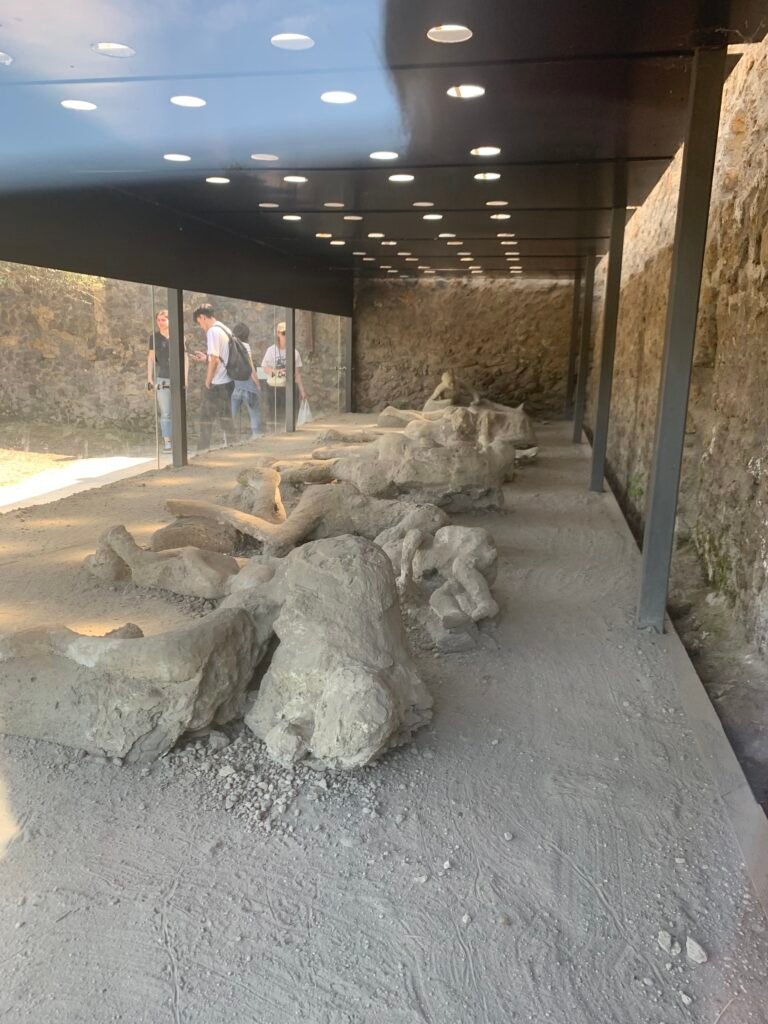
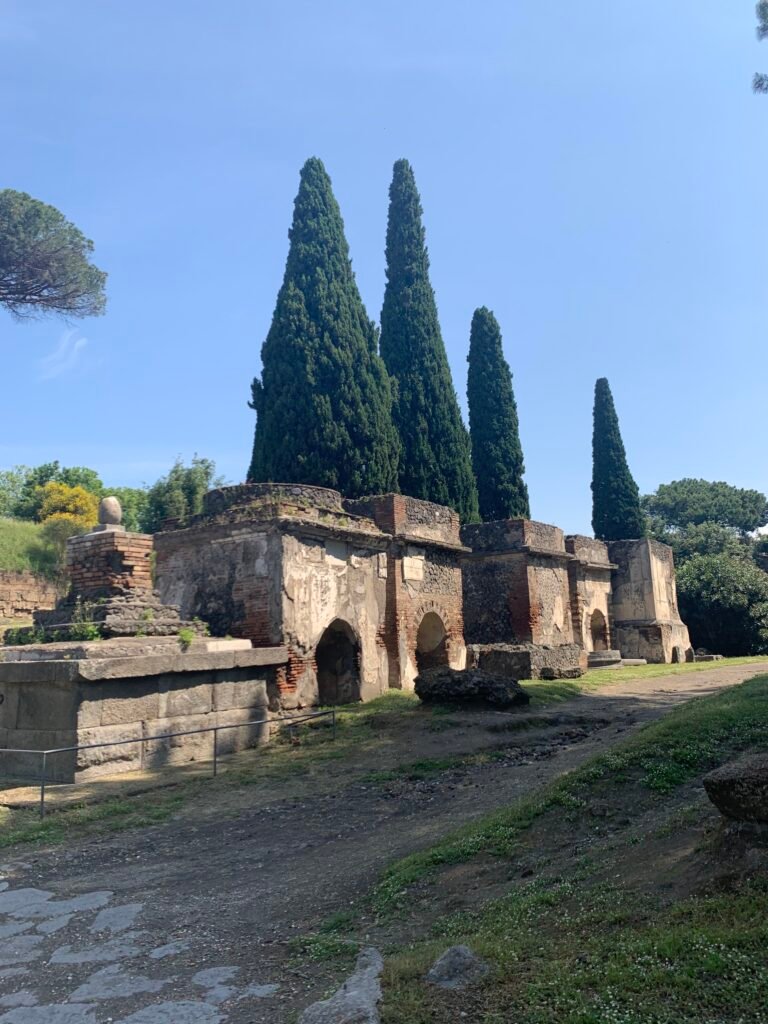
The garden of fugitives pictured on the left, and Necropoli di Porta Nocera on the right.
Terme Stabiane (VII.16)
The Stabian Baths are the oldest and largest of the five public baths in Pompeii. The establishment covers over 3,500 square metres, divided into separate men’s and women’s sections. The central courtyard served as a gymnasium (a center for athletic and intellectual training).
The brothel of Pompeii (VII.18)
The Lupanar is the sole archaeologically confirmed dedicated brothel. It is a two-storey building comprising ten cramped cubicles. The Lupanar’s most famous features are the erotic frescoes above each ground-floor doorway, widely interpreted as a visual menu of services which was practical for a clientele that may not have shared a common language (as Pompeii was a trading port city visited my many travelers). Over 120 pieces of graffiti have been recorded inside — the highest density of inscriptions in any single building in Pompeii. They include client records, workers’ names and nationalities, and even brief reviews. It is consistently the most visited individual building on the site, and the queue outside is almost always the longest.
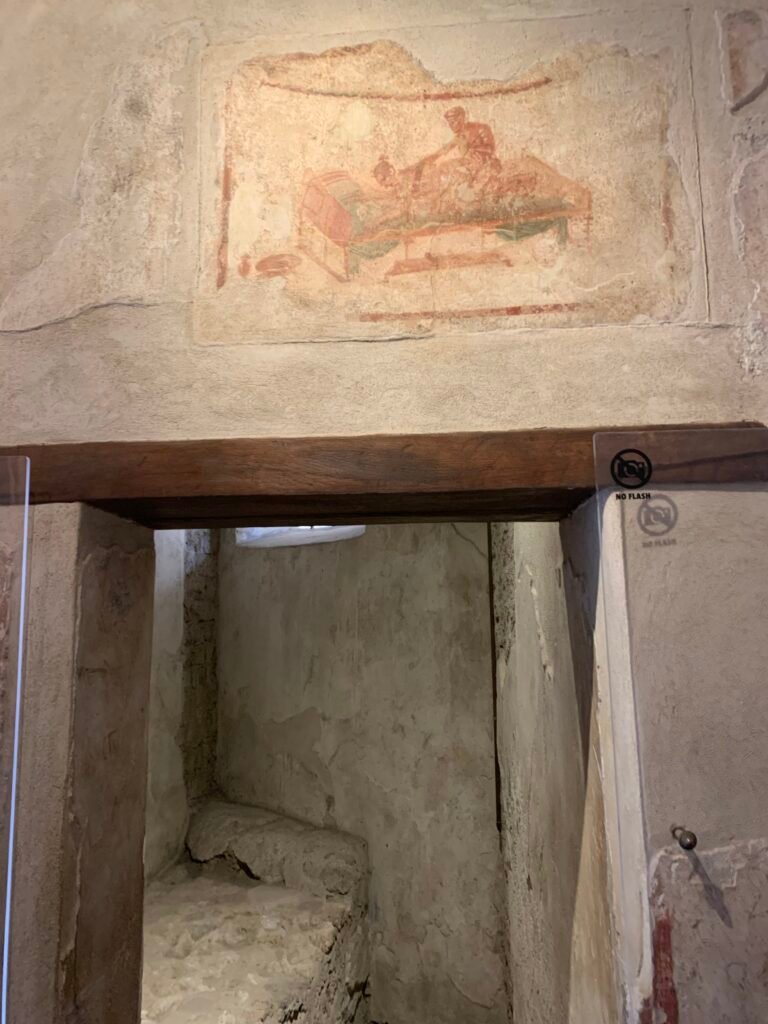
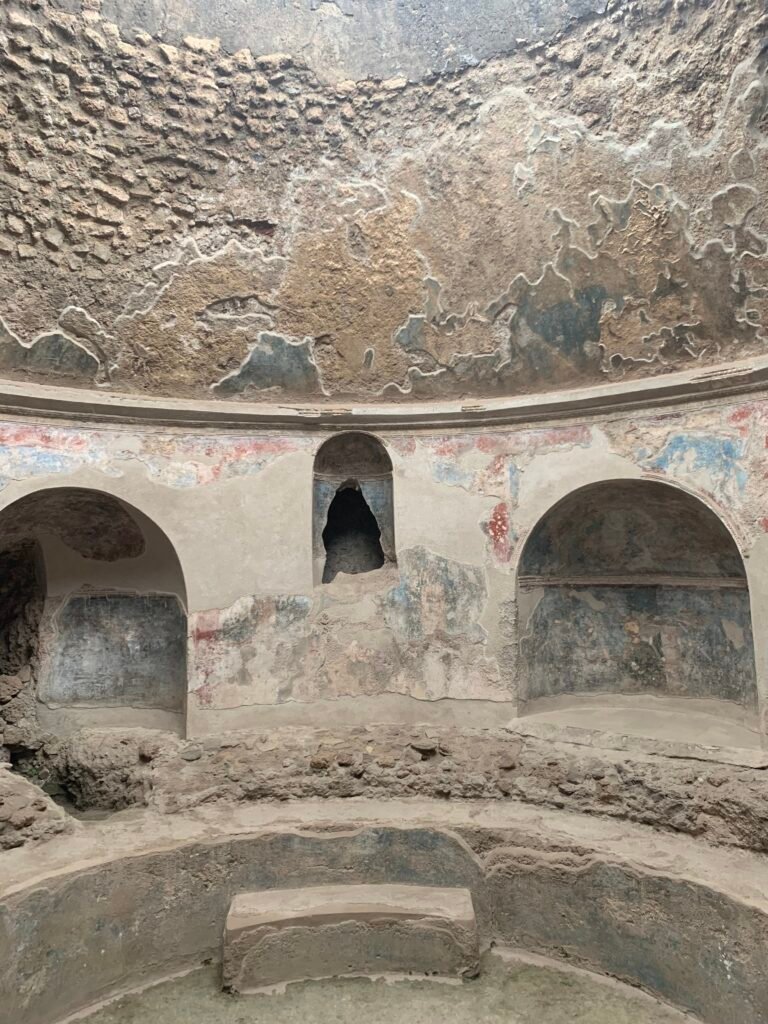
The Lupanar pictured on the left, and the the Stabian Bath on the right.
Pompeii tickets
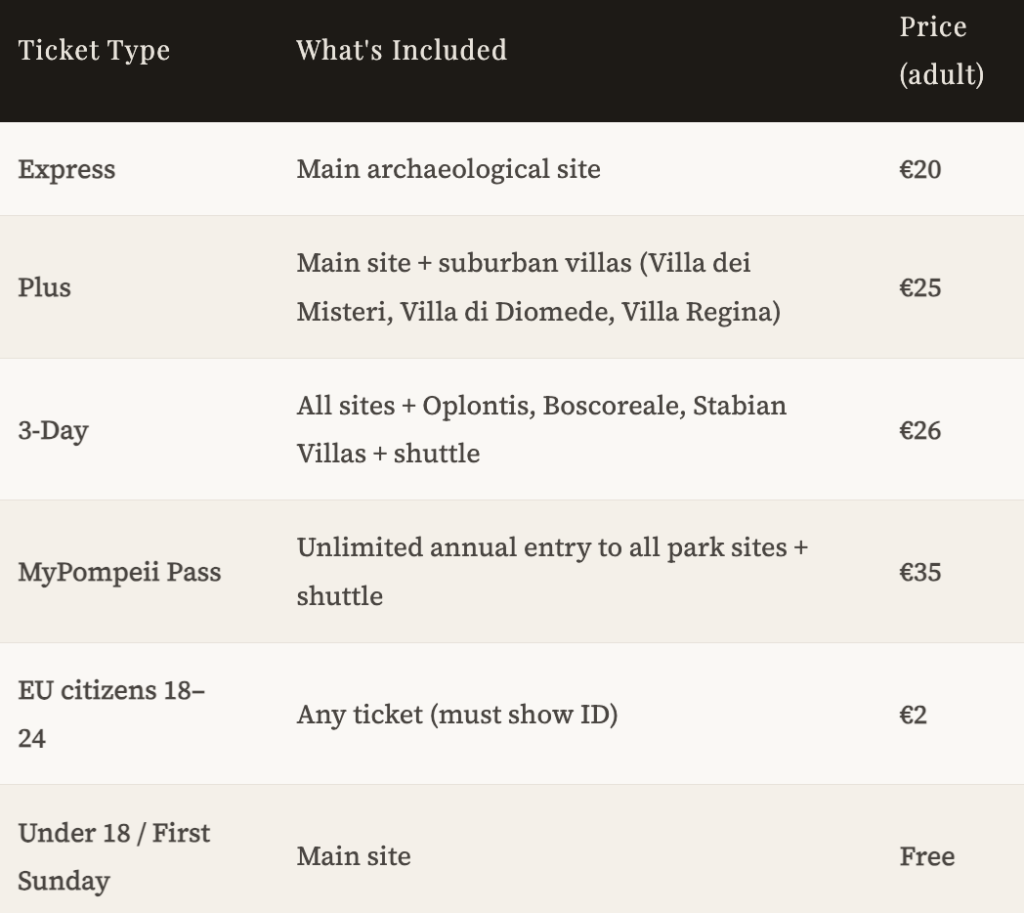
Since November 2024, Pompeii has introduced a daily cap of 20.000 visitors and time-slotted entry during peak season (April–October). Tickets are also now nominative meaning that your name goes on the ticket, this means you HAVE to bring identification like your passport to confirm your ticket. Read about the different types of tickets here.
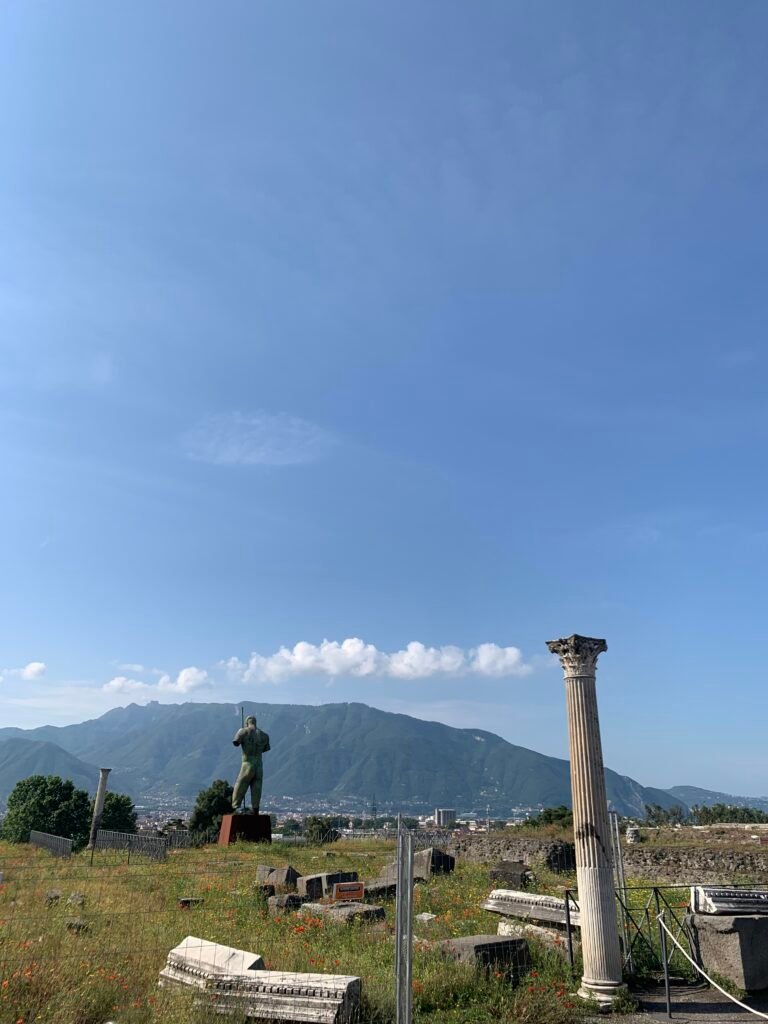
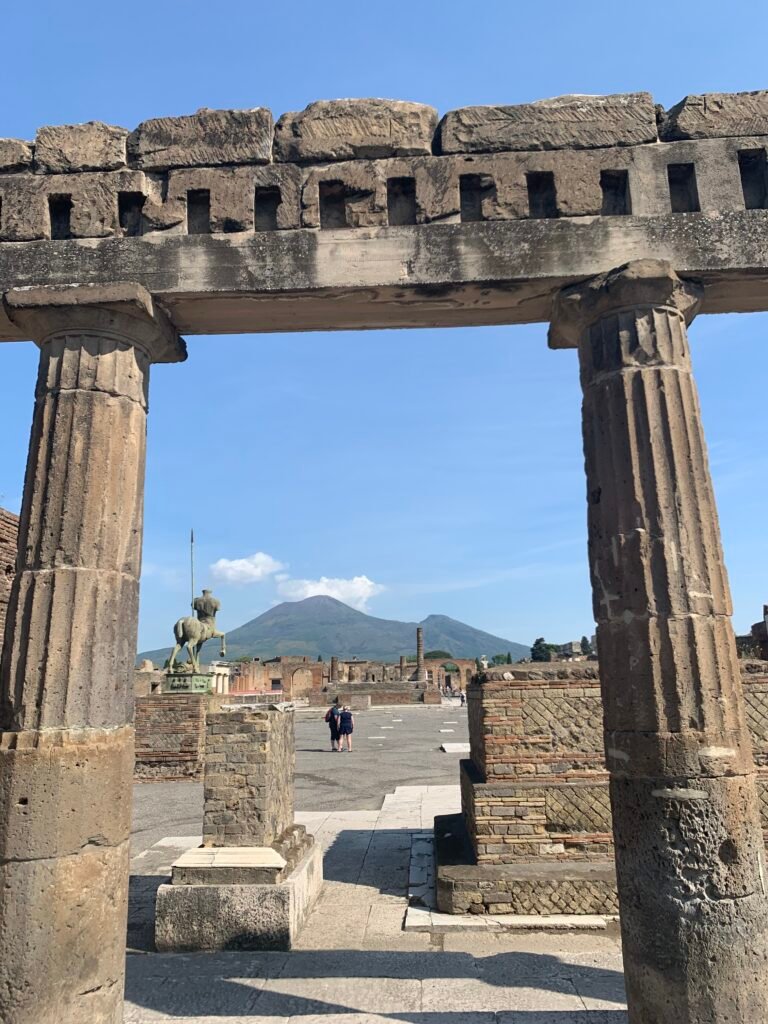
Viewpoint just outside entrance of Piazza Esedra pictured to the left, and Forum of Pompeii on the right.
When is it best to go visiting Pompeii Italy?
Most people forget that the site is almost entirely open to the elements, meaning cover and/or shade from sun or rain is scarce. And the summer crowds can make even the quieter corners feel claustrophobic.
Season wise May and October are the sweet spots. Temperatures are warm but not brutal, the light is beautiful for photography, and you’ll share the site with far fewer people. If you’re planning on visiting Pompeii Italy for the first time, these two months offer the best possible introduction to the site.
Whatever time of year you go, aim to arrive at opening time (9am). The site is at its quietest in the first two hours of the day
Opening hours of the site:
1 April–31 October: 9am–7pm (last entry 5:30pm).
1 November–31 March: 9am–5pm (last entry 3:30pm).
Spring (April–May): mild temperatures and manageable crowds – particularly in early April. The site opens until 7pm from 1 April, giving you more hours to explore at your own pace.
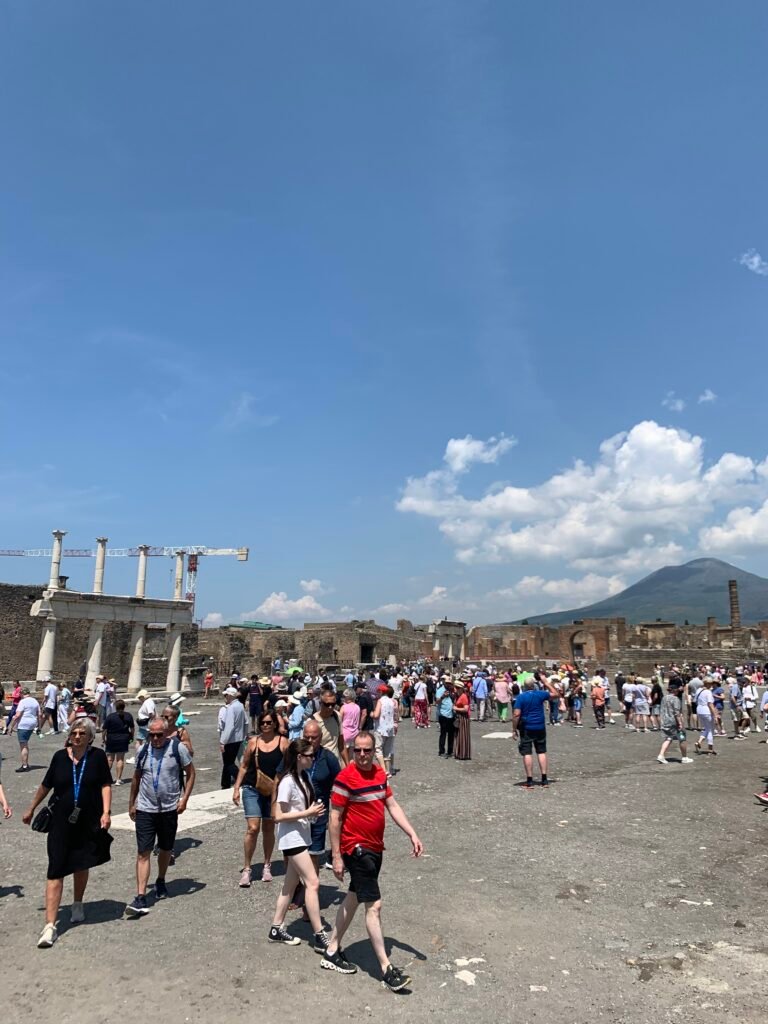
I visited the site on May 31st, which was still very hot at midday. I went right as the site opened at 9am which was amazing, as there was virtually no crowd. But by the time I left around 12pm the Forum was filled!
Autumn (September–October): equally rewarding as spring. September retains some summer warmth but the worst of the crowds have thinned. By mid-October, conditions are genuinely pleasant, and you’ll find the amphitheater and Garden of the Fugitives almost empty.
Winter (November–March): quiet and cool but higher risk of rain. Crowds are minimal and opening hours are shorter (closing at 5pm, last entry 3:30pm), so plan accordingly.
Summer (June–August): peak tourist season and, frankly, the worst time to go. July and August are hot with temperatures regularly exceeding 35°C and the daily visitor cap of 20,000 is reached. If summer is your only option, book the 9am entry slot, head immediately to the far end of the site, and carry more water than you think you’ll need.
Visiting Pompeii Italy by train
Many go by tours to Pompeii including being picked up and dropped off at the site. However if you plan to visit the site solo or have booked a guided tour not including transportation, the easiest way to get to the site is by train.
The first train leaves from Naples Porta Nolana (NOT Napoli Centrale) at 8.22am and then you’ll arrive at Pompei Scavi Villa Dei Misteri exactly at 9am ready to be one of the first ones on site.
Many make the mistake of getting off at “Pompei”. BUT if you book tickets for the main entrance, the station you should get off at is “Pompei Scavi Villa Dei Misteri” (the stop BEFORE “Pompei”). If you book tickets for the entrance at Piazza Anfiteatro, getting off at “Pompei” is closest.

Mistakes to avoid when visiting Pompeii Italy
- If going by train – remember to get off at the correct station “Pompeii Scavi”
- Be careful which entrance gate you buy your ticket for. They won’t let you in if you show up at the wrong gate. Also don’t forget your passport (or student ID).
- Wear the right footwear
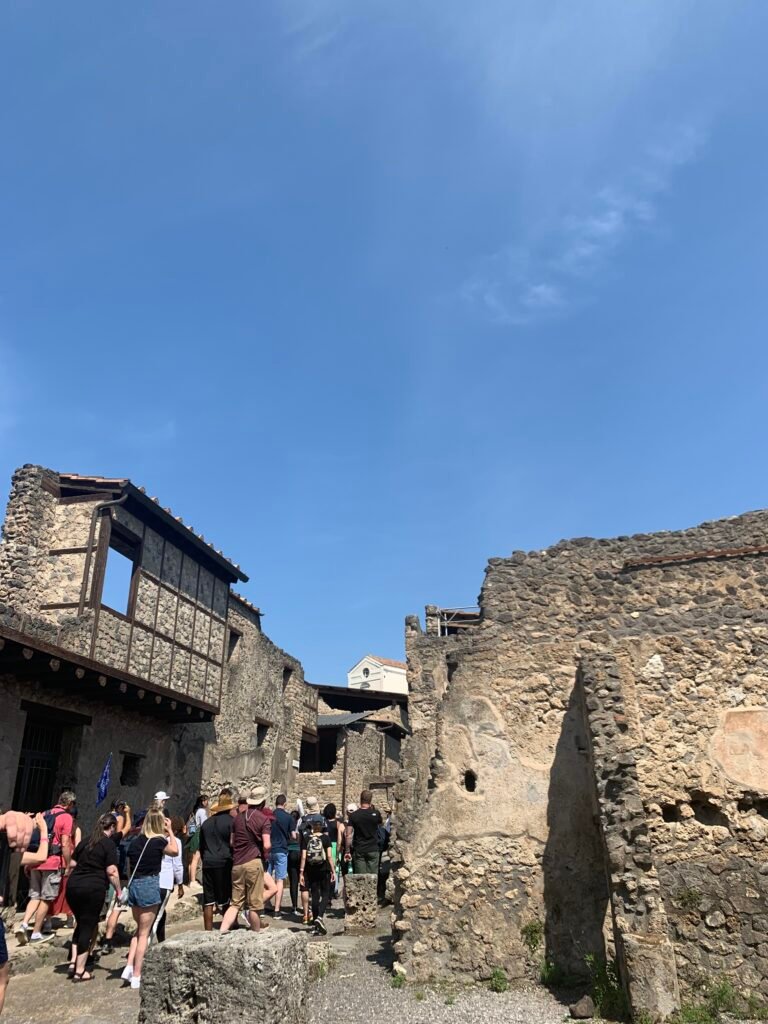
The ancient cobblestone streets are uneven, with high kerbs and rough surfaces. You’ll easily exceed 10,000 steps. Flip-flops and heels are a recipe for blisters and turned ankles. Wear sturdy trainers or walking boots with ankle support. Pack blister plasters just in case.
- Bring a hat and sunscreen
I didn’t bring a hat, and really regretted it as the site is almost entirely open to the elements, meaning cover and/or shade from the sun is almost non-exsistent. Many also bring umbrellas to cover more of their bodies from the sun.
- Skipping a guide altogether
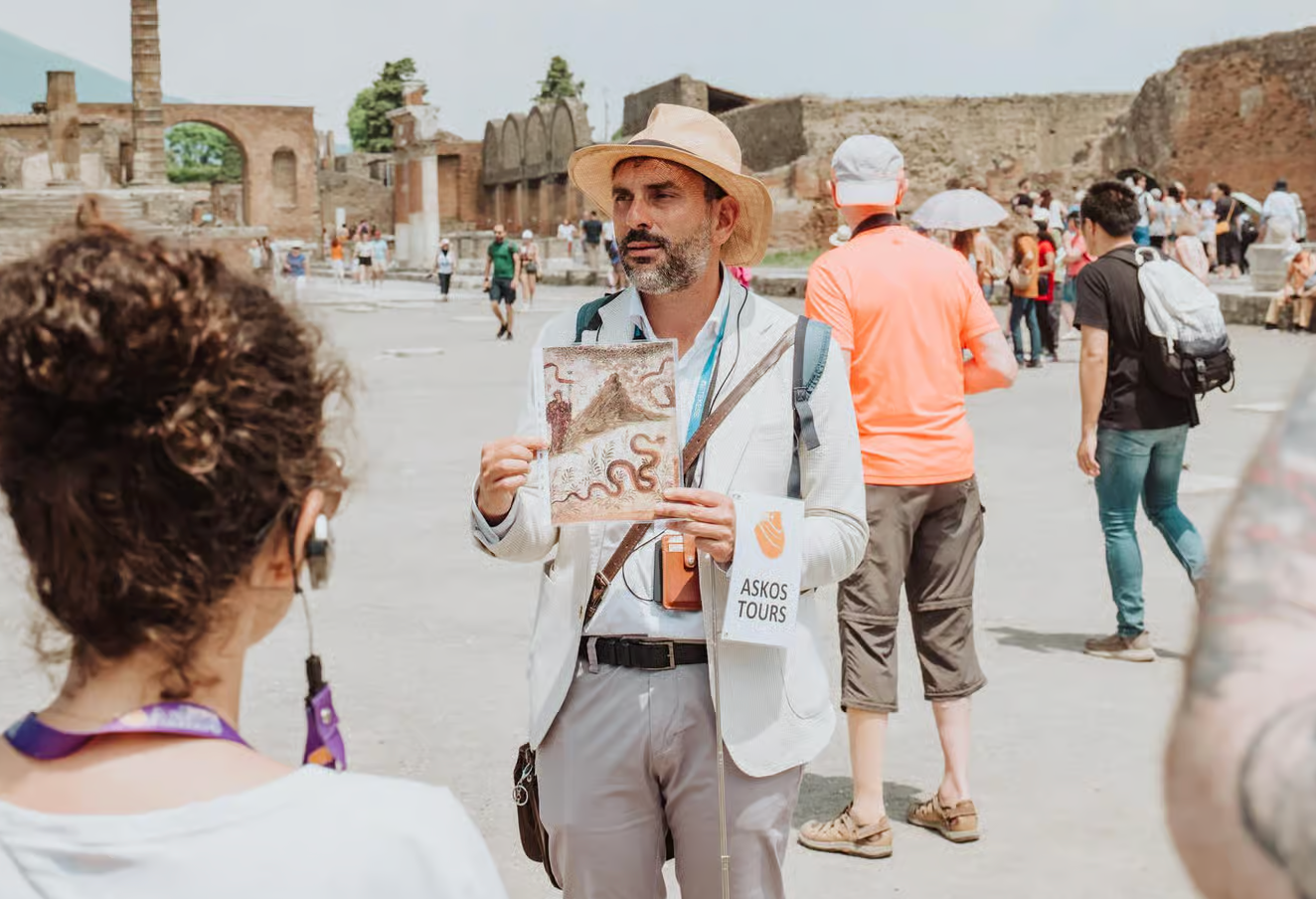
Without context, visiting Pompeii Italy can feel like an endless sequence of rubble. I went with an audio guide, but ended up not using it, as I found it more confusing than helpful. A professional guided tour who knows the history behind each building would’ve transformed my experience entirely. It’s the only thing I regret about my visit – not going on a guided tour.
- Bring food/snacks and water
You can bring your own food into Pompeii. However, official park rules strictly require that you only consume food and drinks in the designated picnic areas rather than throughout the ruins.
- Go as early as possible
Even if your guided tour starts at 10, I would still recommend getting here right when the site opens, as there’s just a different atmosphere in the forum and down the main roads, when you’re almost alone. As mentioned above, the first train leaves from Naples at 8.22am so you can be on site at 9am.
Explore the best-preserved archaeologicalsite in the world with an archaeologist.
Duration: 2 hours
Live tour guide
Free cancellation up to 24 hours in advance
Is Visiting Pompeii Italy Worth It?
Without hesitation, Pompeii is worth every minute and every euro. What makes Pompeii remarkable isn’t just its history — it’s the feel of it. The stepping stones worn smooth by our predecessors’ sandals. The ruts carved into cobblestones by Roman cart wheels. The election slogans still painted on walls. The body casts that make an ancient catastrophe viscerally, painfully real. There is no other place on earth quite like it.
Herculaneum, its neighbour buried in the same eruption, is smaller and in some respects even better preserved, but it lacks Pompeii’s sheer, overwhelming scale.
You need a day, comfortable shoes, plenty of water, and ideally a good guide. In return, whatever brings you here – history, curiosity, or a once-in-a-lifetime bucket list tick – visiting Pompeii Italy delivers on every level.