Venice Italy is one of those cities that divides opinion before you’ve even arrived. Overrun, sinking, a floating theme park — you’ve heard it all. But spend just a few hours away from the tourist corridor, and Venice will quietly make you fall in love with it.
I’ll be honest with you: I was a bit wary about visiting, but the cheapest flight to Italy from Copenhagen was through Venice, so I figured I had to stop by. And if you do your research on how to visit this controversial city without the crowds, I promise it’s worth it (at least that’s what I concluded after my time here).
Venice Italy is essentially three cities in one. There’s the stretch between the train station, Rialto Bridge, and Piazza San Marco, that’s mentioned in every travel blog. It’s beautiful, yes, but packed wall-to-wall between 10am and 7pm. Then there’s that same stretch at night or early morning, when the day-trippers have left or haven’t arrived yet, where locals roam and quiet stretches over the city.
And then there’s the third Venice: the backstreets of Cannaregio, the canal-side bars of Venezia and the colourful fishing island of Burano. Areas most visitors never find because they all follow the same route. But you’re not like the others ;)) So I will guide you to all three. We’ll tick off the unmissable landmarks (because they’re beautiful and it’s your first time here), give you the practical details you actually need, and then take you somewhere most tourists won’t follow.
Map of Venice Italy
Before diving in, it’s important to know that Venice is made up of 118 small islands connected by over 400 bridges! It’s far easier to navigate once you understand how the six districts of Venice relate to one another.
The map below shows you my recommended stops by category. In the following post I’ll guide you through them to plan your perfect itinerary.
Getting Around Venice Italy
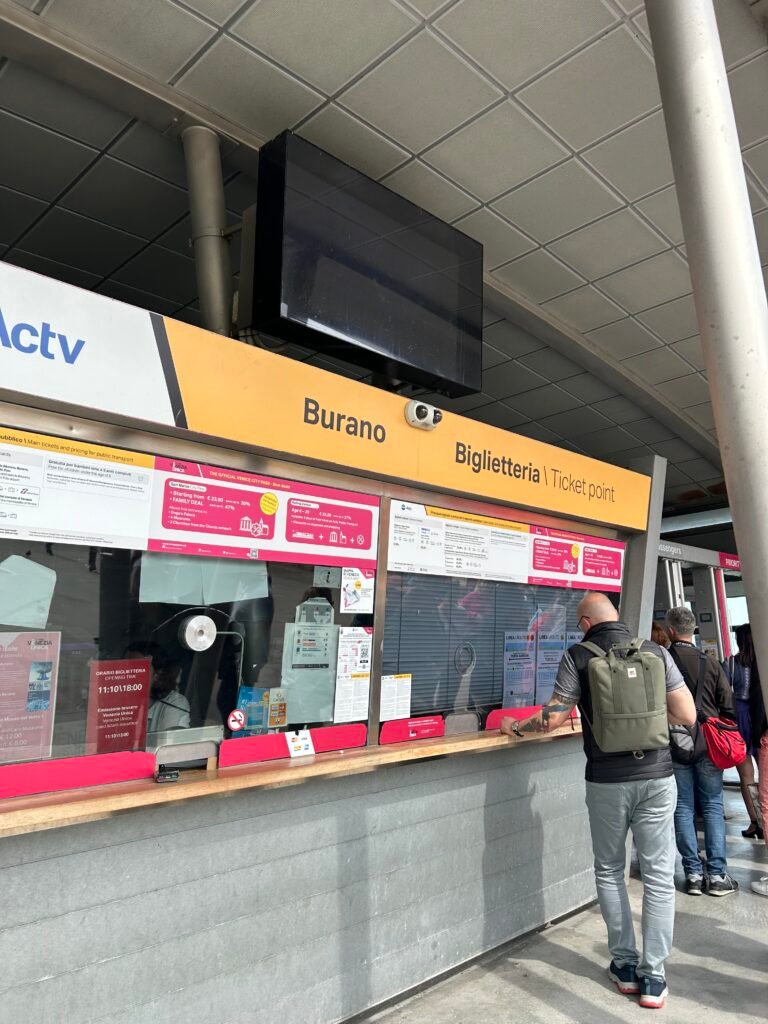
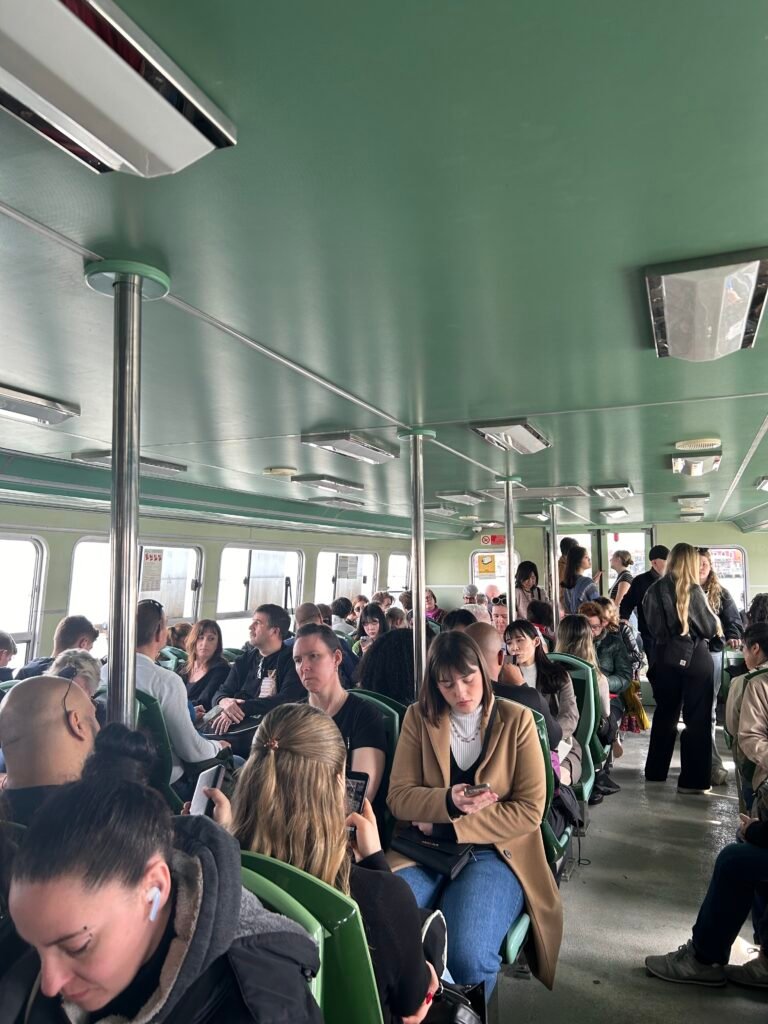
As you can imagine with this many small islands making up a city, there are no cars or buses in Venice. You walk or take the vaporetto (water bus). A single vaporetto ticket costs €9.50, valid for 75 minutes. I recommend walking as much as possible, as that’s how you get off the beaten path the easiest way.
Best time to visit Venice Italy
Timing your visit to Venice Italy makes an enormous difference to your experience. Pre-Covid, the city welcomed 30 million visitors per year — for a population of just 50,000 locals. Even with reduced numbers today, peak season remains overwhelming in the tourist corridor. The good news: shoulder season is still warm but with far less crowds.
March: The sweet spot of low season prices, fewer tourists, and spring just beginning to arrive.
April: Lovely weather, but be aware around Easter as the crowds spike over holidays. Personally I visited on April 4th 2024 and it was perfect for me (mostly because I avoided the main areas).
October & November: Some say Autumn is Venice’s most beautiful season. But here there’s also manageable crowds, and lower prices. Just be aware that the acqua alta flooding season begins.
To know before going to Venice Italy in 2026
Venice in 2026 is not the same Venice people visited 10 years ago. It’s still magical, but there are a few important changes (and unspoken rules) that can seriously affect your trip if you don’t know them.
There’s now a Venice tax / entry fee (on certain days). Here’s an overview:
If you plan to visit Venice on a daytrip, you need to book you visit in advance and get a QR code to enter the city. An access fee of €5–€10 applies on ~60 peak days between April – July 2026. Book and read more here.
Things to do in Venice Italy on the beaten path
Yes, you read right. Do the beaten path but do them smart and then get out.
There’s a reason the classic Venice Italy sights are classics. The Basilica’s golden mosaics, the curve of the Grand Canal, the white stone arch of the Rialto — they are genuinely, breathtakingly beautiful. The trick isn’t to skip them, it’s to experience them on your own terms.
Rialto Bridge Venice Italy
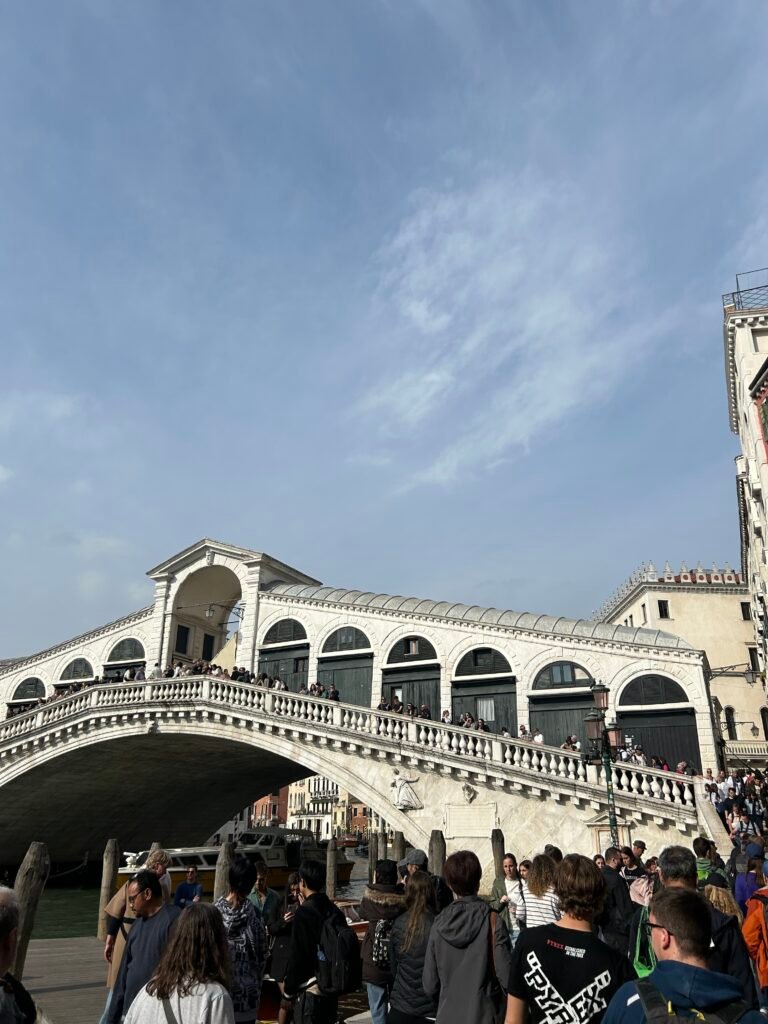
The Rialto Bridge is the oldest and most iconic of Venice’s four Grand Canal crossings, and for centuries it was the commercial heart of the city. Originally a wooden structure that collapsed or caught fire several times before being rebuilt in stone in the late 16th century.
This is also where most tourist Gondola rides and water-buses leave from. So you can imagine why it gets busy quickly.
Cross the bridge from the San Marco side into San Polo, and follow the street straight ahead: you’ll arrive at the Mercato di Rialto, Venice’s open-air market. It’s at its absolute best in the early morning.
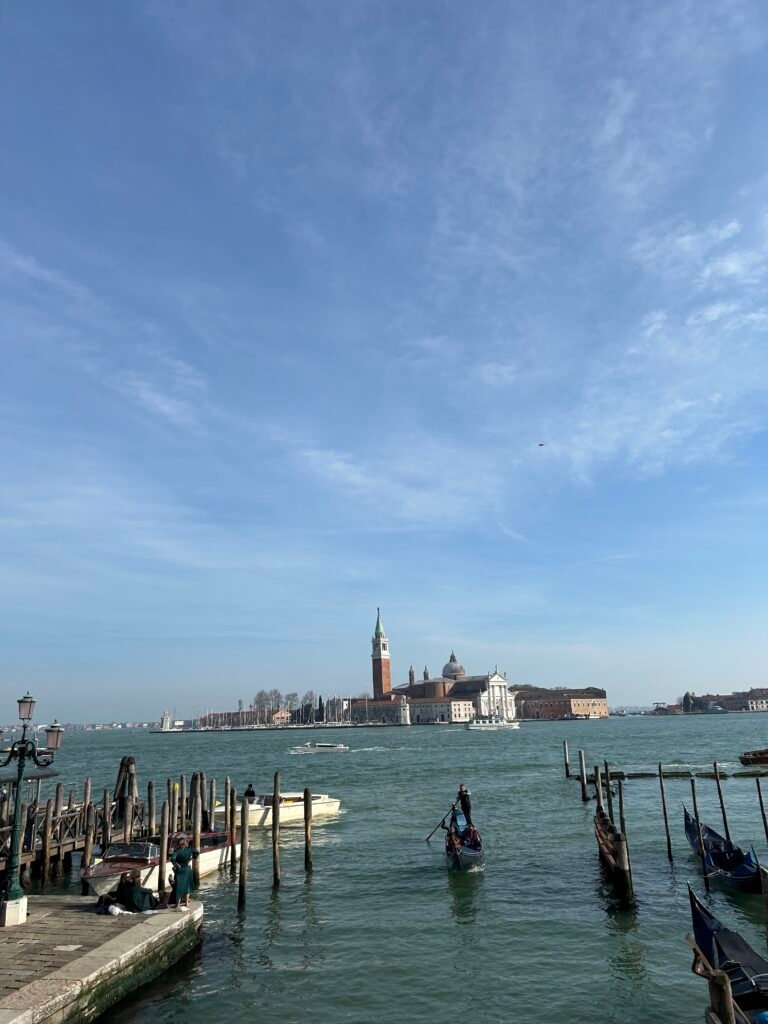
St Mark’s Square Venice Italy (Piazza San Marco)
The largest and most important square in Venice Italy, it has served as the political, religious, and ceremonial centre of the city for over a thousand years — and standing in it for the first time, even in the middle of a crowd, is one of those rare travel moments that lives up to every expectation.
The piazza is framed on three sides by absolute monuments. Because of limited time and budget, I chose not to visit any of the monuments, but I’d recommend you do some research on them, and decide if visiting is worth it to you.
Whatever time of year you visit, make one rule for yourself: be at Piazza San Marco before 9am. It’s a completely different experience compared to the chaos of midday.
What to see around the square:
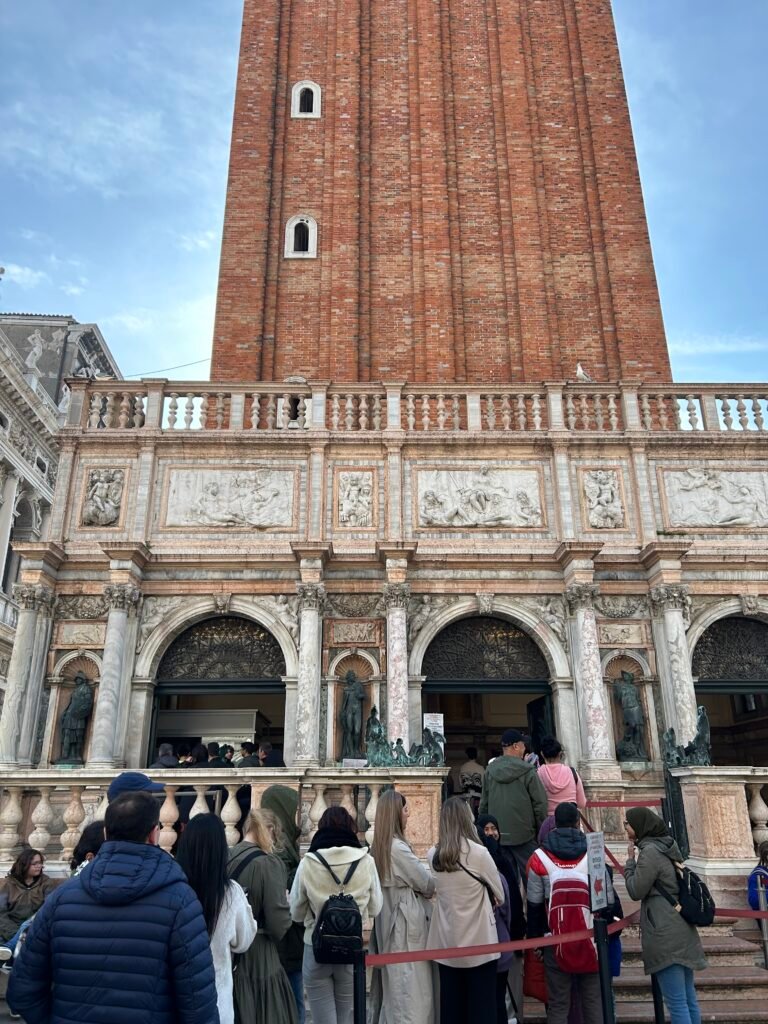
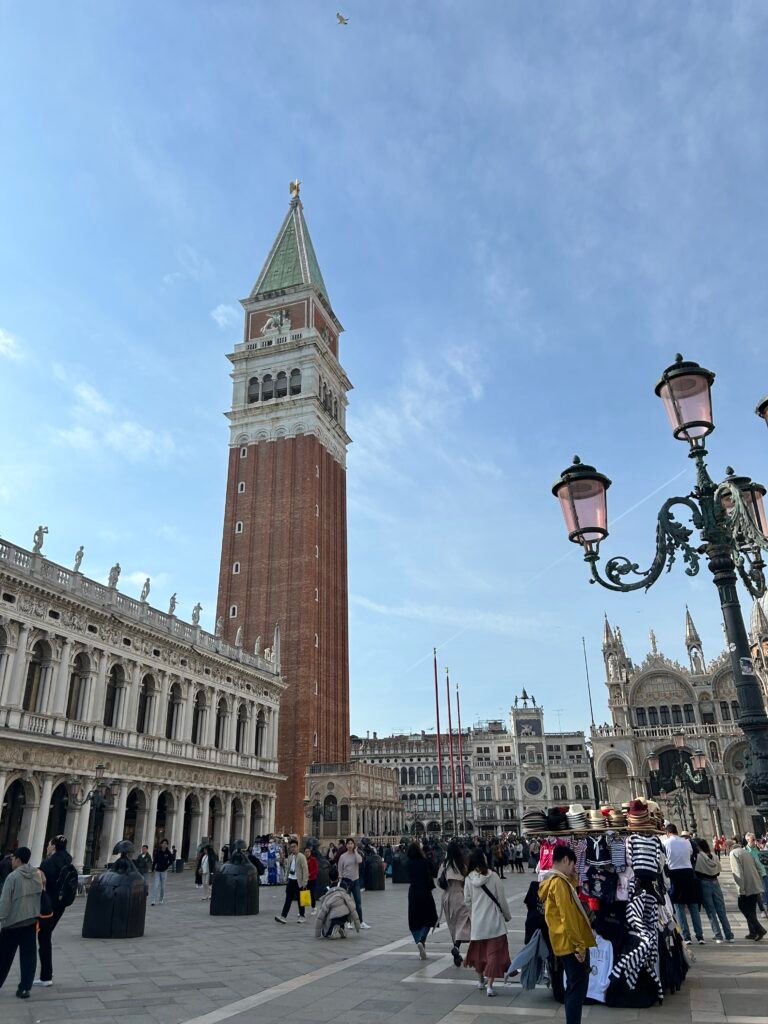
The Campanile bell tower
It costs €15 to ascend via elevator and offers one of the highest vantage points in the city. It gives a stunning overview of Venice’s terracotta rooftops stretching all the way to the mainland.
The Torre dell’Orologio (Clock Tower)
A 15th-century astronomical clock that still marks the hours. It’s only possible to visit the interior and rooftop upon prior booking, with specialized guide. The tour lasts about an hour and costs €15.
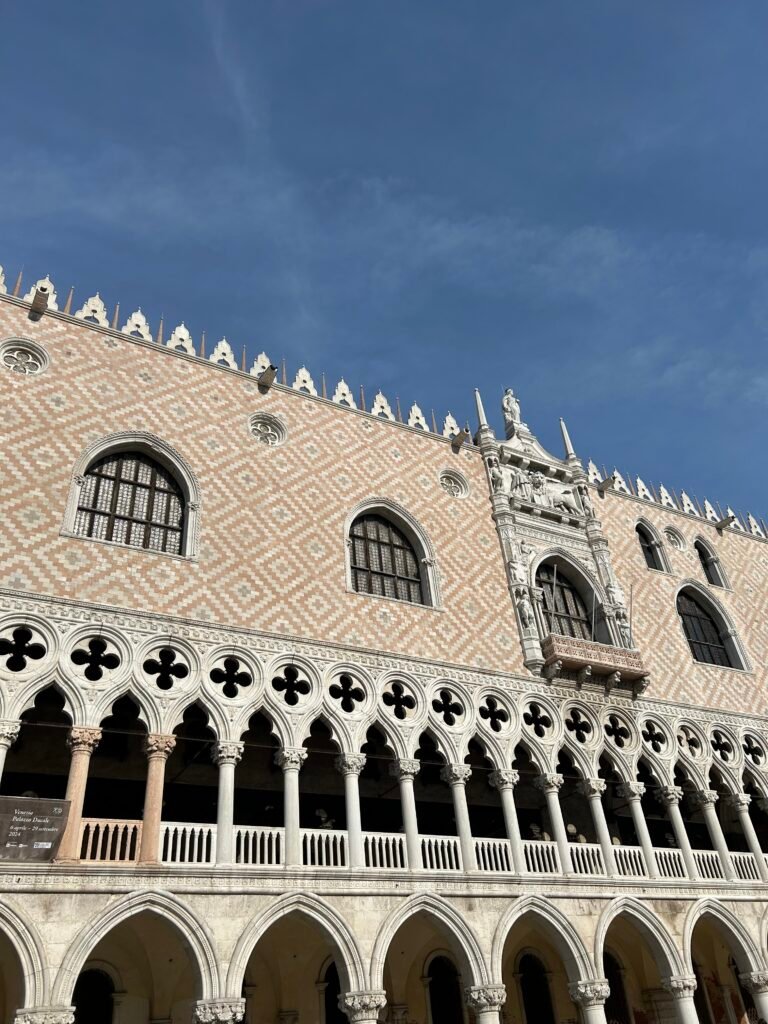
The Doge’s Palace (Palazzo Ducale)
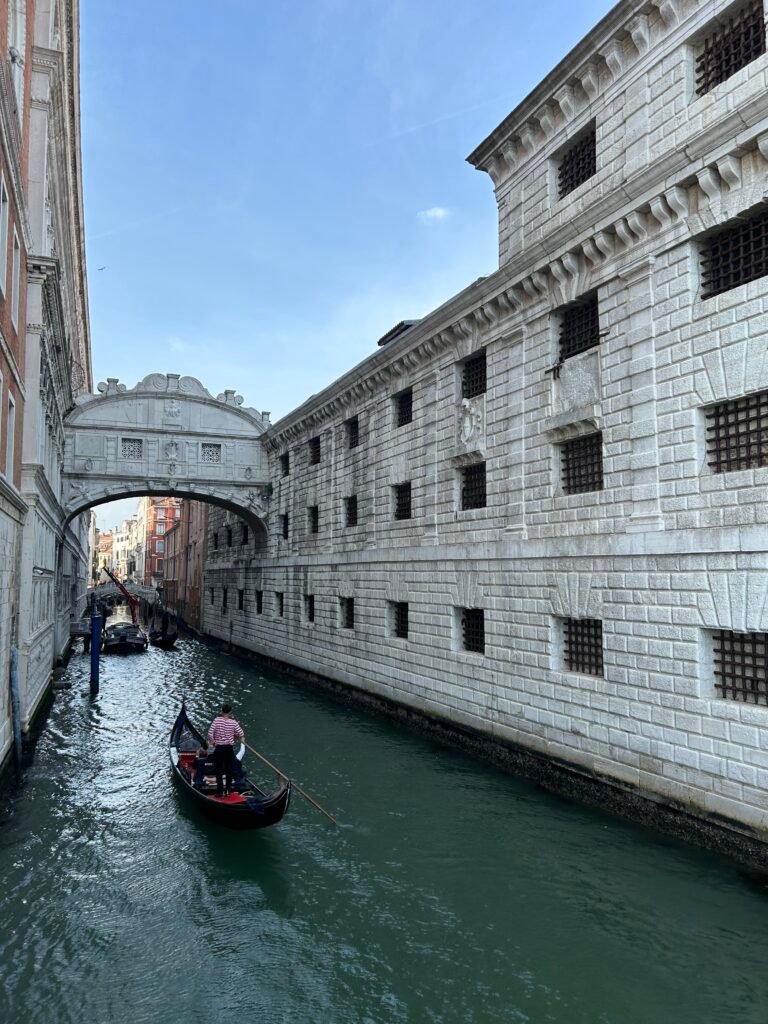
Has been the seat of Venice’s government for centuries, combining the functions of a royal residence, parliament building, and prison (yes, you read that right). The palace is connected to the adjacent prison by the famous Bridge of Sighs, which you can walk across as part of the visit. Entry starts at €35.
St Mark’s Basilica Venice Italy
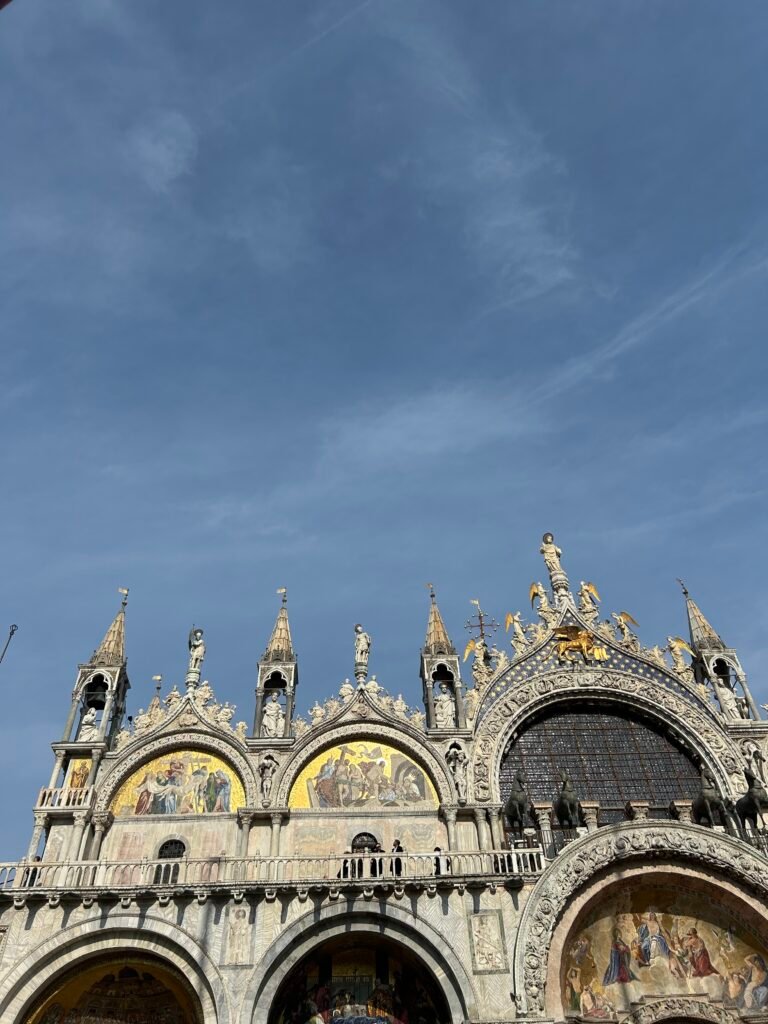
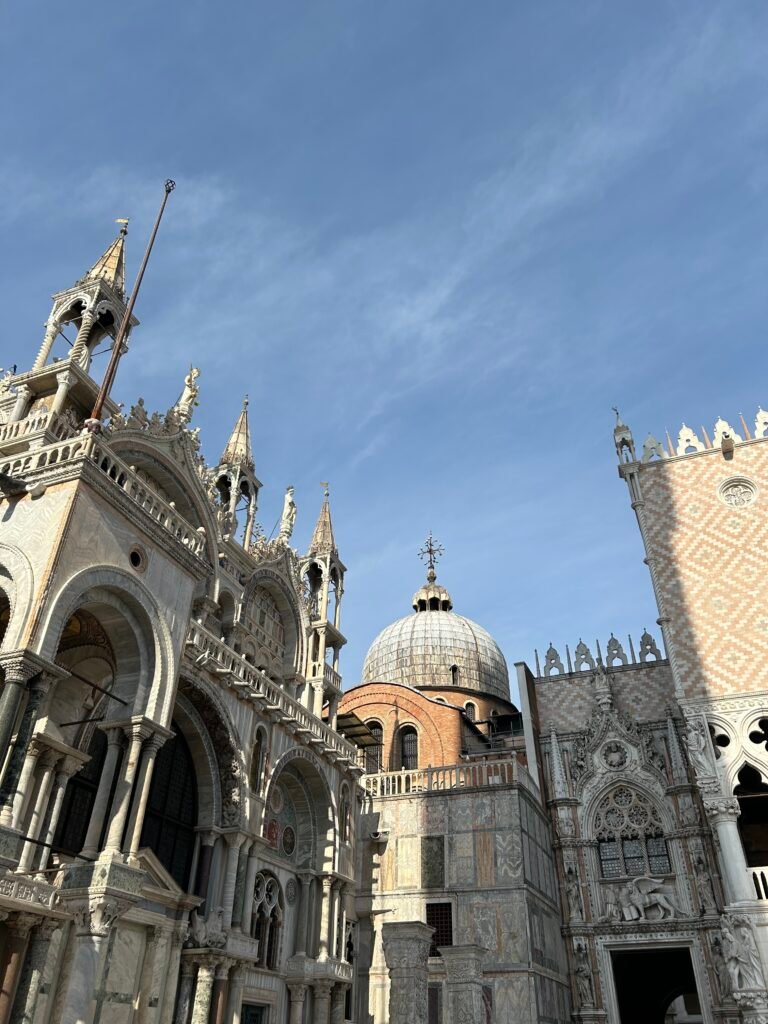
Italy is famous for its Basilicas but this one is different. Five domed Byzantine arches, a facade of looted marble and mosaics, and an interior where every single inch of ceiling has been covered in shimmering gold mosaic. It took nearly six centuries to decorate.
If you didn’t know (like me) the tomb holding the relics of Saint Mark is placed in this Basilica (hence the name…) but how Venice acquired the body is a little bizarre. Apparently Venetian merchants smuggled the remains out of Alexandria, Egypt (then under Muslim rule) by hiding them under layers of pork, knowing customs officials wouldn’t touch it. The relics arrived in Venice in 828 AD, and the city has been showing off about it ever since.
Entry to the basilica costs €10 but if you want to visit the rooftop you have to get a combination ticket which costs €30.
Hot tip: Pre-booking online (even in shoulder season) will save you so much time in queue time.
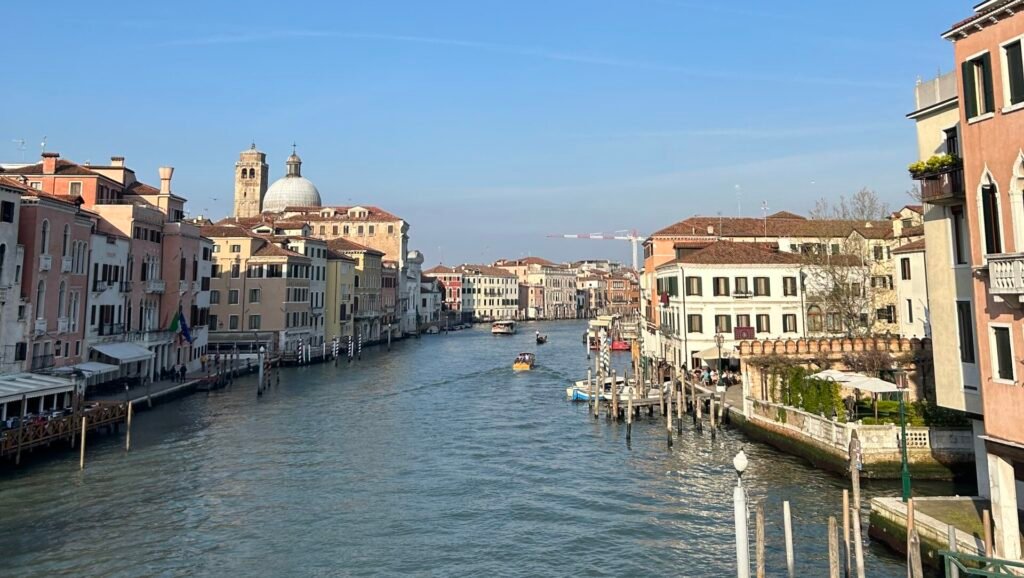
The Grand Canal of Venice Italy (Ponte degli Scalzi)
The Grand Canal is Venice Italy’s main waterway. It looks like a reverse-S curve cutting through the heart of the city, lined with palaces dating from the 13th to the 18th century. These are the former homes of the merchant families who made Venice one of the most powerful trading republics in the medieval Mediterranean world, and many remain in extraordinary condition.
The best way to see the Grand Canal? On the water. You have three options:
- The vaporetto (Line 1) is the budget option at €9.50 for a single ticket. Take it from Stazione Santa Lucia (the main train station, right by the Ponte degli Scalzi) to San Marco. The route passes under the Rialto Bridge and takes about an hour.
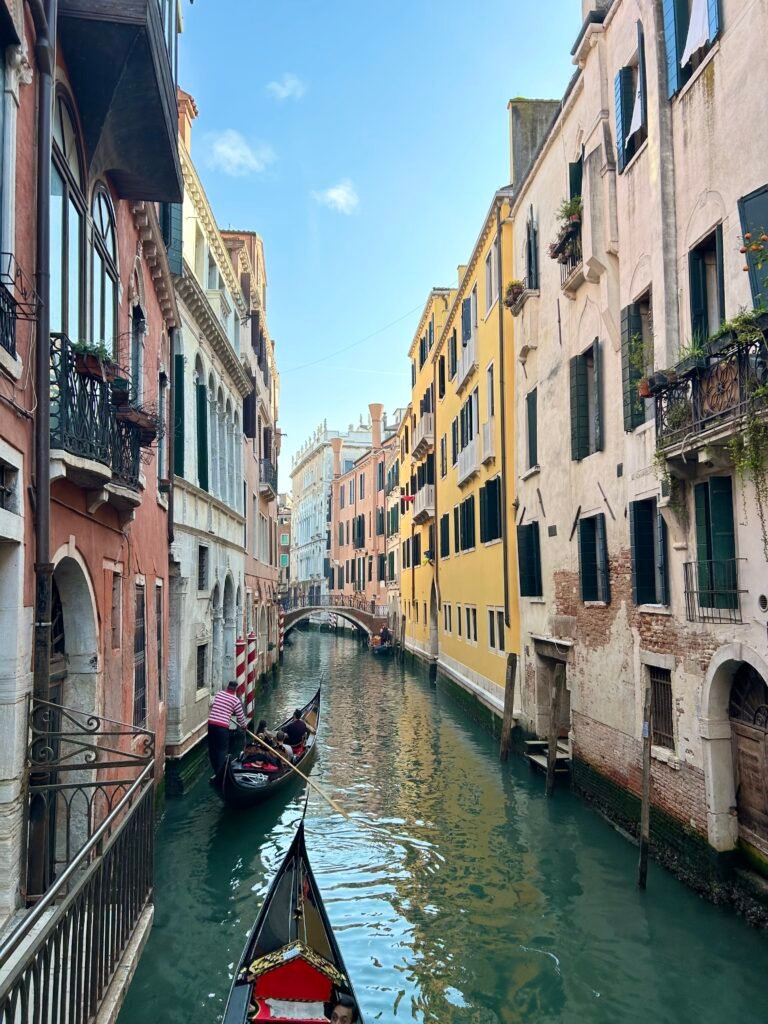
- A private gondola costs €90 for 30 minutes during the day (per boat, not per person). The price is officially regulated across the city, so don’t pay more – REMEMBER scams are common. For the best experience, avoid the gondola stands near Piazza San Marco and the Rialto. Instead, find one in Cannaregio or Dorsoduro.
- A shared boat tour (around 60 minutes) is longer and cheaper than a private gondola, more personal than the vaporetto, and usually includes some context about Venice’s maritime history and layout. If you have the time and budget, I’d recommend it.
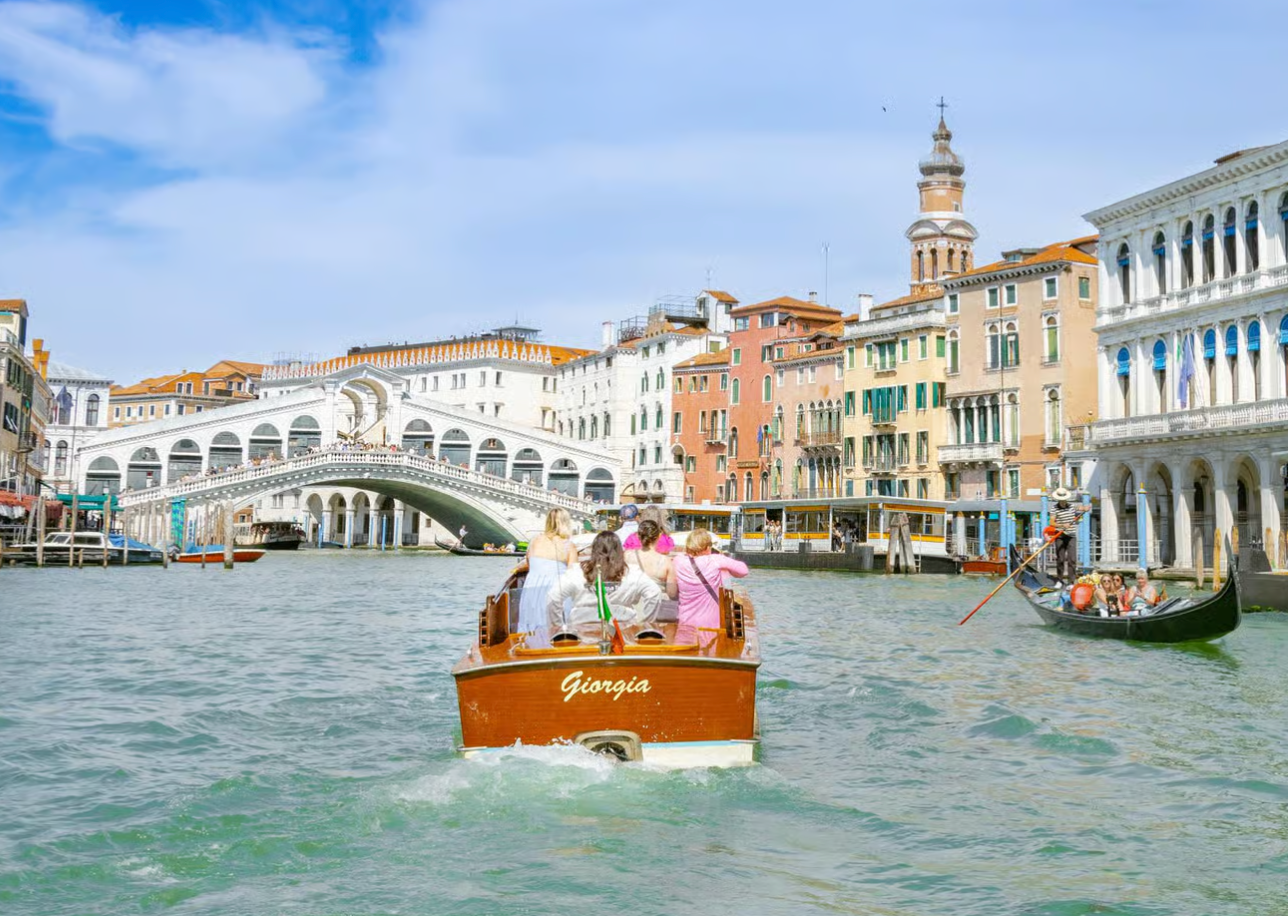 Venice: Grand Canal Boat Tour
Free cancellation up to 24 hours in advance
Duration: 1 hour
Live tour guide
- Cruise along the Grand Canal of Venice in a motorboat
- See Venetian patrician homes, traditional palazzos, and famous churches
- Pass through the bustling Venetian waterfront
Things to do in Venice Italy off the beaten path
Here is the thing about Venice Italy that most visitors never discover: the tourist crowds are extraordinarily concentrated. The corridor from the train station to Rialto to San Marco accounts for the overwhelming majority of foot traffic. Step off it and you can walk almost alone and see the true soul of Venice.
Cannaregio area
Cannaregio is Venice’s northernmost district and, in my opinion, the most rewarding neighbourhood for unhurried exploration.
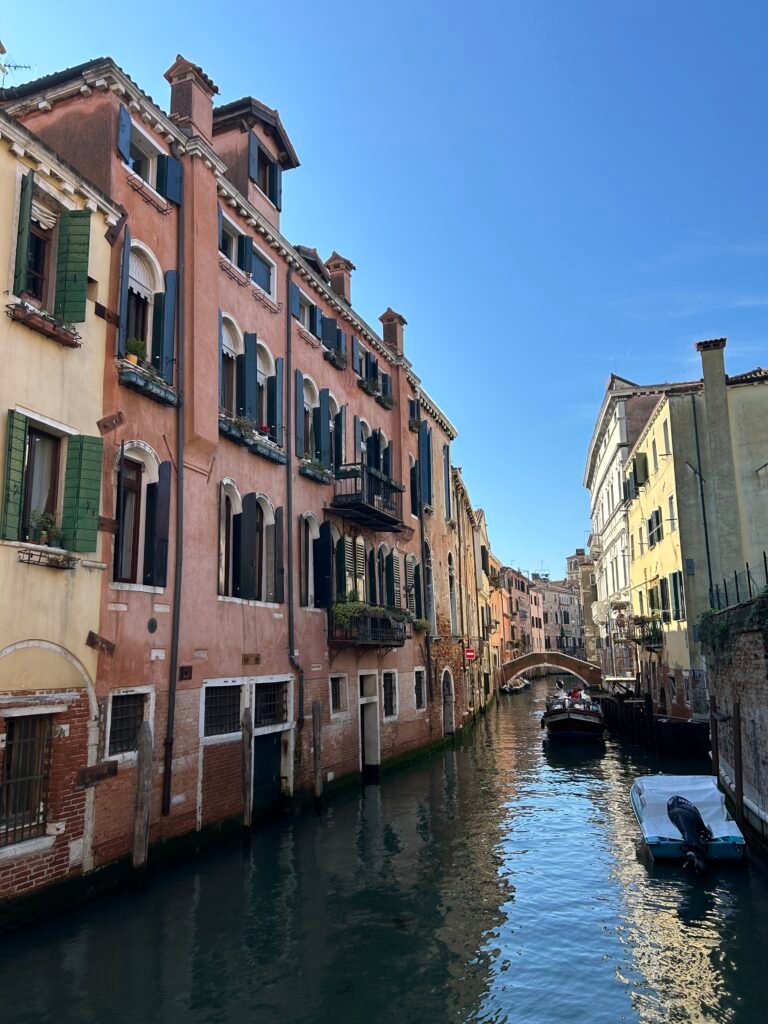
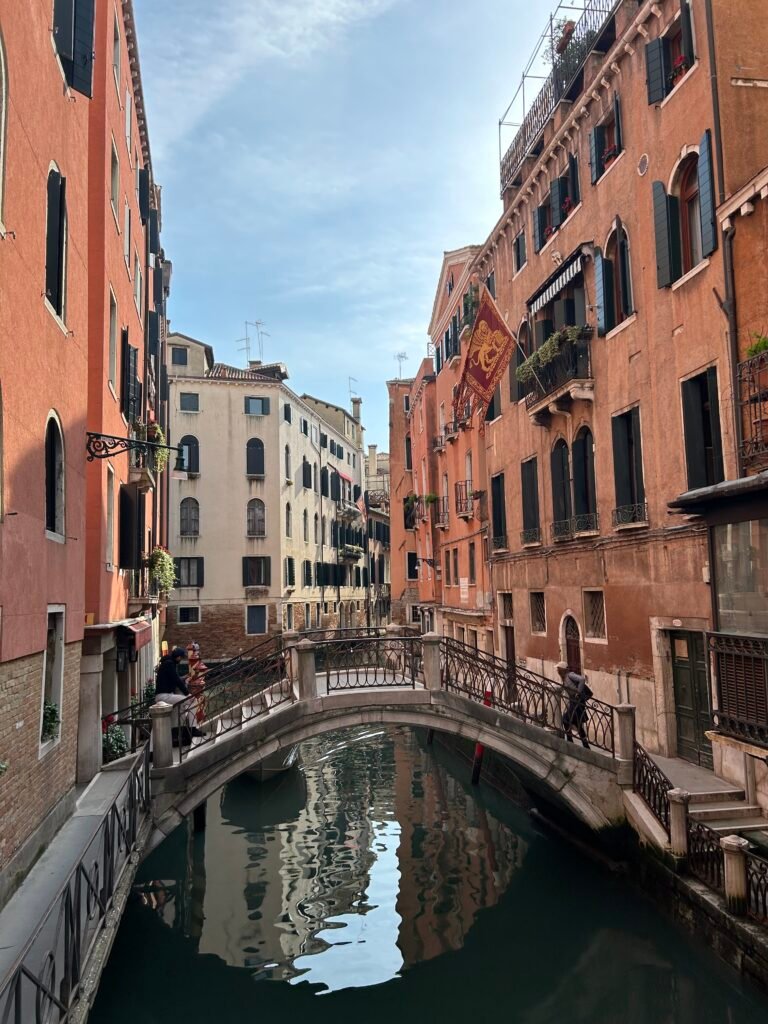
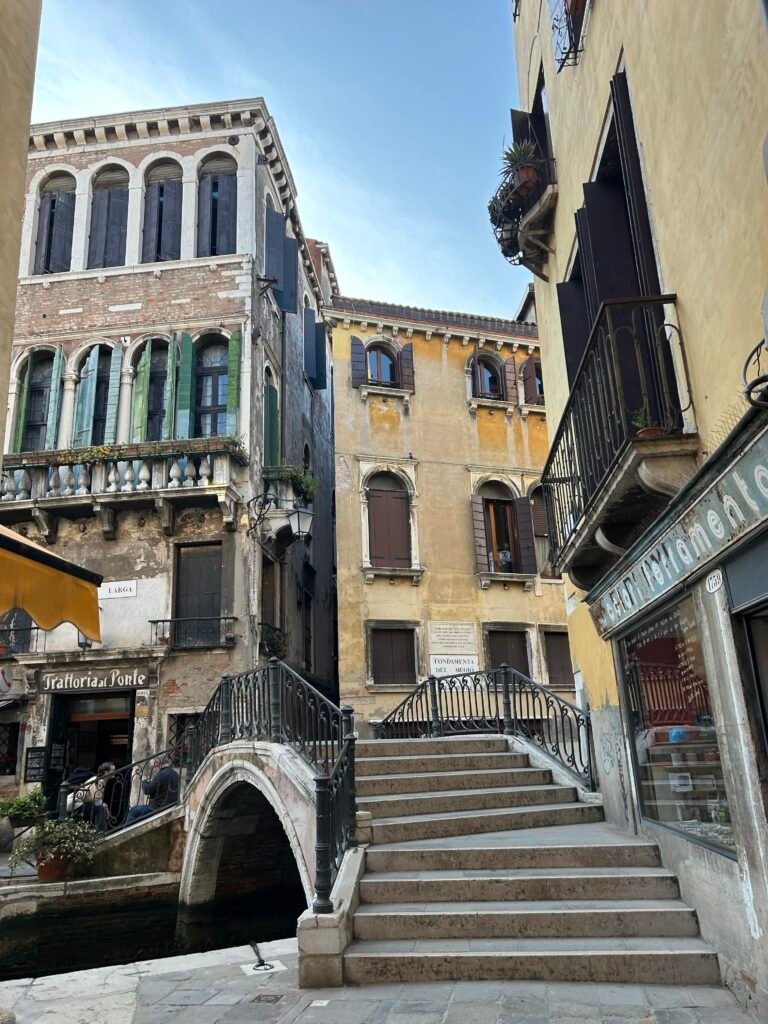
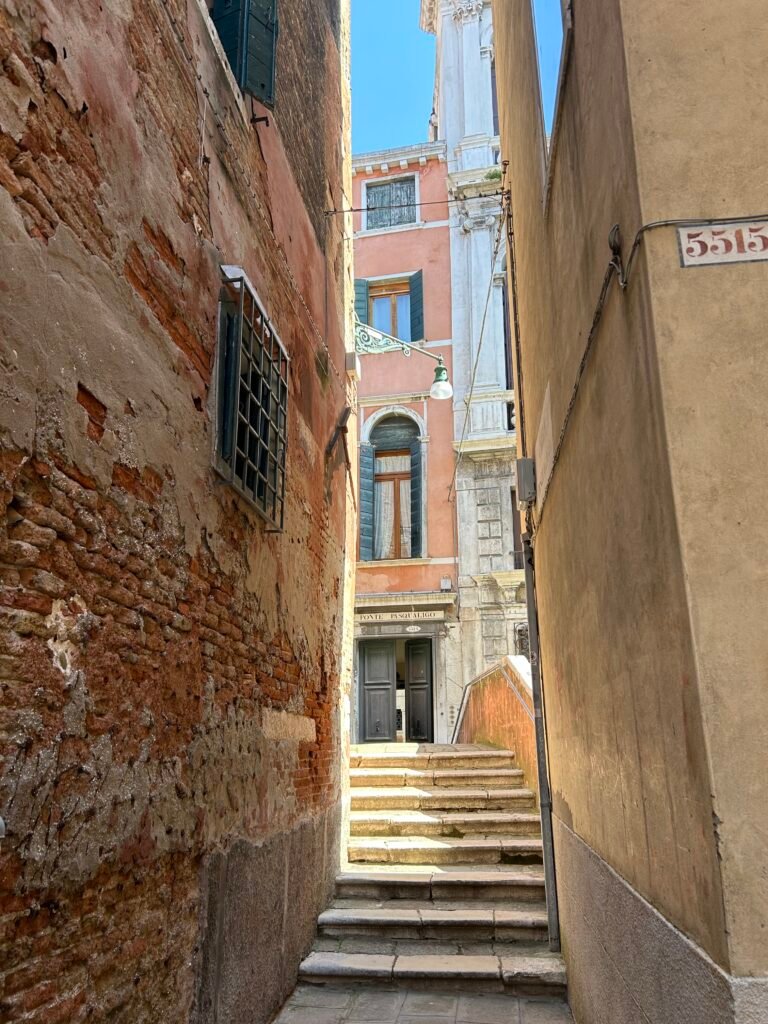
Allow yourself to just wander around and get lost in the many, small canals.
As you wander, look out for Ponte di Chiodo, the only bridge in Venice that still has no railings. It’s a small detail that reveals how much of the city’s medieval character has been carefully preserved.
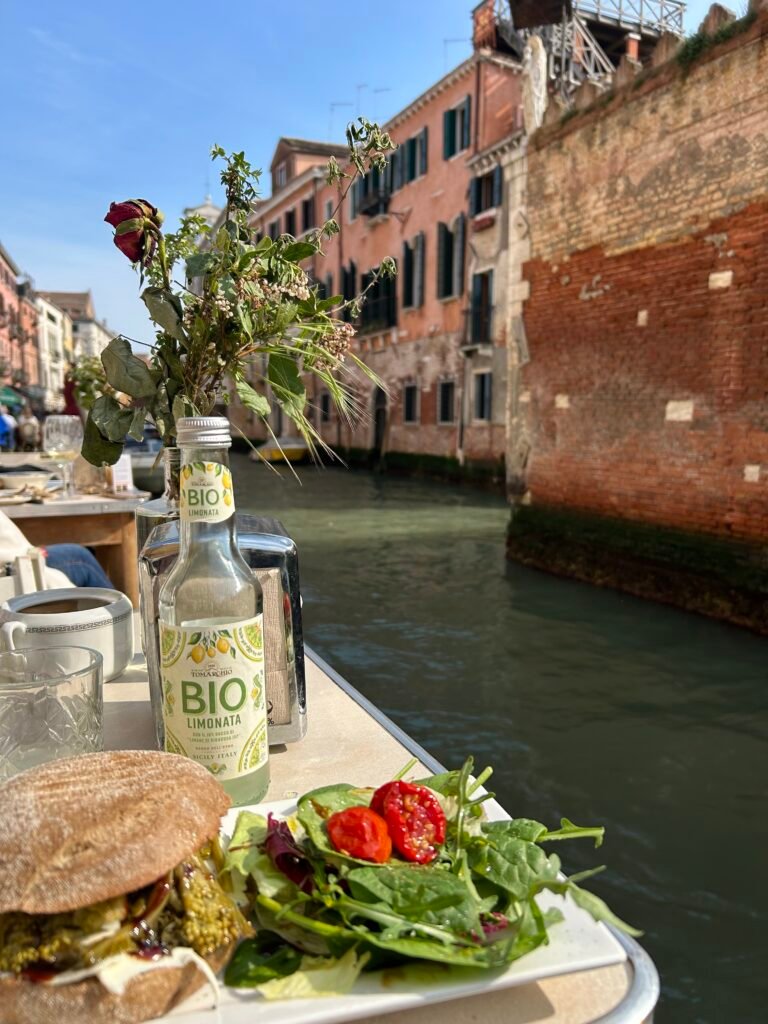
The beating heart of the neighbourhood for food and drinks is Fondamenta de la Misericordia— a canalside walkway lined with bacari (Venetian wine bars) and osterie. This is where you eat and drink like a local.
Sullaluna libreria & bistrot
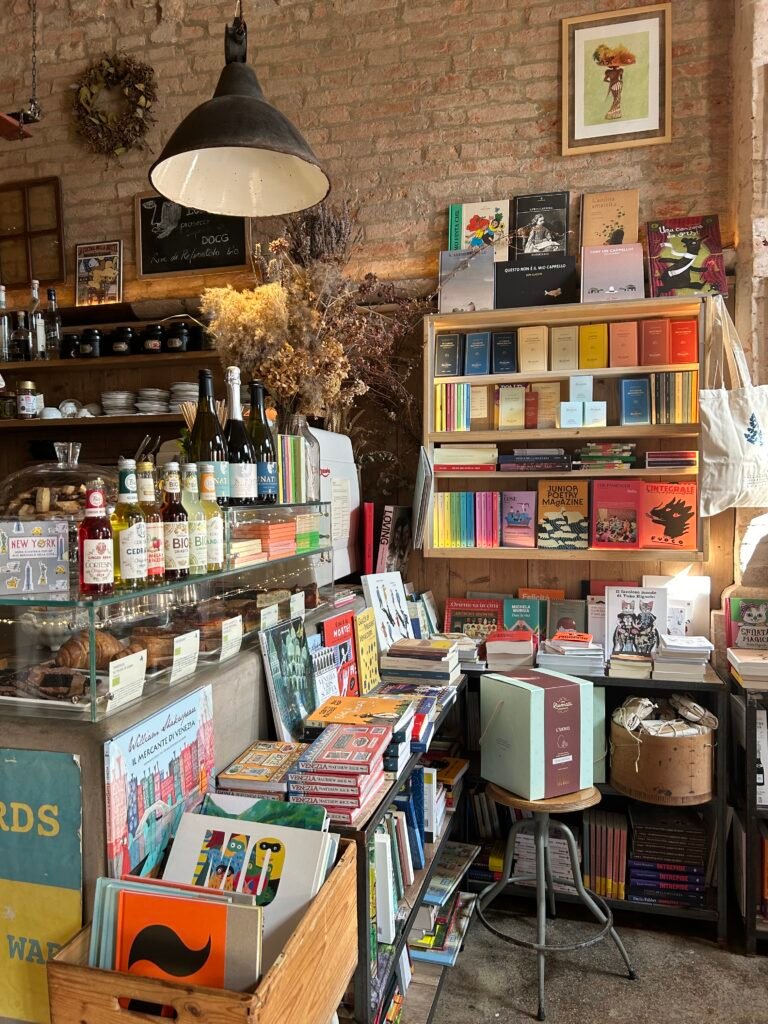
Speaking of bacari, Sullaluna is the kind of place that feels like a local secret even though it isn’t, and I stumbled across it by accident.
A proper combination of bookshop and wine bar that embodies everything Venice’s quieter neighbourhoods do best. The shelves are curated with obvious care: art books, travel writing, Italian literature, and quirky objects. The bistrot element means you can sit, order a glass of natural wine or an Aperol alongside your books, and stay as long as you like.
Excursion to Burano
Burano is the island you’ve definitely seen online without knowing where it is… With vivid pink, yellow, orange and red houses reflected in narrow canals, it’s 100% worth the 45 minutes vaporetto journey.
The island was historically a fishing and lace-making community, and while the population has dwindled in recent decades (a story familiar to small towns everywhere), it still has a genuine, lived-in character that Murano (the glass island, closer to Venice and significantly more touristic) has largely lost.
Even as the island has gotten more popular, you’ll largely have the painted streets almost to yourself.
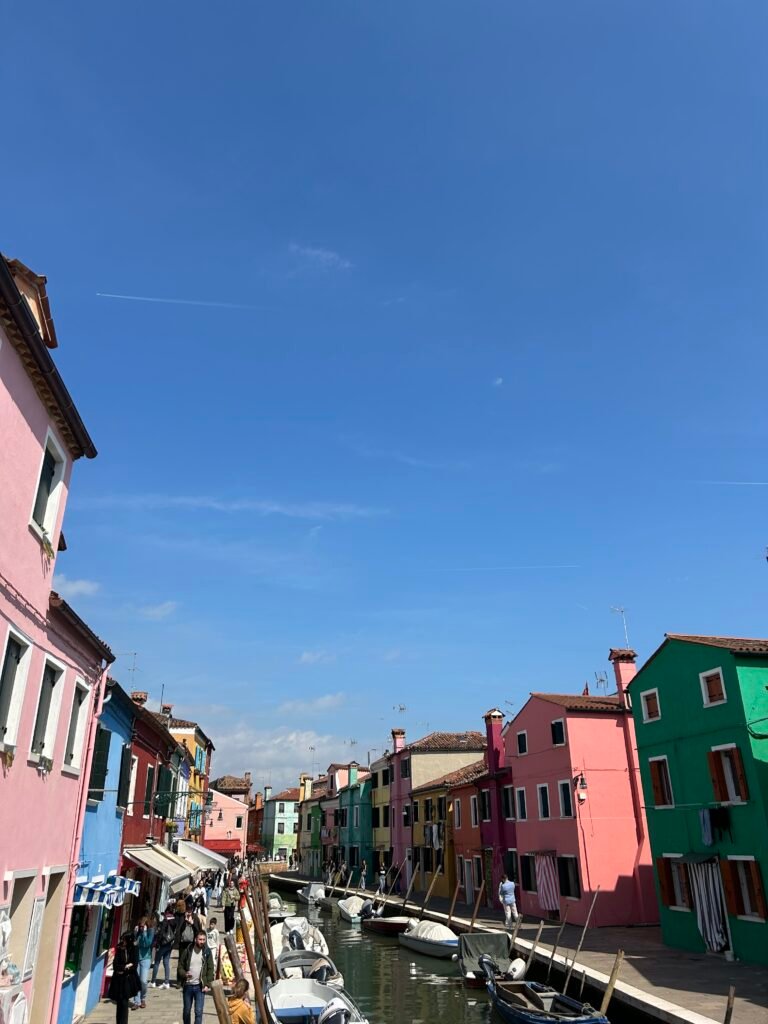
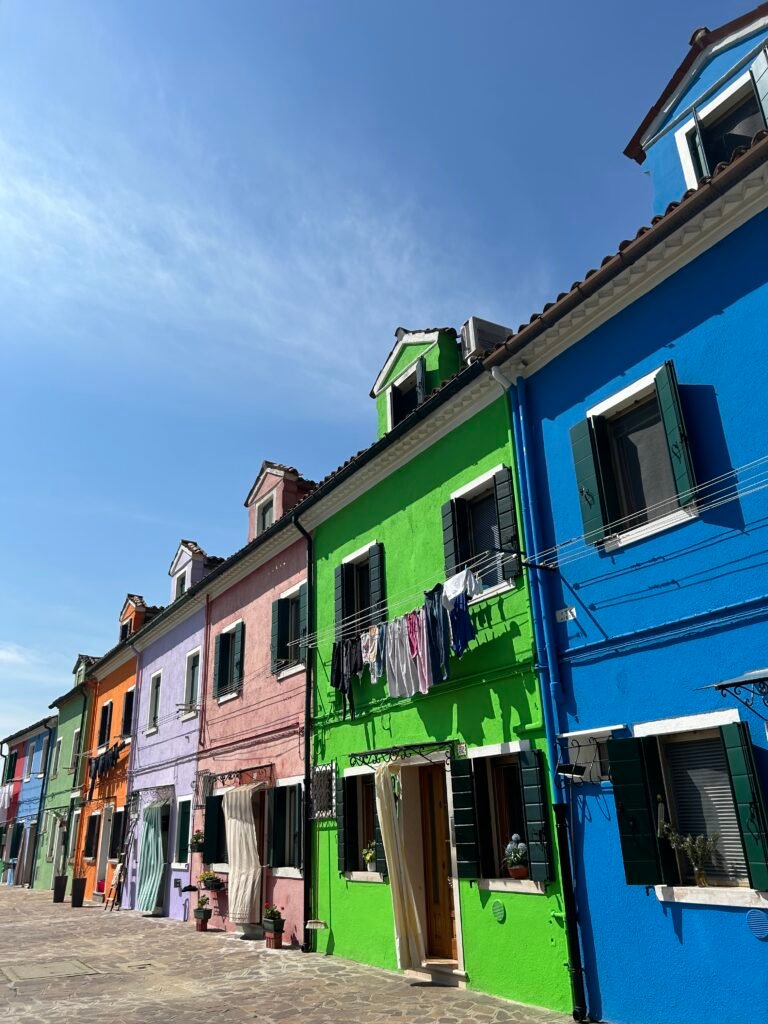
I took Line 12 from Fondamente Nove A (see map above) and was dropped off at Mazzorbo (a 10 min. Walk from the central area of Burano). It’s good to know that the area around Tre Ponti, is the most popular. I highly recommend wandering around the entire island (which takes max. 1 hour). It’s genuinely magical. I especially loved the area around “Ponte della Vigna” where almost no tourists go, even though it’s only a 10 min. walk from Tre Ponti…
To get back to Venice, go to “Burano C pier” and take the vaporetto back.