If you are looking for things to do in Ravenna Italy, you are about to discover one of Europe’s most underrated cities. Tucked into the Emilia-Romagna region of northern Italy, close to the Adriatic coast, Ravenna rewards those curious enough to look beyond Rome, Florence, and Venice.
I visited Ravenna as a quick stop before heading to Florence, not quite sure what to expect. But I left wondering why on earth this city isn’t more famous. Ancient mosaics, charming pedestrian streets and Dante’s actual tomb! Like why are we not talking more about this!
Where is Ravenna Italy
Ravenna sits in the Emilia-Romagna region of northern Italy, close to the Adriatic coast. Before diving into the best things to do in Ravenna Italy, it helps to understand why this relatively small city is so historically significant.
Despite its relatively modest size today, the city punches far above its weight historically. It was once the capital of the Western Roman Empire in the 5th century, then the seat of the Ostrogothic Kingdom, and later a major centre of Byzantine Italy until the 8th century. Each successive power left its mark — most visibly in the form of extraordinary mosaic art that decorates its churches and monuments. The result is a city with eight UNESCO World Heritage Sites, which is more than some entire countries can claim.
Main Things to Do in Ravenna Italy
The best things to do in Ravenna, Italy centre on its eight UNESCO-listed monuments, all built during the city’s Roman and Byzantine golden ages.
You can visit 5 of the monuments with one combo ticket for only €16.5! (For reference, a ticket to just Pompeii is €22…)
Allow at least three to four hours to see everything comfortably. Beyond the mosaics, the city’s streets, piazzas, restaurants, and unexpected archaeological finds make it a place worth lingering in. Here are the highlights.
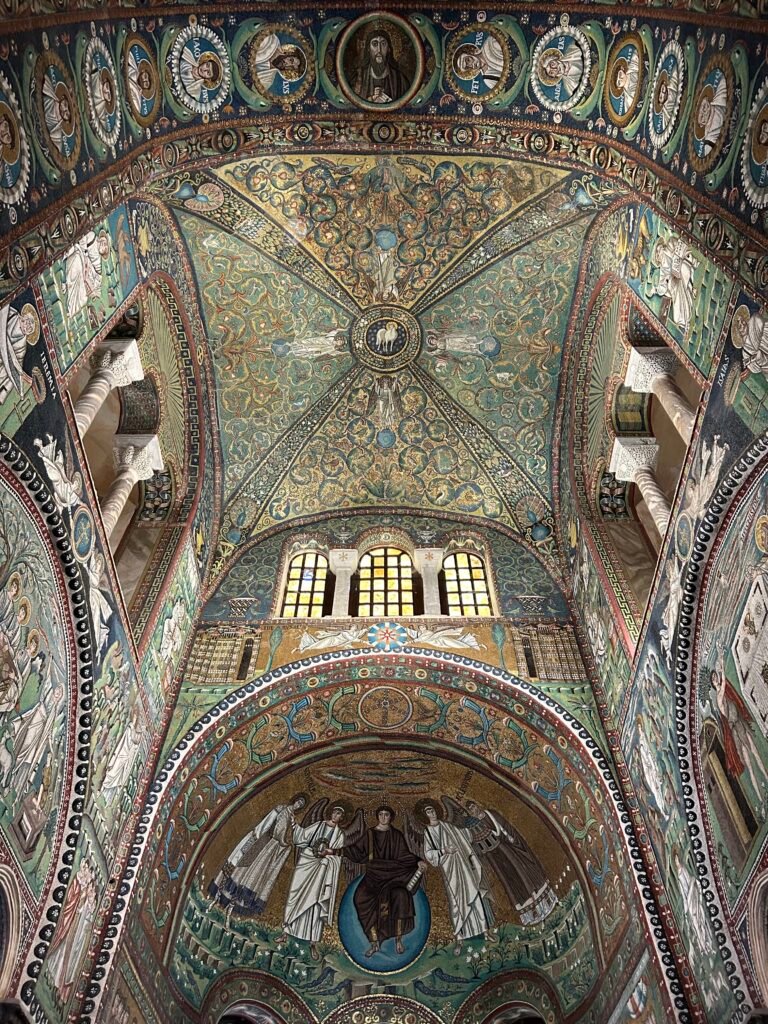
Why the Basilica of San Vitale is one of the best things to do in Ravenna Italy
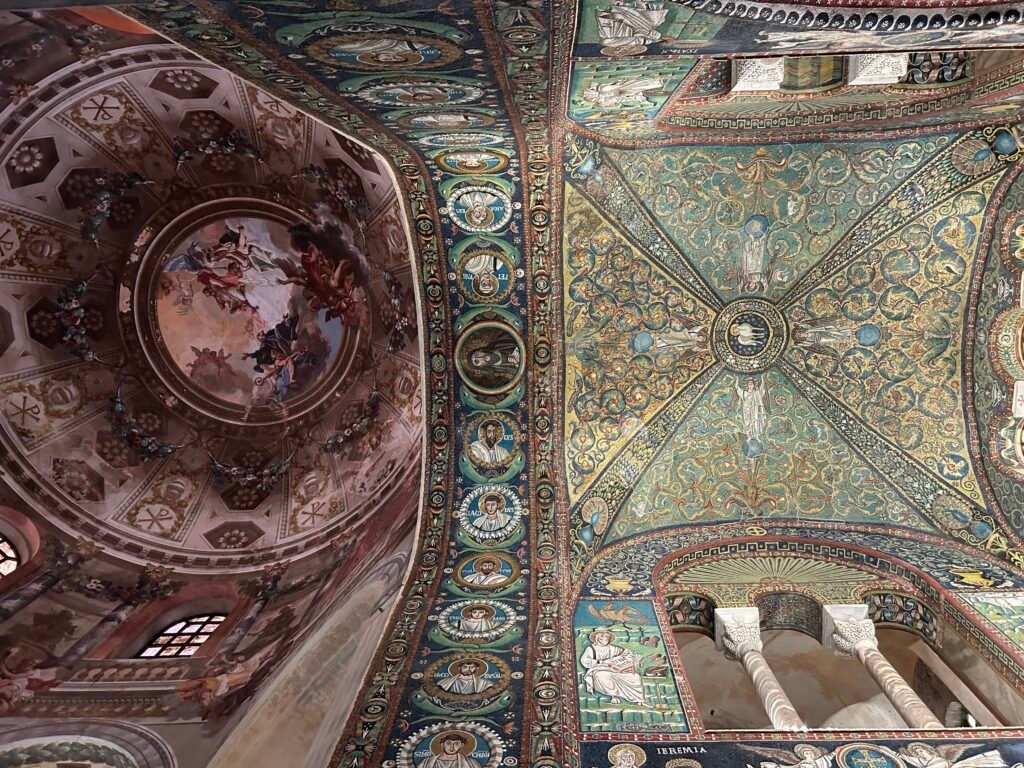
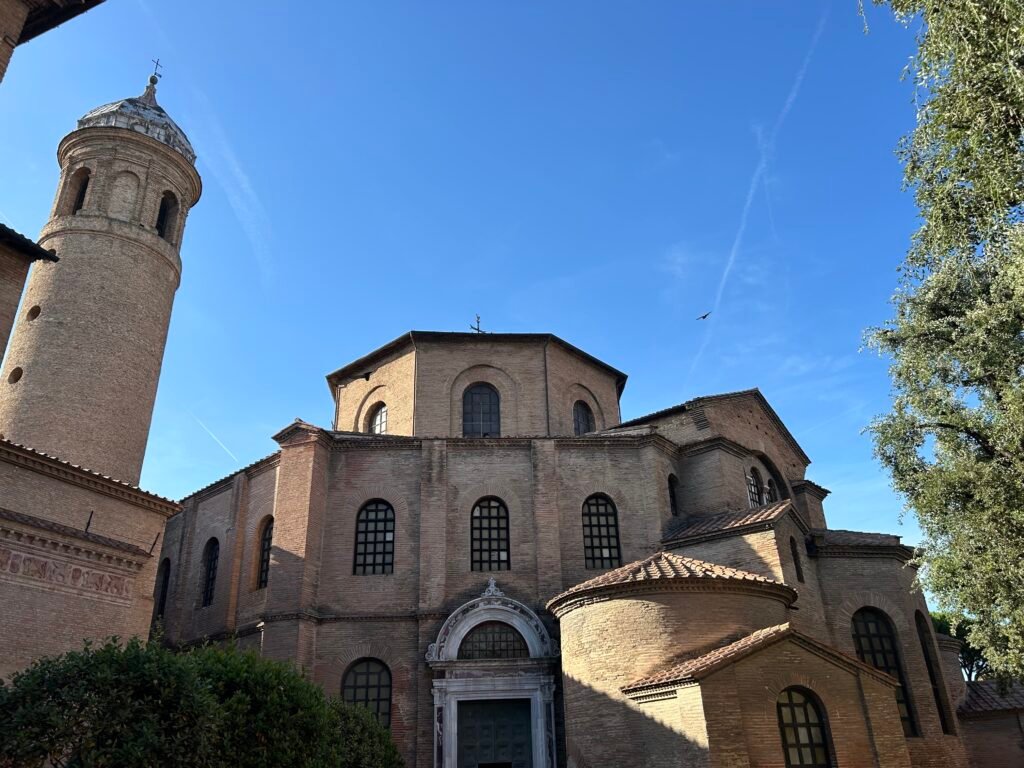
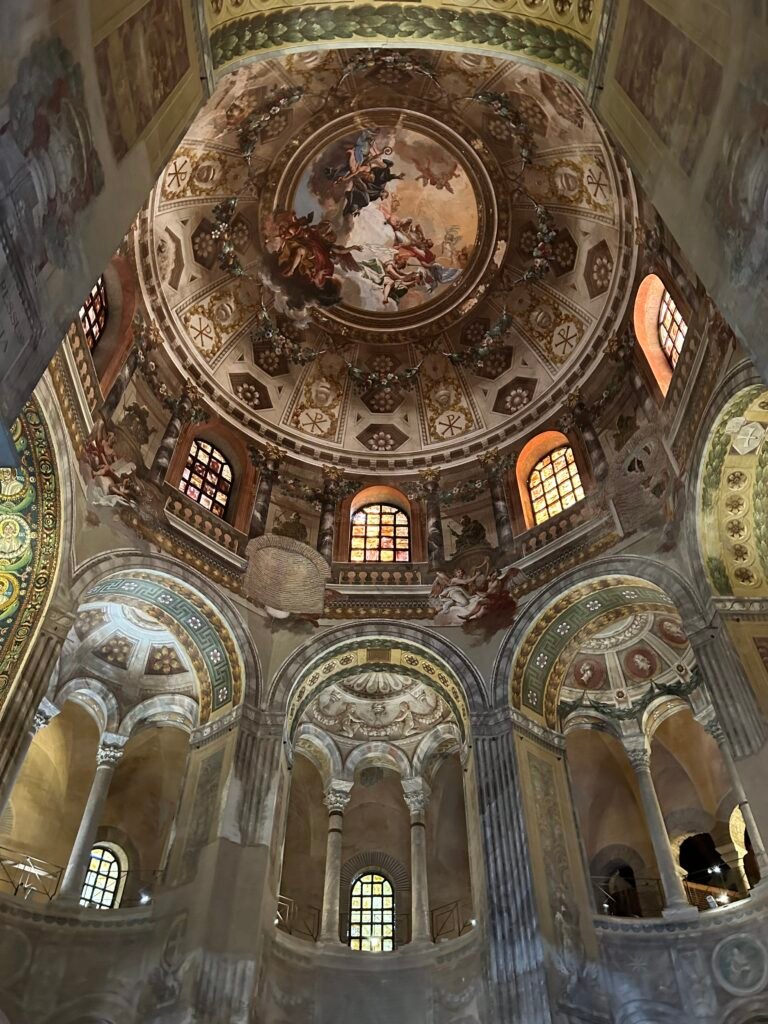
If you see only one thing in Ravenna, make it the Basilica of San Vitale. Built in 525 CE (a full millennium before many of the cathedrals most of us have visited – think older than the Notre-Dame!)
The level of detail, color, and preservation of the mosaics inside is unlike anything you’ll see elsewhere in Italy.
Again, it’s just one of those things that feels illegally underrated! Especially because the church looks super boring from the outside… But I promise you won’t be disappointed!
Dante’s Tomb
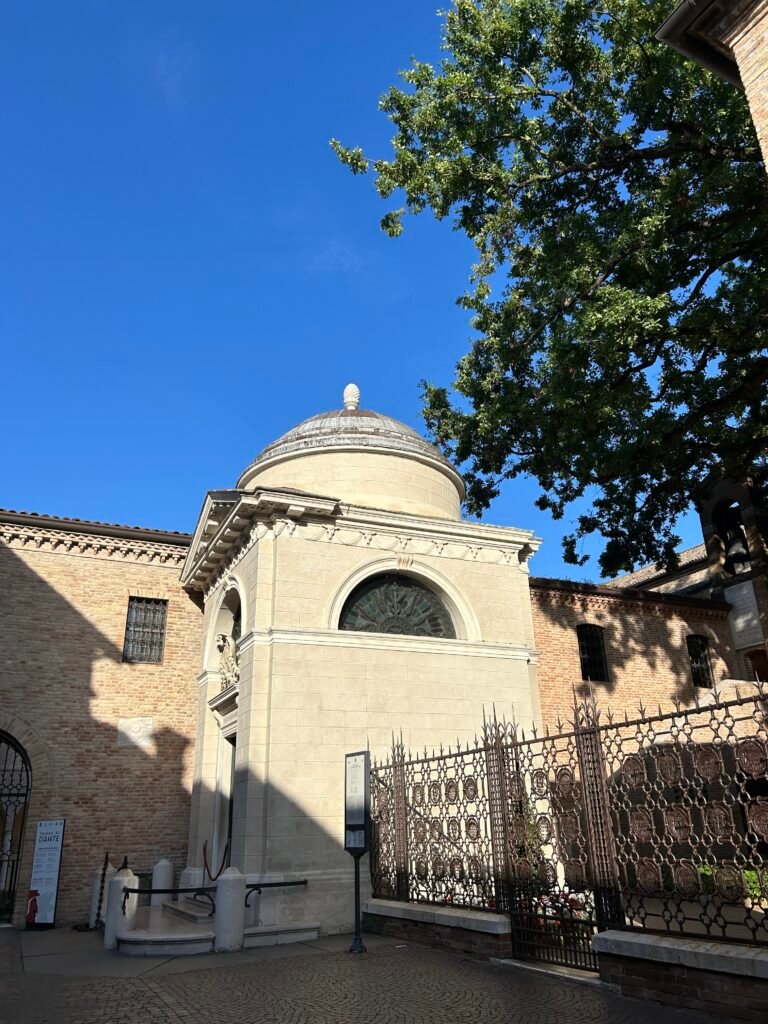
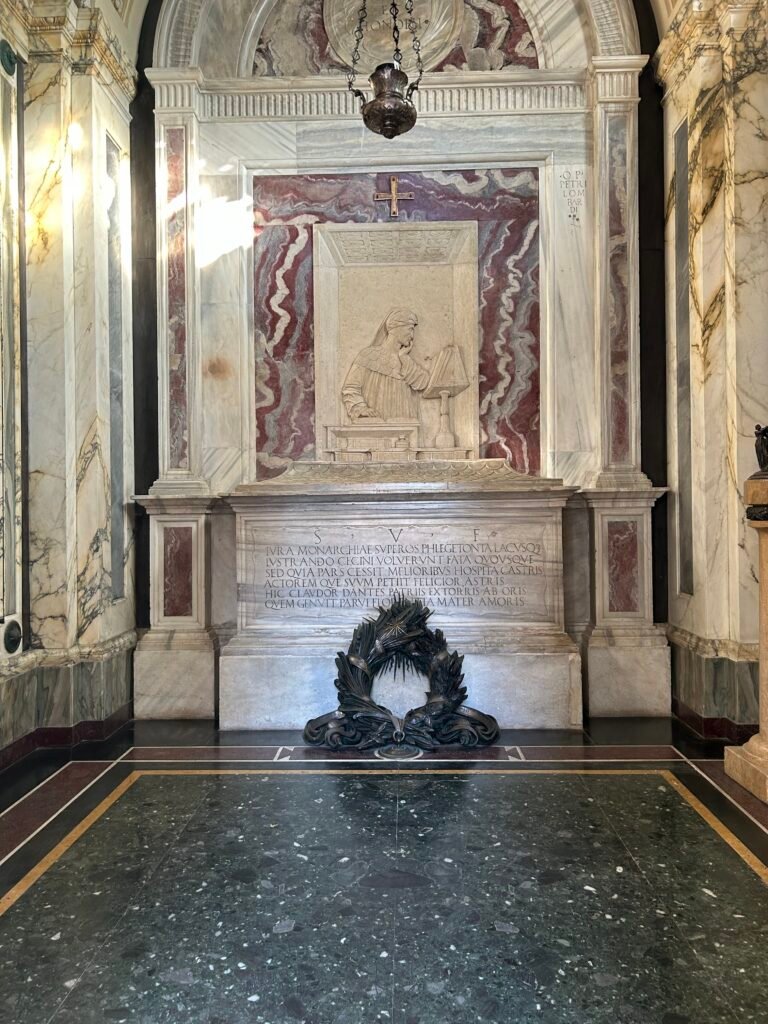
It comes as a surprise to many visitors — myself included — that Dante Alighieri, one of the most important literary figures of the Middle Ages, is buried in Ravenna.
If you don’t know Dante by more than association, here a quick recap:
He was born in 1265 in Florence and is best known as a poet, philosopher, and political thinker. Dante is often called the “father of the Italian language”, because he wrote in Italian (Tuscan dialect) instead of Latin, making literature more accessible in the 13th century. He lived during a time of intense political conflict in Italy, which ultimately led to one of the defining moments of his life: exile. He was banished from Florence in 1302 due to political rivalries and never returned. Instead, he spent the rest of his life moving between different Italian cities, eventually settling in Ravenna, where he died in 1321.
His small, neoclassical tomb on Via Corrado Ricciis a genuinely moving place to visit.
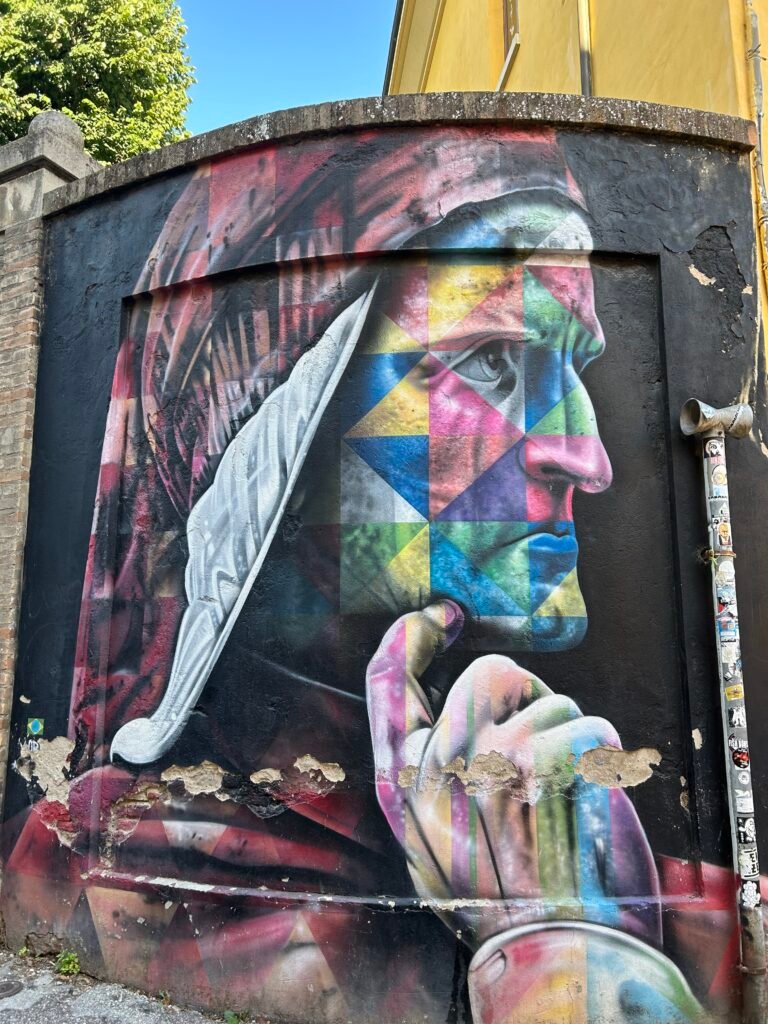
Beside the tomb, look out also for a striking large-scale street portrait of Dante by Brazilian artist Kobra, painted on Via Giuseppe Pasolini.
Don’t Miss the Basilica di San Francesco: One of the Most Unique Things to Do in Ravenna Italy
While you’re already on Via Corrado Ricci visiting Dante, walk just 50 meters, and you’ll be in front of this 5th-century Basilica. The church was rebuilt and restored several times over the centuries because it was gradually sinking into the marshy ground on which it was built. The real cool part about this church however, lies beneath the altar: a sunken 10th-century chapel that has flooded over the centuries, its beautiful mosaic floor now visible through shallow water, with small fish swimming among the ancient columns.
I sadly did not visit, simply because I didn’t know… so this my own reminder to research small towns a little more.
Piazza del Popolo
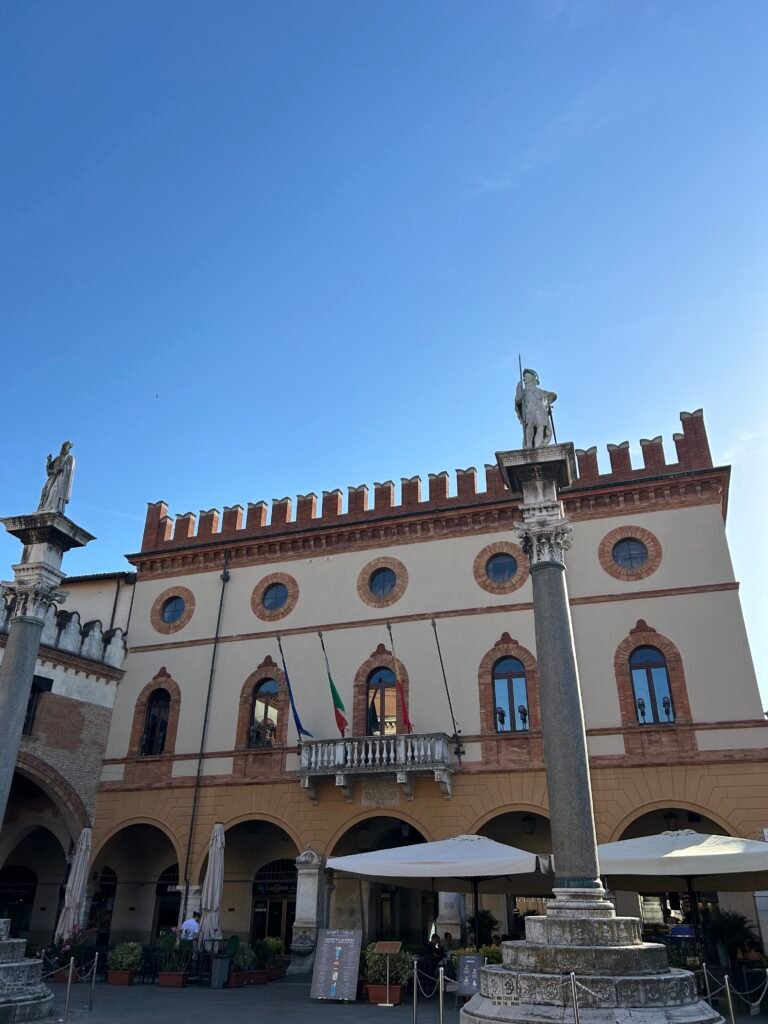
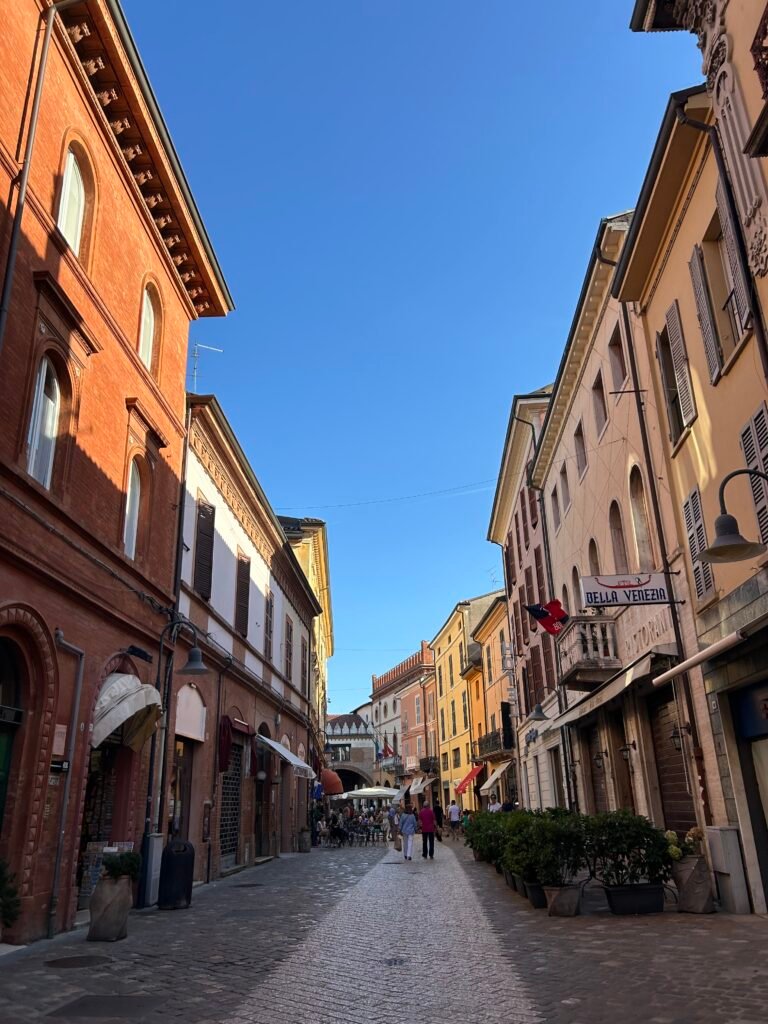
As you might already know, every Italian city has a central piazza (square), and Ravenna’s is the Piazza del Popolo, with pedestrian streets radiating outward in all directions toward shops, cafés, and restaurants. It’s probably one of the calmest and thoroughly local piazzas I’ve ever visited, which just makes me love it even more.
Is Ravenna worth visiting as a day trip?
In my humble opinion – 1000% and I would even go so far as to say you should stay here for longer. This would give you time to see all eight UNESCO sites properly, enjoy the evening atmosphere at Piazza del Popolo, and perhaps make a secondary trip out to the Adriatic beaches.
I can’t wait for my return to Ravenna, to discover even more of this amazing city.
Train from Venice to Ravenna Italy
Ravenna is straightforward to reach by train, and connecting from Venice is easiest via Bologna Centrale, which takes around two hours on a high-speed Frecciarossa service, and then changing at Bologna for the regional train to Ravenna, which is just over an hour. Total journey time is roughly three to three and a half hours, depending on connections.
Once you arrive, the train station is a pleasant 15-minute walk from most of the city centre. Everything you need in Ravenna is then reachable on foot, which is, honestly, a big part of the city’s charm.